

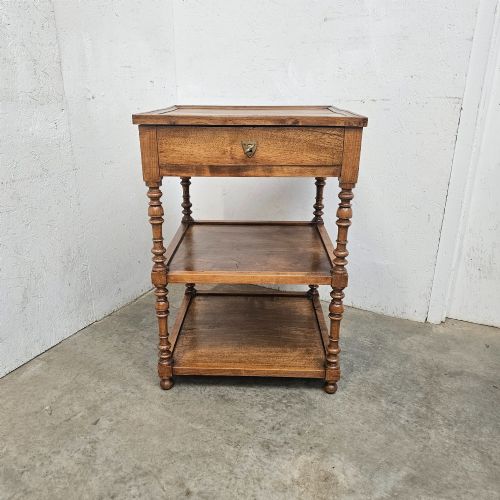


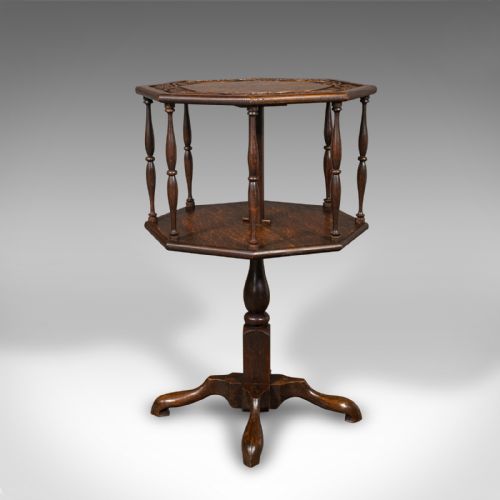


Turned Spindle Bookcase
These turned spindle bookcase selections bring practical display and rich timber character into a room.
Turned Spindle Bookcase
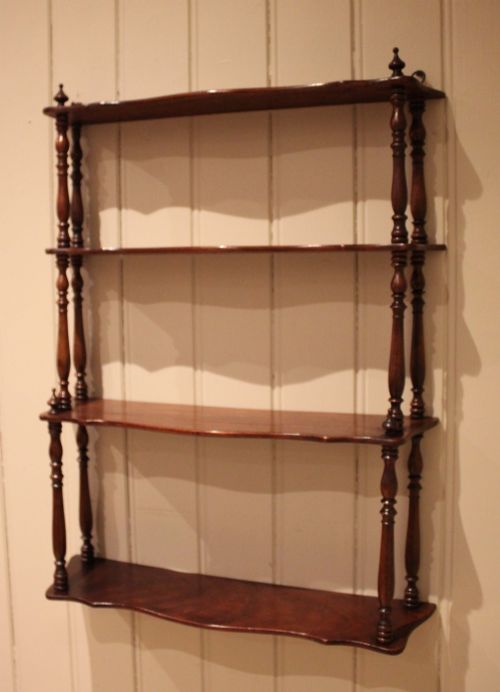
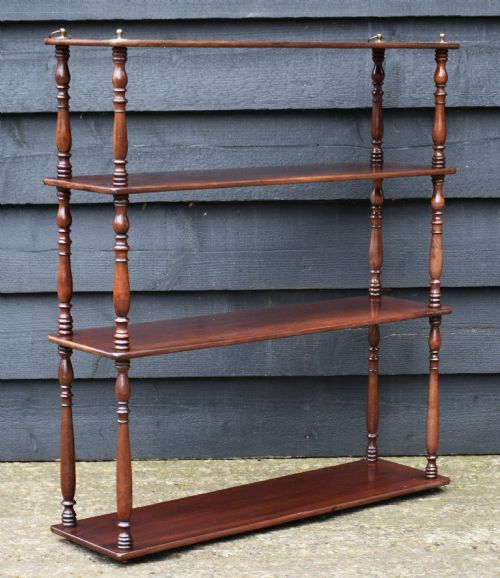
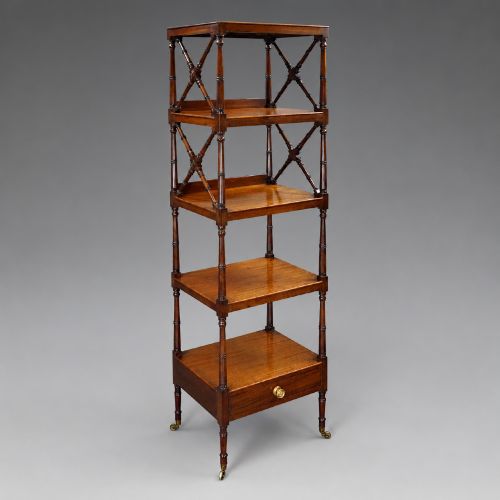
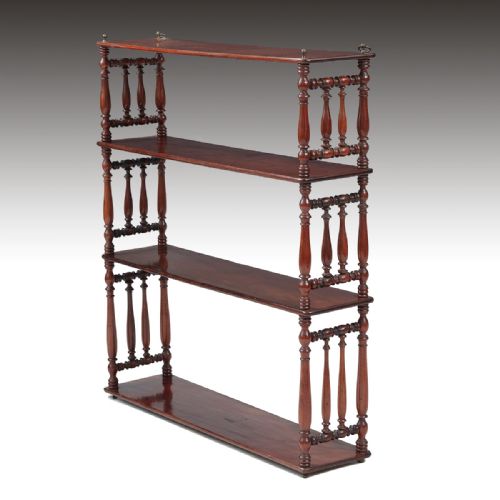
A turned spindle bookcase brings together upright shelving and open display, serving as a practical home for volumes and prized objects alike. When searching for a turned spindle bookcase, buyers encounter forms ranging from multi-tiered whatnots and hanging wall shelves to revolving book stands and etageres.
The pieces seen here span the Georgian, Regency, Victorian, and Edwardian periods, stretching through the nineteenth century and into the early twentieth. Makers constructed these items in varied configurations, including floor-standing four-tier units, rotating library tables, and wall-mounted shelving with turned structural elements.
How they were made
Craftsmen utilised timbers such as mahogany, walnut, satin birch, cherry wood, and oak to build these shelves and bookcases, often incorporating brass fittings for movement or structural support. The turning lathe shaped the characteristic spindles and columns that define the upright supports and revolving sections.
Joinery techniques varied from wall-hanging brackets to stable floor-standing frames with splayed legs or rotating bases. Wood surfaces received finishes that highlighted the natural grain of the mahogany, walnut, and oak.
Turned Spindle Bookcase Retail Price Guide 2026
Typical asking prices for turned spindle bookcase among the pieces listed under this phrase on Sellingantiques today, from the lower quarter to the upper quarter. They describe what is for sale here now, not the wider market.
The listings show pieces spanning the Georgian, Regency, Victorian, Edwardian, and William IV periods, constructed in mahogany, walnut, oak, satin birch, and cherry wood.
What varies in quality
The choice of primary timber sets the baseline for quality, with richly figured mahogany, walnut, and satin birch demonstrating superior selection by the original maker. Finer examples display precise lathe work on the turned columns and spindles, ensuring balanced proportions across multiple tiers.
Construction integrity distinguishes standard utilitarian pieces from exceptional ones, particularly in the smooth rotation of revolving book stands and the secure joinery of multi-tiered whatnots. The crispness of the turned details and the integration of brass components reflect the maker's skill.
The Turned Spindle Bookcase Glossary
- Whatnot
- An open set of movable shelves used for displaying ornaments or books. These pieces typically feature multiple tiers supported by turned columns or spindles.
- Etagere
- A piece of furniture consisting of a set of open shelves for displaying small objects. Originating in France, these items mirror the multi-tiered utility of British bookcases.
- Revolving bookcase
- A freestanding book stand designed to rotate on a central axis for easy access to volumes. Such pieces often include spindle sections beneath the main tabletop.
- Satin birch
- A light-coloured hardwood utilised for furniture production during the nineteenth century. Its distinctive grain offers a pale contrast to darker timbers like mahogany and walnut.
Turned Spindle Bookcase: Frequently Asked Questions
Where did people place these bookcases?
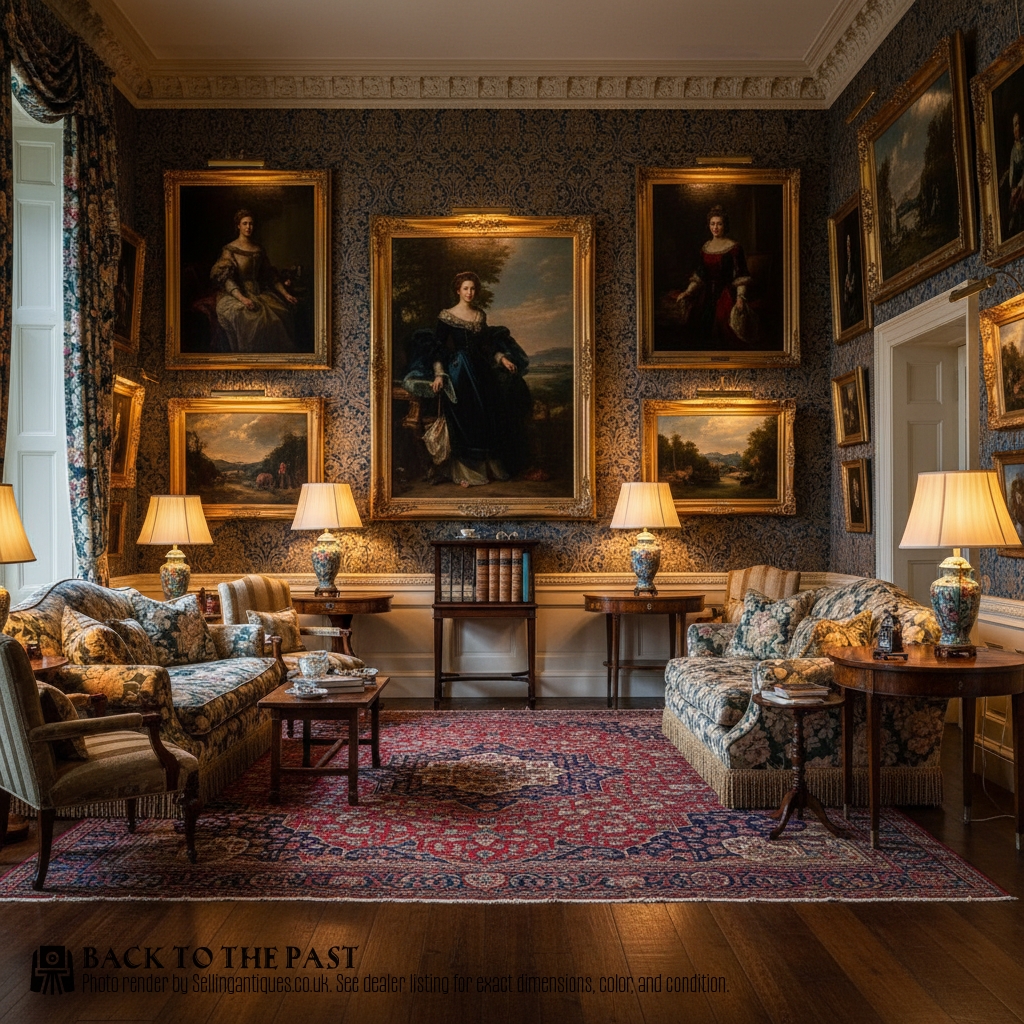
These pieces found places in libraries, parlours, and studies where book storage and display met daily domestic needs. Wall-hanging versions suited smaller rooms, while revolving stands sat beside armchairs.
Floor-standing whatnots occupied corners or wall spaces, holding both reading material and decorative objects within easy reach of the occupant.
How do I identify a Victorian piece?
Victorian examples often employ dense mahogany and feature robust four-tier constructions with turned uprights. Look for substantial frames and heavier timber gauges characteristic of the era.
Revolving stands and octagonal occasional tables from this time also integrate spindle galleries and column supports reflecting nineteenth-century design preferences.
What is the difference between a whatnot and an etagere?
A whatnot is traditionally a British multi-tiered shelving unit designed for books and ornaments, often featuring turned supports. An etagere represents a similar French form focused primarily on display.
In practice, both terms describe open-tiered furniture sharing many structural similarities in the pieces found across these periods.
How do revolving book stands operate?
Revolving book stands utilise an internal pivot or spindle mechanism that allows the upper tiers to turn smoothly in either direction. This mechanism grants access to multiple sides of stored books from a single seated position.
Such stands often combine a rotating bookcase section above with turned columns and splayed legs below for stability.