
Low Library Shelves
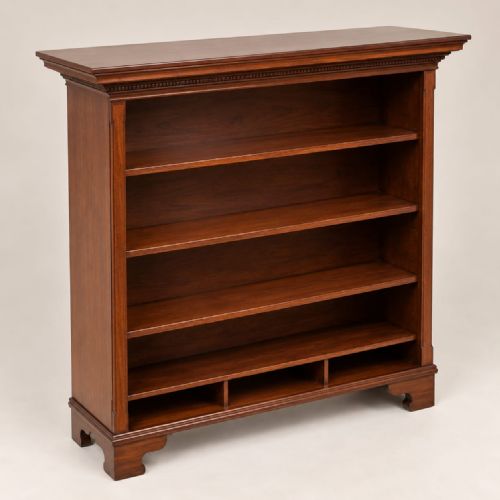
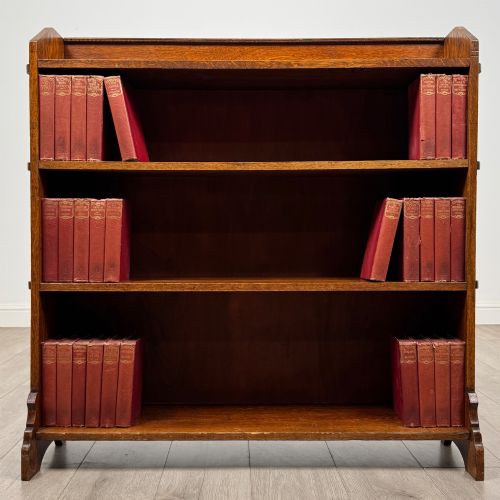
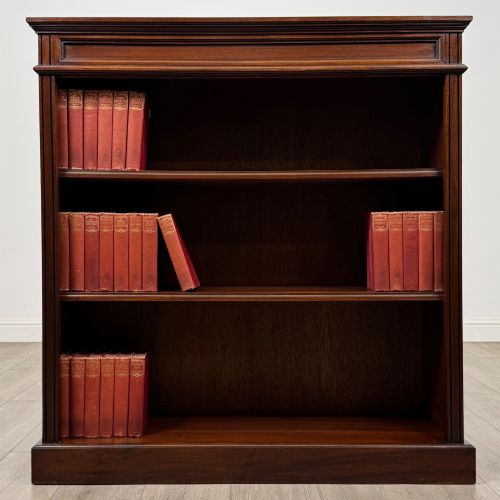
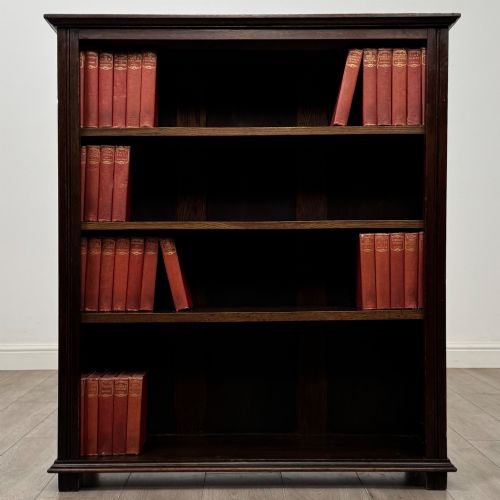
Low library shelves are open timber bookcases built to keep volumes within arm's reach while preserving sightlines across a room.
Low Library Shelves
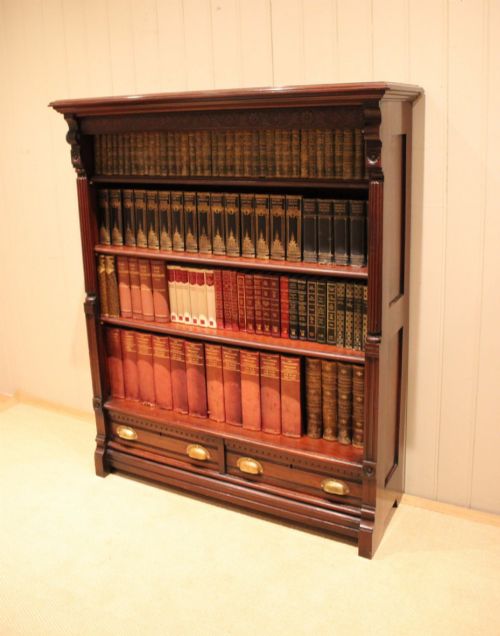
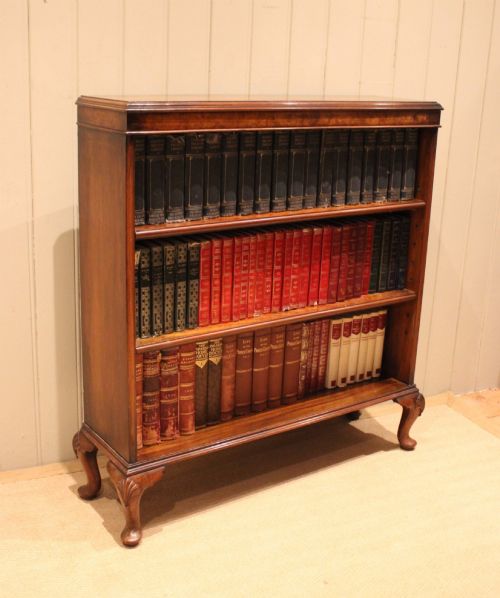
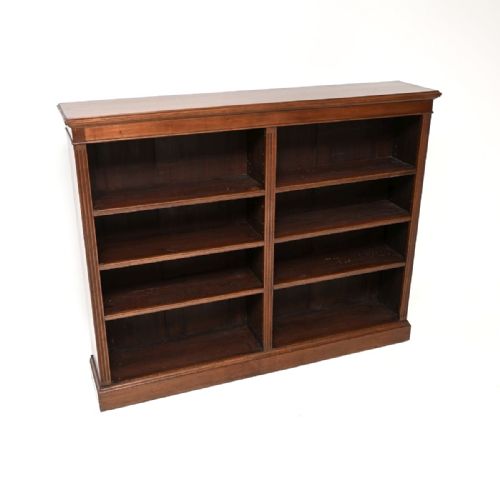
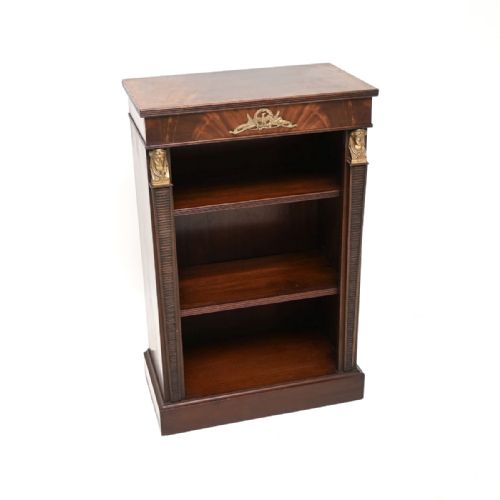
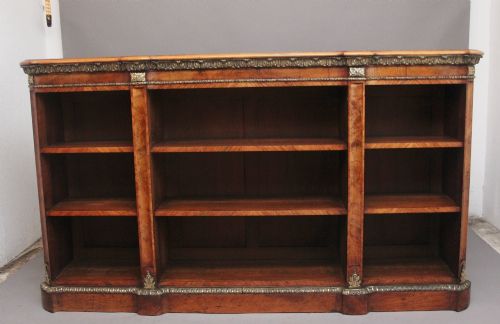
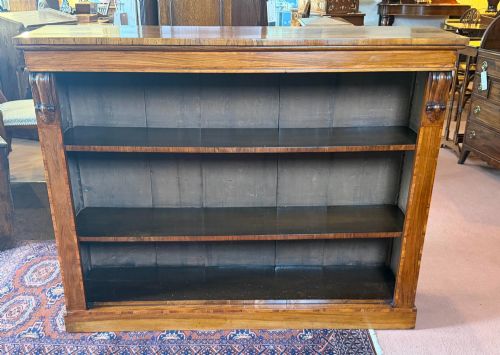
When you search for low library shelves, you encounter open bookcases and dwarf bookcases designed for domestic studies and larger rooms alike. The pieces listed on this page span the Victorian, Edwardian, and Regency periods, utilising timber forms from compact single bays to large breakfront configurations.
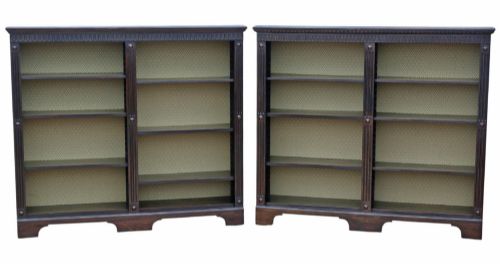
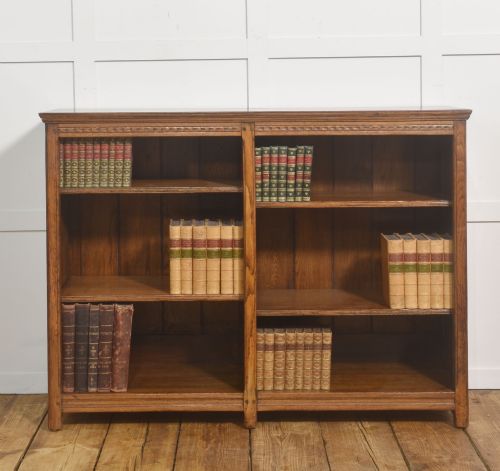
The version you are most likely to meet on this page is the Victorian or Edwardian mahogany or oak open bookcase, often fitted with adjustable shelves. These examples frequently present a low profile that allows the surface top to hold decorative objects or additional folios.
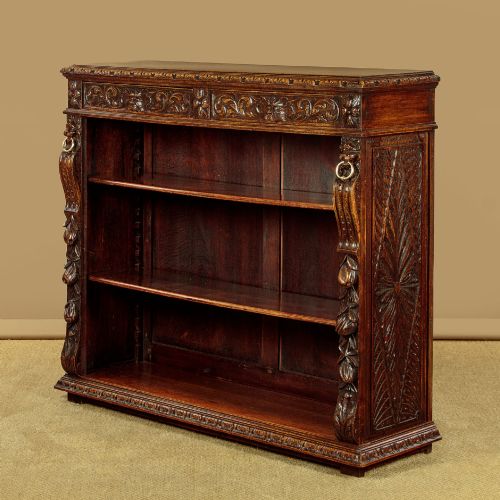
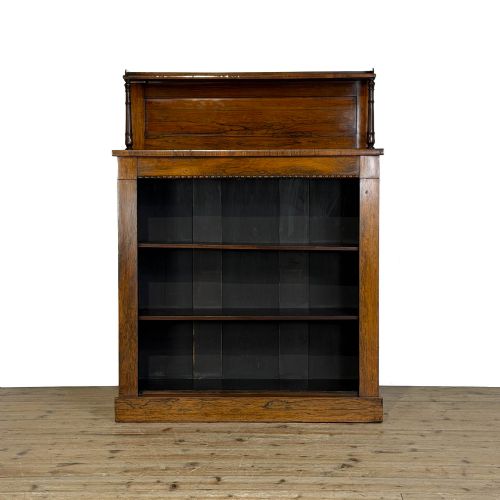
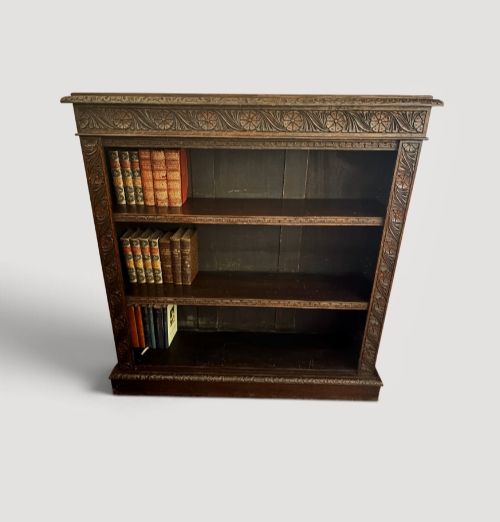
Makers and cabinet makers constructed these items to sit beneath dado rails or windows, ensuring that libraries retained an airy feel. Styles range from plain utility models to refined Regency rosewood pieces and Aesthetic Movement designs incorporating carved details.
Construction and Materials
Cabinet makers relied heavily on hardwoods such as mahogany, oak, and walnut, frequently selecting figured veneers like burr walnut or flame mahogany for the primary visible surfaces. Pine often served as the secondary timber for internal carcases and backs, while brass fittings supported the movable shelf mechanisms.
Joinery techniques focused on stability, utilising solid plinths and sturdy uprights to bear the considerable weight of bound volumes. Ormolu mounts and ebonised highlights appeared on finer examples, particularly during the nineteenth century, adding decorative contrast to the timber grain.
The listings here include Victorian, Edwardian, and Regency pieces built from mahogany, oak, walnut, rosewood, and pine.
Judging Quality
The division between standard workshop production and superior cabinet work rests upon timber selection and secondary detailing. Finer examples display carefully matched flame mahogany or burr walnut veneers across the entire front, whereas utilitarian pieces rely on plainer boards.
The sophistication of the shelving mechanism and the crispness of carved mouldings also separate grades. Well-executed brass shelf supports and integrated architectural cornices denote a higher workshop standard than fixed shelving held by simple nailed battens.
Johnstone and Jeanes
The Low Library Shelves Glossary
- Open Bookcase
- A bookcase without doors, providing direct access to the volumes stored within. These pieces often feature adjustable wooden shelves supported by brass racks or wooden pegs.
- Breakfront
- A cabinet or bookcase whose central section projects forward from the flanking wings. This architectural arrangement creates depth and visual balance in larger library furniture.
- Ormolu
- Gilded bronze applied as a decorative mount on furniture. It gained popularity on high-end nineteenth-century walnut and mahogany pieces.
- Waterfall Bookcase
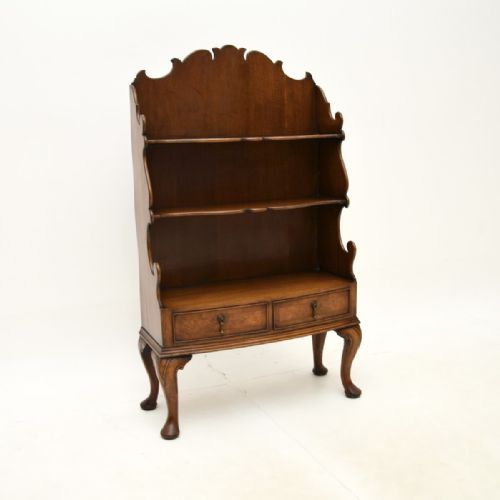
- A piece of shelving featuring tiered shelves that step back progressively from bottom to top. This form originated during the Regency period.
- Ebonised
- Timber treated with a dark finish to imitate ebony. Cabinet makers used this technique to create sharp tonal contrasts on carved details.
Low Library Shelves: Frequently Asked Questions
What are low library shelves?
Low library shelves are open bookcases designed to stand at a reduced height, keeping books accessible without blocking wall space or windows.
They emerged as a practical solution for domestic libraries and studies where natural light and an open room layout were valued.
How were low library shelves used?
These pieces held working libraries, reference volumes, and current reading materials within easy reach of a desk or armchair.
The flat top surface additionally served as a display space for ornaments, clocks, or smaller busts.
How do I adjust the shelves?
Many period examples utilise brass rack strips inset into the interior uprights alongside small matching brass clips. These allow the wooden shelves to be lifted and repositioned at different heights to accommodate varying book sizes.
Simpler vernacular versions relied on fixed rows of wooden peg holes or stationary ledges.
How do I date a bookcase?
Dating relies on timber choices, construction methods, and stylistic cues such as Regency rosewood work or heavy Victorian carving. Edwardian pieces often display lighter golden oak tones, while earlier nineteenth-century examples favour dense mahogany and walnut.
Secondary woods like pine backing boards and the type of shelf support hardware provide further chronological evidence.