
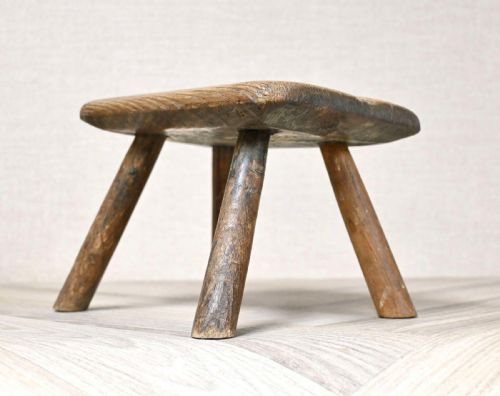
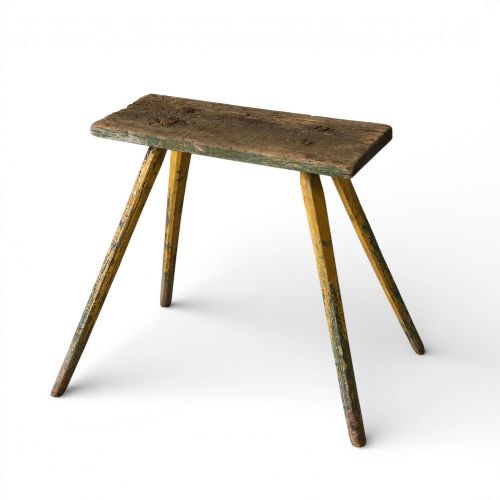
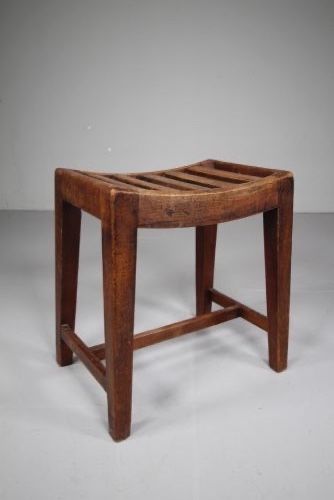
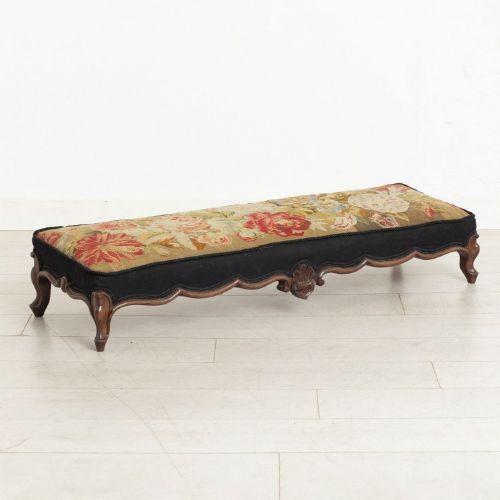


Low Fireplace Footstool
These low fireplace footstool pieces bring practical warmth and character to a hearth, offering a sturdy seat close to the fire.
Low Fireplace Footstool
A low fireplace footstool serves as a practical seat or footrest positioned close to the hearth for warmth. The selection spans periods from the eighteenth century through the Edwardian era, encompassing Georgian, Victorian, and rustic country forms.
Most examples found here are compact stools, fender stools, and longer hearth benches designed to sit low to the ground. Woods such as walnut, mahogany, oak, elm, and timber form the primary structures supporting various textile, tapestry, and leather surfaces.
How they were made
Cabinetmakers constructed these frames using hardwoods like mahogany, walnut, and oak, often shaping legs into cabriole forms or keeping them plain and rustic. Timber frames were joined with traditional woodworking methods to withstand daily use near the heat of a fire.
Upholstered versions combine solid wood bases with period textiles, tapestries, or leather coverings secured over padding. Some country examples rely on simple painted wooden surfaces without upholstery, highlighting the natural grain and texture of the wood.
The selection includes pieces spanning the eighteenth century, Georgian, Victorian, and Edwardian periods, utilising walnut, mahogany, oak, elm, and leather.
What varies in quality
The distinction between ordinary and superior pieces rests on the refinement of the timber work and the integrity of the original materials. Finer examples display carefully shaped mahogany or walnut frames with balanced proportions, whereas simpler country versions show a more utilitarian construction.
Survival of original upholstery, fabric, and paint adds considerable merit to a piece. Altered frames or replaced coverings shift an item further from its original state, altering its character.
The Low Fireplace Footstool Glossary
- Fender stool
- A long, low stool designed to sit directly in front of a hearth fender. These pieces kept feet elevated off cold stone floors.
- Cabriole leg
- A furniture leg that curves out and then in, resembling the leg of an animal. This style appears frequently on finer eighteenth and nineteenth century pieces.
- Hearth stool
- A low seat intended for use beside an open fireplace. They generally feature sturdy timber construction to withstand proximity to heat.
- Milking stool
- A small, simple, three-legged or four-legged seat used for agricultural tasks. Country examples often retain traces of original paint.
Low Fireplace Footstool: Frequently Asked Questions
What is a low fireplace footstool used for?
These pieces served to keep feet elevated away from cold drafts near the floor while sitting by an open fire. Their low height also provided a convenient, compact seat close to the warmth of the hearth.
Over time, many adapted from purely functional fireside items into decorative household furnishings. Their modest proportions make them versatile for placing in living spaces today.
How do I date a footstool?
Dating relies on examining the timber species, joinery techniques, and leg styles characteristic of specific periods. Georgian pieces often show refined mahogany framing, while Victorian examples frequently utilise walnut and turned legs.
Comparing the upholstery style and any surviving fabric to known historical periods helps narrow down the decade of manufacture. Country pieces often display simpler hand-tool marks distinct from urban cabinetmaking.
Are these stools comfortable to use daily?
Many upholstered examples retain supportive padding and sturdy frames suitable for regular sitting or resting feet. However, older textiles and internal stuffing may require careful treatment during daily use.
Unupholstered wooden stools provide solid support but lack cushioning, functioning best as side seats or display surfaces. Assessing the rigidity of the frame ensures it remains stable for regular placement.
How do I care for antique wood and leather?
Maintaining these pieces involves keeping them away from direct heat sources and sudden temperature changes that can dry out timber. Gentle dusting preserves the polished wood surfaces without stripping historical finishes.
Leather and fabric elements benefit from minimal interference, protecting the original texture and colour. Proper placement out of harsh sunlight prevents fading on older textiles.