


Walnut Leather Bench
These walnut leather bench pieces combine rich timber frames with durable hides, offering practical seating across eras from the Victorian period to Art Deco.
Walnut Leather Bench
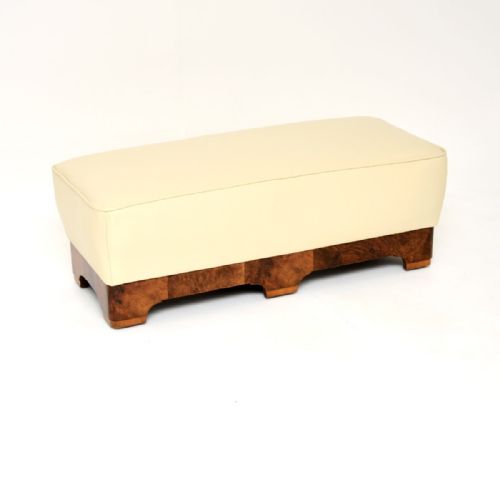
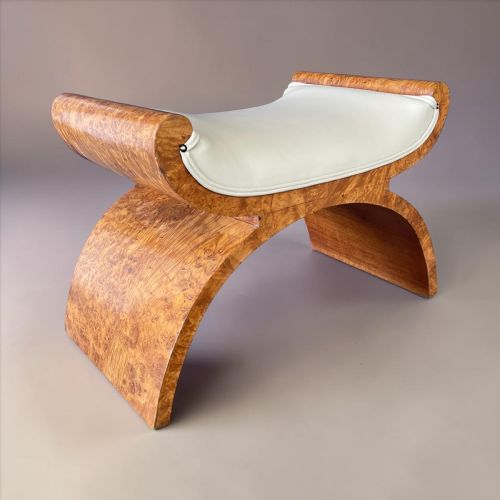
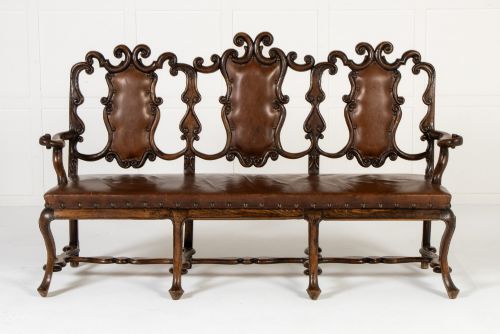
A walnut leather bench serves as versatile seating or a low table, appearing on this page in forms such as long footstools, dressing table stools, ottomans, and settees. Buyers searching for a walnut leather bench will encounter diverse historic interpretations ranging from simple 19th century footstools to elaborate Italian and Venetian Renaissance revival seats.
The physical form adapts to different domestic uses, encompassing everything from diminutive occasional stools to large hall seats and sofas. Victorian examples often feature buttoned upholstery, while 1930s pieces showcase the cleaner lines typical of Art Deco design.
Origins span English, French, and Italian workshops, bringing distinct regional carving traditions to the walnut framework. Whether configured as a rectangular piano stool or an X-framed hall seat, the combination of timber and leather remains constant.
How they were made
Makers constructed the structural frames from solid walnut or burr walnut, frequently employing rich grain patterns for visual impact. Carving, turning, and X-frame construction methods provided structural integrity and decorative flourish to the wooden bases.
Upholsterers fitted these frames with leather, utilising plain hides, hand-dyed English leather, or embossed panels secured with brass details. Buttoning techniques and traditional padding gave the seating surfaces both firmness and texture.
Some nineteenth-century examples spent their youth beside billiard tables as dedicated snooker benches before retiring to the hallway.
What varies in quality
The depth of carving and the selection of timber dictate the upper tier of quality, with burr walnut and intricate figural or botanical relief work marking out superior examples. Plain structural execution and simpler turned legs generally characterise more utilitarian pieces.
Leather treatment also separates grades, ranging from standard hides to hand-dyed English leather and finely embossed surfaces. The precision of the joinery and the integrity of the frame construction determine the lasting durability of each stool or settee.
Harry and Lou Epstein
The Walnut Leather Bench Glossary
- Burr walnut
- A highly figured veneer taken from the wart or burl of a walnut tree, prized for its swirling grain patterns. It frequently appears on high-end Art Deco and Victorian furniture surfaces.
- X-framed
- A structural design where the legs cross in an X shape to support the seat, seen in revivalist and formal seating. This configuration distributes weight effectively while adding architectural interest.
- Buttoned
- An upholstery technique where depressions are created in the leather using buttons pulled tight into the padding. This method secures the filling and creates a distinctive geometric pattern.
- Carolean style
- A revivalist aesthetic referencing the restoration period of English design, characterised by rich carving and scrolled woodwork. It appears on heavy walnut low hall seats.
- Settee
- A small upholstered sofa designed for two or more people, combining a wooden framework with padded seating. These pieces often feature extended lengths compared to standard footstools.
Walnut Leather Bench: Frequently Asked Questions
What is a walnut leather bench used for?
These pieces function primarily as low seating, footstools, or auxiliary furniture in hallways, dressing rooms, and living spaces. Their sturdy wooden frames and durable leather surfaces allow them to double as impromptu coffee tables when topped with a tray.
Historically, specific variants like snooker benches or hall seats served specialised domestic or recreational purposes. Today, buyers use them to add functional surface area and rich textural contrast to modern interiors.
How do I date a walnut leather bench?
Dating relies on stylistic clues, combining the form of the walnut woodwork with the application of the leather upholstery. Victorian pieces often display deep buttoning and heavy turned legs, while 1930s examples favor smoother burr walnut veneers and streamlined Art Deco geometries.
Revival styles can occasionally complicate dating by borrowing motifs from earlier centuries, such as the Baroque or Renaissance eras. Examining construction joints, hardware, and timber patination helps confirm whether a piece is an 1850s original or a later revival.
Are these benches comfortable?
Comfort depends heavily on the original padding and the type of leather used in the upholstery. Many footstools and ottomans were built with firm support systems intended for resting feet rather than prolonged lounging.
Settees and hall seats offer more substantial back support or wider cushioned areas suited for sitting. The firmness of the leather and internal stuffing varies significantly between a simple Victorian foot stool and a grand Venetian carved bench.
How do I care for the leather?
Leather surfaces require protection from direct sunlight and excessive heat to prevent drying and cracking. Regular dusting with a soft cloth keeps the hide clean and maintains its finish.
Conditioning balms suited for antique leather help preserve hand-dyed and embossed surfaces over time. Avoid harsh chemical cleaners that can strip the natural oils and pigments from the material.