
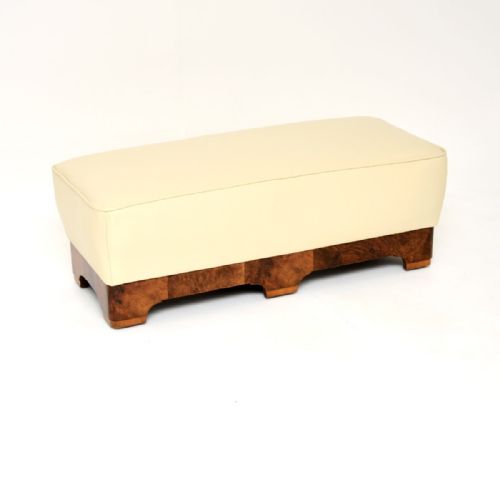
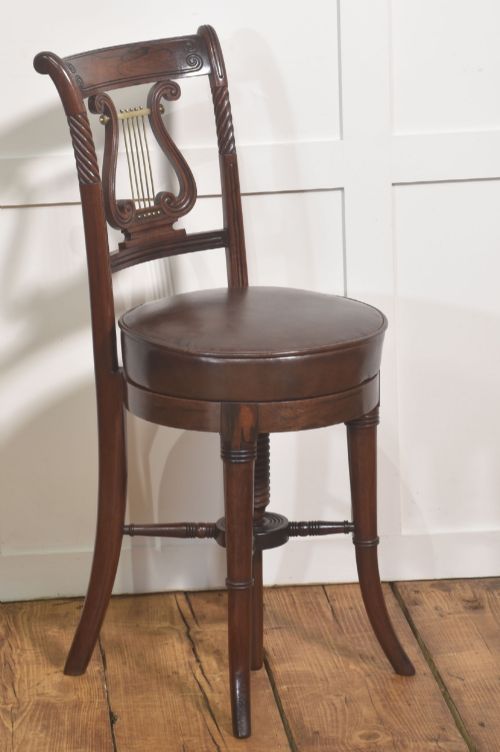
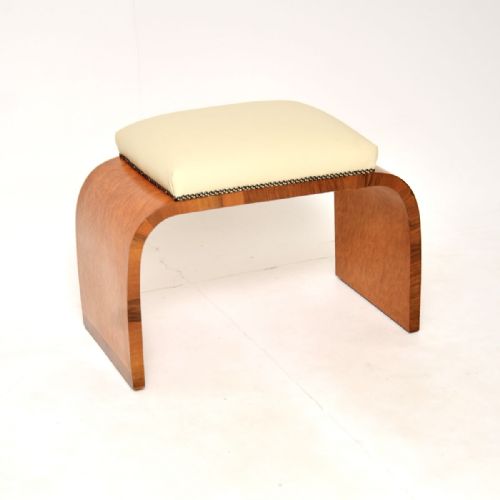


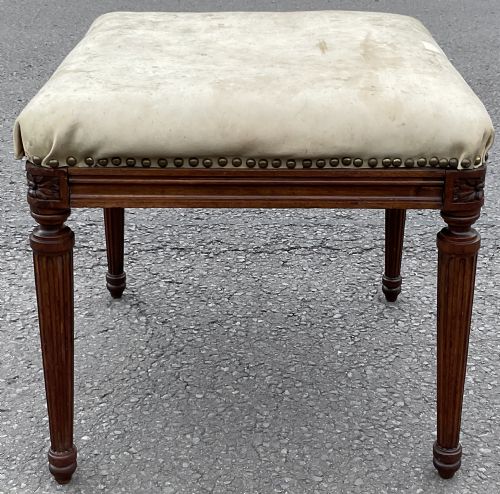


Leather Dressing Table Stool
These leather dressing table stool examples span several decades and styles, offering a functional seat for a bedroom vanity.
Leather Dressing Table Stool
When you search for a leather dressing table stool, you are looking at small seating designed for vanity tables, featuring upholstered leather tops paired with wooden frames. These pieces appear across various periods, including the Victorian era, the Edwardian period, and the Art Deco movement of the nineteen thirties.
The forms vary from simple rectangular dressing stools and piano stools to adjustable revolving chairs and ottomans. You are most likely to encounter twentieth-century walnut or burr walnut pieces alongside nineteenth-century mahogany variants on this page.
Origin details indicate both English manufacture and specific revival styles such as Louis XV. The historical function remains consistent as a low seat for grooming or musical accompaniment.
Materials and construction methods
The framework relies on traditional cabinet timbers such as mahogany, walnut, burr walnut, and birds-eye maple, sometimes enhanced with painted finishes or brass details. These hardwoods provide structural stability for the compact frames of dressing chairs and piano stools.
Upholstery utilises leather in various tones, fixed over padding to create a firm yet comfortable surface for daily use. Mechanical elements appear in adjustable and revolving examples from the nineteenth century, allowing height modification through threaded wooden or metal spindles.
The documented periods stretch from the nineteenth century through the Edwardian era into nineteen-thirty Art Deco.
Distinctions in quality and execution
Quality separates through the selection of cabinet timbers, where figured veneers like burr walnut or birds-eye maple indicate superior material cost compared to plain painted alternatives. The joinery of the wooden frame and the precision of any adjustable revolving mechanism define the standard of production.
The execution of the leather upholstery and the integrity of the underlying padding dictate the finish. Higher grade pieces exhibit careful stitching and stable frames without excessive play in the joints or swivel mechanisms.
Harry and Lou Epstein·Trollope and Sons
The Leather Dressing Table Stool Glossary
- Burr walnut
- A timber figured with swirling grain patterns formed from tree growths, commonly utilised in Art Deco veneer work. It provides a decorative surface distinct from straight-grained walnut.
- Revolving mechanism
- A mechanical assembly allowing the seat top to turn through a full rotation, frequently found on nineteenth-century piano and dressing stools. This allows the user to adjust position without moving the base.
- Birds eye maple
- A North American hardwood showing small dots or swirls resembling tiny eyes across the grain. This pale timber appears on twentieth-century seating frames.
- Regency style
- A design period drawing on classical Greco-Roman motifs, characterised by clean lines and occasional use of rosewood or mahogany. Pieces from this tradition often feature elegant scroll or waisted forms.
- Adjustable stool
- A seat fitted with a screw mechanism to raise or lower the height of the platform. This function served both piano players and those sitting at dressing tables.
Leather Dressing Table Stool: Frequently Asked Questions
What is a leather dressing table stool?
A leather dressing table stool is a compact seat designed to sit beneath a bedroom vanity or dressing chest. These pieces combine a wooden frame with a leather-upholstered top for daily grooming use.
They appear in various historic styles, from nineteenth-century mahogany revolving designs to nineteen-thirties burr walnut Art Deco examples.
How do I identify the period?
Period identification relies on the combination of timber, structural form, and decorative style. Nineteenth-century examples often feature solid mahogany or walnut with revolving mechanisms, while nineteen-thirties pieces utilise burr walnut or birds-eye maple veneers.
Edwardian and Victorian variants show distinct turning and joinery characteristics typical of those decades.
Were these stools used for pianos too?
Many historic seating designs served dual purposes as music stools and dressing table chairs. Adjustable revolving mechanisms suited both piano players needing height variation and individuals at vanity tables.
Dimensions and circular or rectangular top shapes often overlap between piano stools and dressing stools.
How should I care for the leather?
Leather upholstery benefits from regular dusting and occasional conditioning to maintain suppleness and prevent drying. Keeping the material away from direct heat sources preserves the natural surface.
Wooden frames require standard furniture maintenance with soft cloths and appropriate wax or polish.