
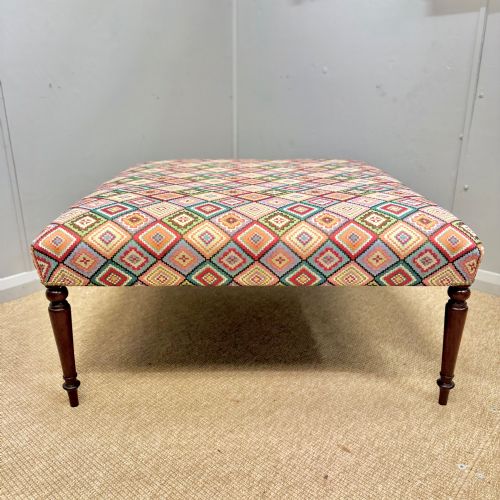
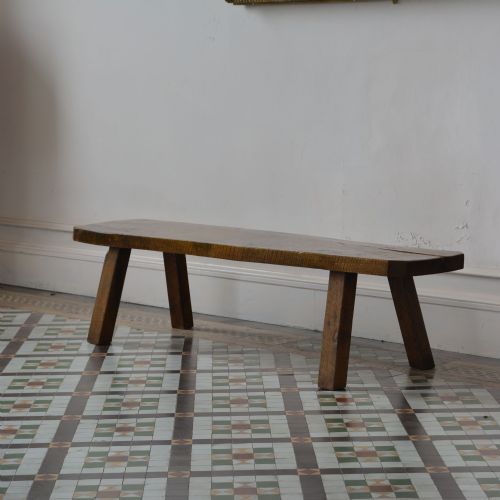
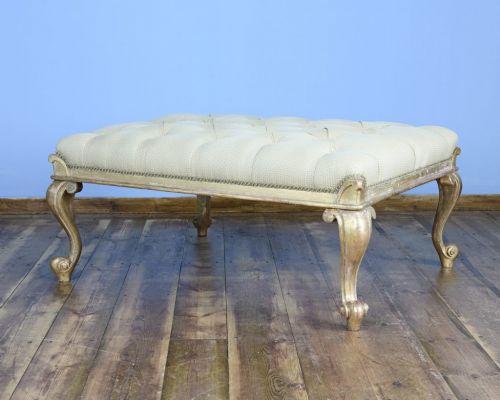


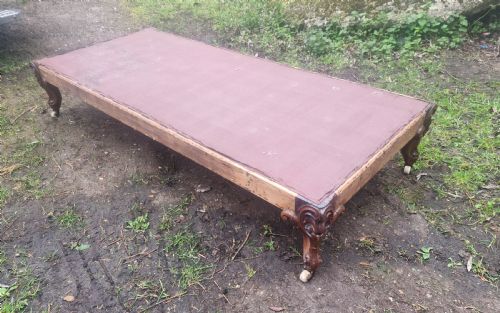


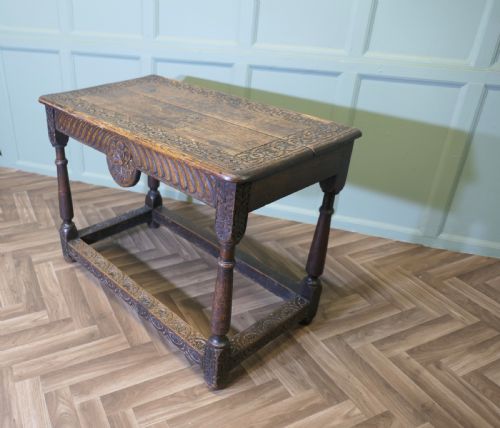

Low Coffee Table Stool
A low coffee table stool gives a room a grounded surface and flexible seating, combining the height of a footstool with the utility of a table.
Low Coffee Table Stool
A low coffee table stool bridges the gap between traditional seating and low surface furniture, drawing from nineteenth-century footstools, ottomans, and occasional tables. These low forms serve double duty as resting places for trays and books or as impromptu seats by the hearth.
The selections span rustic country benches and grand Victorian centre stools alongside French Régence styles and campaign-scale ottomans. Most pieces encountered here date from the nineteenth century, though earlier eighteenth-century oak examples and later twentieth-century drum tables also appear.
Makers often adapted utilitarian objects like pig benches or low side tables into dual-purpose furniture for the English country house interior. Buyers find everything from square mahogany frames with caned tops to zebra hide drum tables and carved walnut frames ready for fresh upholstery.
Materials and construction
Carpenters relied on sturdy native timbers including oak, mahogany, walnut, and general hardwood to build these resilient low frames. Joinery typically involved traditional pegged or tenoned joints designed to withstand the rigours of heavy domestic use.
Surfaces frequently incorporated woven cane, brass mounts, and carved details such as parcel gilding or Celtic motifs. Many items also accommodated fabric, leather, or zebra hide upholstery to cushion the seat or soften the low table top.
A zebra hide drum table brings an unexpected flash of savannah style straight into the Victorian parlour.
Distinguishing quality in low seating
Quality rests in the proportion of the timber frame and the crispness of hand-carved details like the scrolling work on Victorian rosewood or French Régence window seats. Heavier timbers and substantial scale distinguish grand country house ottomans from lighter occasional pieces.
The integrity of the original construction, from the tightness of the wood joints to the preservation of natural grain in oak and mahogany, marks the finer examples. Alterations to height or surface finish alter the character of these low tables.
The Low Coffee Table Stool Glossary
- Centre stool
- A large freestanding stool designed to sit in the middle of a room rather than against a wall. These substantial frames often double as low coffee tables.
- Pig bench
- A low, utilitarian wooden bench originating from rural farm use. Their low profile and sturdy oak construction make them popular as rustic coffee tables.
- Caned top
- A seating surface woven from peeled rattan or cane strips. This technique provides a lightweight, resilient panel often found on mahogany or hardwood frames.
- Parcel gilt
- A decoration method where selected portions of a carved wooden frame receive a thin layer of gold leaf. This technique highlights specific architectural motifs against a dark wood or painted ground.
Low Coffee Table Stool: Frequently Asked Questions
Can I use a footstool as a coffee table?
Many large nineteenth-century footstools and ottomans feature sturdy wooden frames and flat tops that easily accommodate a serving tray or books.
Adding a firm tray protects any fabric or leather upholstery while providing the stable surface needed for everyday living room use.
How do I clean a caned stool top?
Caned panels require gentle dusting with a soft brush and occasional wiping with a damp cloth to keep the plant fibres supple.
Avoid soaking the cane, and allow the material to dry completely in a well-ventilated room to prevent the natural strands from snapping.
What is a French Régence style stool?
This style reflects the transitional decorative arts of early eighteenth-century France, featuring bold carved ornament and substantial cabriole legs.
Nineteenth-century revival pieces often adopted these sculptural wooden frames to add formal elegance to English country house interiors.
How do I care for antique oak furniture?
Antique oak benefits from occasional applications of traditional beeswax to nourish the dry timber and protect the original surface finish.
Keep these low tables away from direct heat sources and strong sunlight to prevent the hardwood from splitting or warping over time.