



Decorative Upholstered Ottoman
These decorative upholstered ottoman examples bring period seating and footstools into a room, offering both textile charm and traditional craftsmanship.
Decorative Upholstered Ottoman
Buyers most frequently meet Victorian and Continental examples on this page, including French Neoclassical, Italian Baroque, and Anglo-Indian designs. Walnut, rosewood, and carved hardwoods form the structural bases for these varied stool formats.
Materials and construction techniques
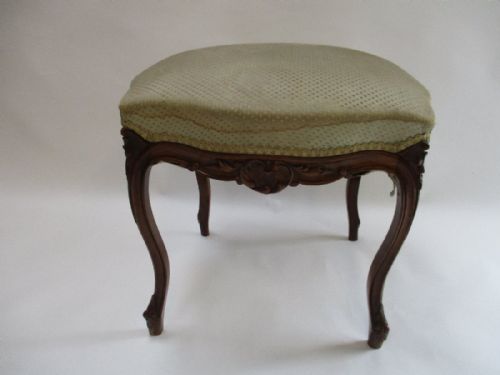
Carved wood and hardwood foundations form the backbone of these pieces, often utilising walnut and rosewood. Craftsmen shaped these timbers into intricate frames featuring cabriole legs and detailed mouldings.
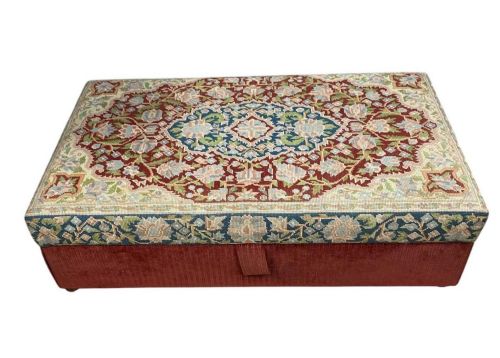
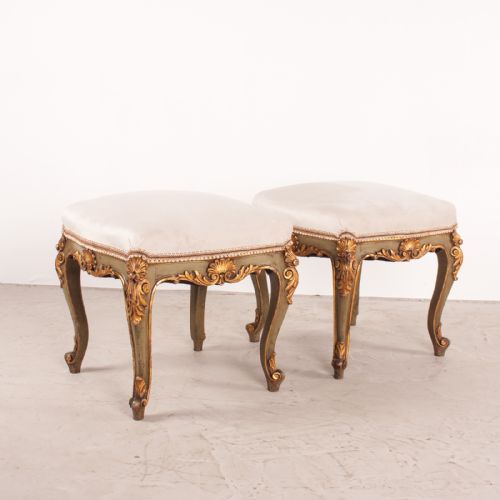
Textile elements, including needlepoint covers and linen, are paired with painted and gilded finishes or gold leaf applications. Hand carving brings dimension to the wooden structures before upholstery completes the work.
Listings span the nineteenth century, capturing periods from 1860 to 1900 in walnut, rosewood, and carved hardwood.
Judging the quality of a decorative upholstered ottoman
Depth and precision in the hand carving separate standard frames from finer works, particularly where floral motifs and structural curves meet. The choice of primary timber, such as dense walnut or rosewood, dictates the strength and finish of the base.
The choice of textile covering and the execution of the needlepoint or fabric upholstery define the upper tier of these pieces. Attribution to known makers, such as A.M.E. Fournier, adds distinct provenance to a stool.
A.M.E. Fournier
The Decorative Upholstered Ottoman Glossary
- Cabriole leg
- A furniture leg that bends outward and then tapers inward, mimicking an animal's limb. This style appears frequently on eighteenth and nineteenth century seating.
- Needlepoint
- A type of canvas work embroidery used for upholstery. It provides a durable and decorative surface for stools and ottomans.
- Gold leaf
- Gold beaten into extremely thin sheets used for gilding surfaces. It adorns frames to create a reflective, ornate finish.
- Anglo-Indian
- A style describing objects made in India under British influence, combining local woods and carving with European furniture forms.
- Continental Rococo
- A decorative style characterised by asymmetrical curves, scrollwork, and natural motifs. It heavily influences nineteenth century European seating.
Decorative Upholstered Ottoman: Frequently Asked Questions
What is a decorative upholstered ottoman used for?
These pieces function primarily as movable seating, footstools, or low coffee tables within a room. Their padded textile tops provide comfort alongside decorative presence.
Historically, larger versions adapted easily to changing interior layouts while offering solid wood support under decorative covers.
How do I identify a nineteenth century piece?
Nineteenth century construction typically relies on dense hardwoods like walnut or rosewood, shaped by hand with traditional joining methods. Stylistic cues include Victorian, French Second Empire, and Italian Baroque design elements.
Examination of the woodwork and textile application helps distinguish these period pieces from later reproductions.
How do I care for antique upholstery and wood?
Keep wooden frames away from direct sunlight and sudden temperature changes to protect the walnut, rosewood, and gold leaf finishes. Regular, gentle dusting preserves both the carved details and the surrounding textile.
Needlepoint and fabric coverings benefit from professional textile cleaning when necessary to maintain their condition.