


Victorian Colonial Stool
These nineteenth-century pieces of furniture bring hand-carved exotic timber and distinctive colonial craftsmanship straight into a modern interior.
Victorian Colonial Stool
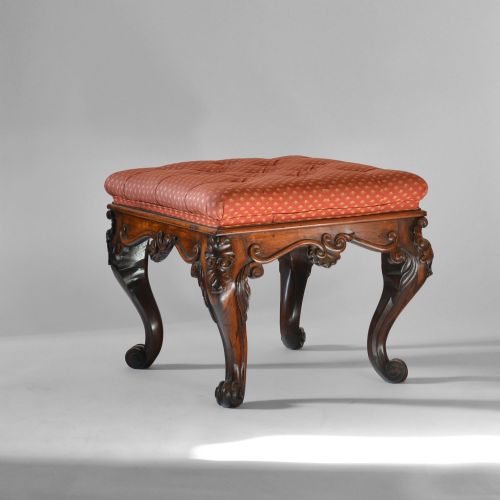
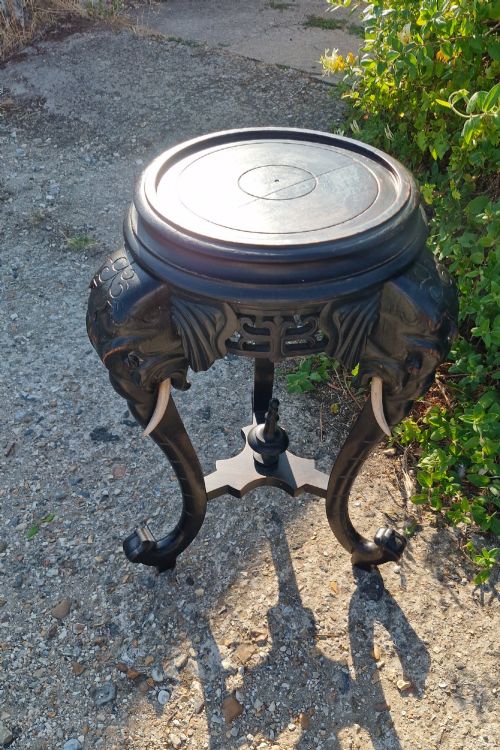
When you search for a victorian colonial stool, you are looking at nineteenth-century seating and low tables produced during the British administration in India and Burma. The forms on this page include sturdy footstools, large ottomans, circular occasional pieces, and elephant-shaped tables.
Most examples date from the late nineteenth century, around 1880 to 1890, reflecting the stylistic exchange between British domestic demand and overseas workshops. You will most frequently meet pieces carved from dense tropical timbers, often taking the form of low footstools with intricate floral or figurative motifs.
How they were made
The makers relied on dense imported hardwoods such as rosewood and teak, selected for their stability and capacity to hold deep, crisp chisel work. These woods are frequently paired with woven rattan or traditional fabric upholstery to create contrasting textures.
Skilled artisans carved the timber by hand, often incorporating complex pierced decoration, foliate scrolls, and zoomorphic elements like elephant legs or painted wooden tusks.
Listings show nineteenth-century pieces spanning the 1880s and 1890s, categorised under Anglo-Indian and Anglo-Burmese colonial styles.
What varies in quality
The distinction between ordinary and exceptional work lies in the depth and crispness of the hand carving rather than the age alone. Pieces featuring fully sculpted animal forms or elaborate pierced panels show a higher degree of workshop skill than simpler turned supports.
The choice of primary timber also dictates the character of the piece, with richly figured rosewood and heavy teak representing the more substantial end of nineteenth-century production compared to painted or ebonised alternatives.
The Victorian Colonial Stool Glossary
- Anglo-Indian
- Descriptive of furniture made in the Indian subcontinent during the British period, combining British furniture forms with local carving traditions. These pieces often utilise regional hardwoods and distinct iconography.
- Rosewood
- A heavy, durable tropical timber with a dark grain and natural oil content that takes a high polish. It was favoured for its rich colour and strength.
- Ebonised
- Wood treated with a chemical stain or finish to imitate the dense, black appearance of ebony. This treatment was common on nineteenth-century statement furniture.
- Rattan
- A slender, pliable palm stem woven to create breathable panels for seating and surface inserts. It provides a light textural contrast to heavy carved frames.
Victorian Colonial Stool: Frequently Asked Questions
What is a victorian colonial stool?
A nineteenth-century seating or low table piece produced in British India or Burma, combining European functional forms with traditional local carving.
These items range from simple low footstools to large ottomans and tables supported by carved elephant legs.
How were these stools used?
They served as practical footrests, low occasional tables, or central ottoman coffee tables in nineteenth-century drawing rooms.
Their robust construction in teak and rosewood suited both domestic comfort and the display of decorative objects.
How do I care for hardwood furniture?
Keep the timber away from direct heat sources and sudden temperature changes to prevent the dense wood from splitting.
Apply a light application of natural wax occasionally to nourish the grain and maintain the finish.
How can I tell the period?
Look to the combination of nineteenth-century British furniture shapes with traditional regional hand-carved motifs and dense tropical timbers.
Workshop methods and material choices from the 1880s and 1890s typically distinguish these pieces from later reproductions.