
Low Buttoned Armchairs
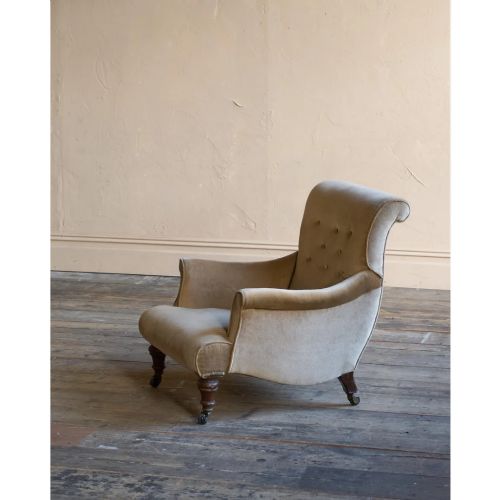
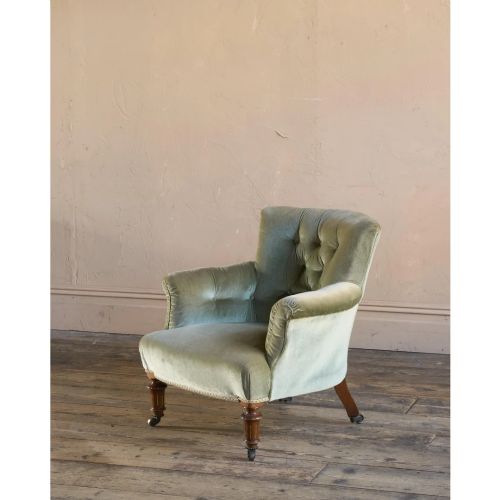
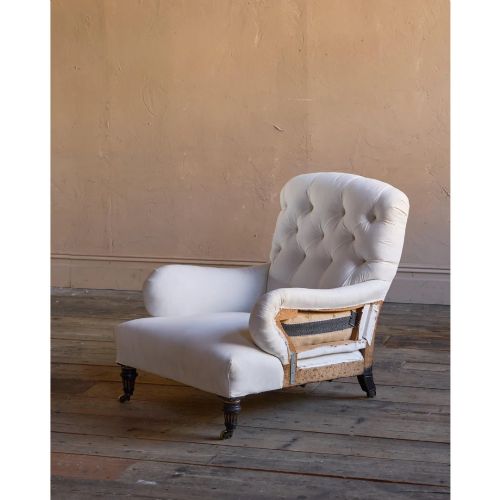
These low buttoned armchairs bring nineteenth-century comfort and deep tufted upholstery to drawing rooms, bedrooms, and quiet corners.
Low Buttoned Armchairs
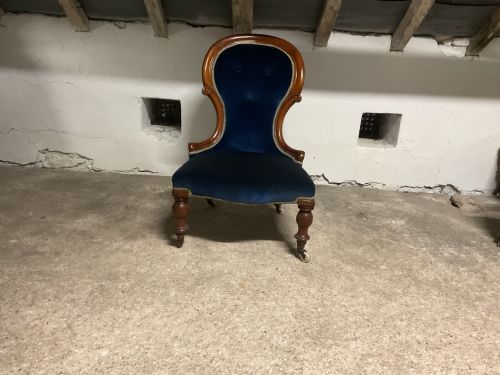
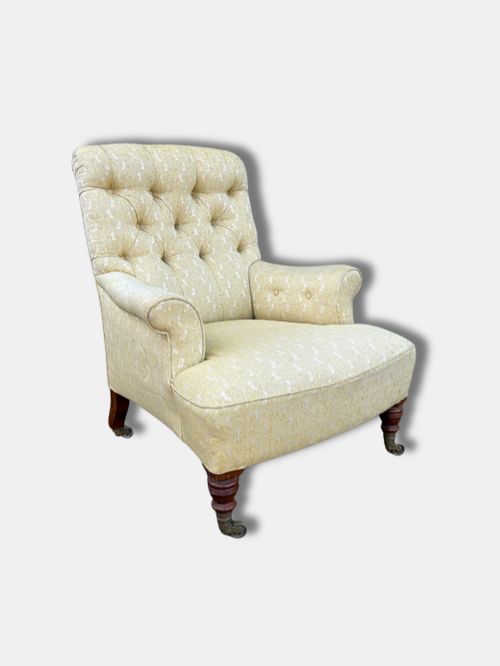
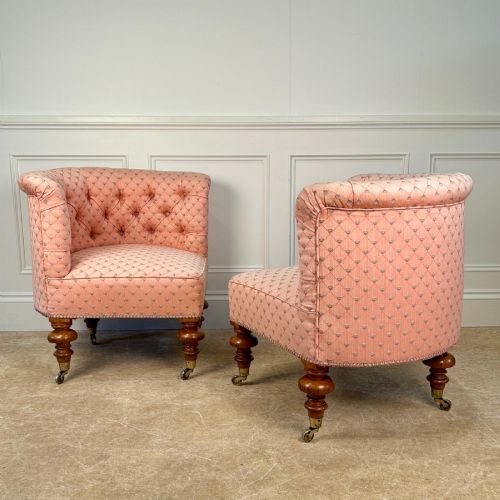
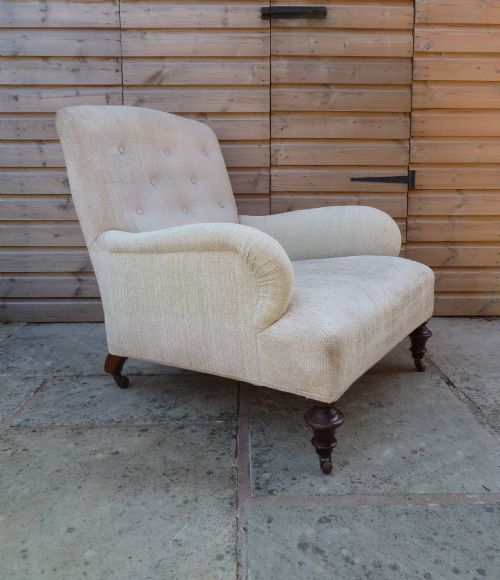
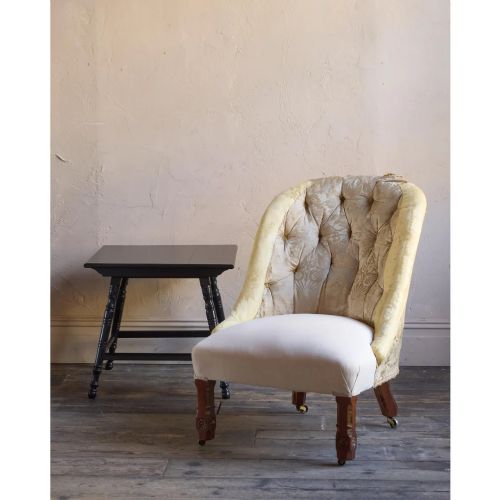
Low buttoned armchairs encompass a diverse group of nineteenth-century seating forms designed for intimate spaces, including nursing chairs, slipper chairs, and compact bedroom chairs. When exploring low buttoned armchairs, buyers frequently encounter Victorian walnut and mahogany frames alongside Edwardian and French examples.
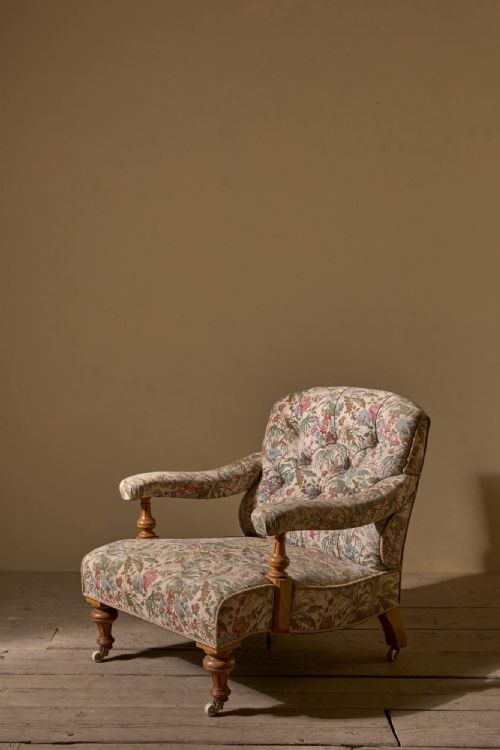
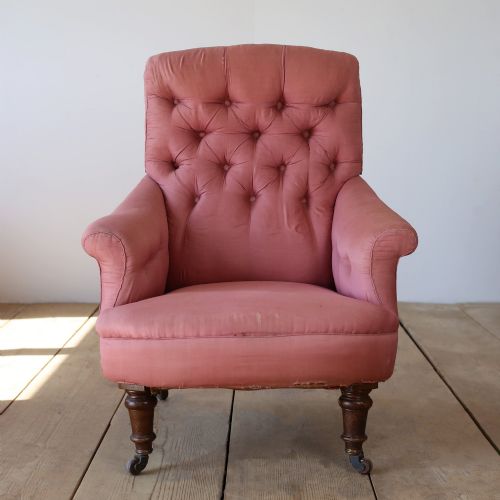
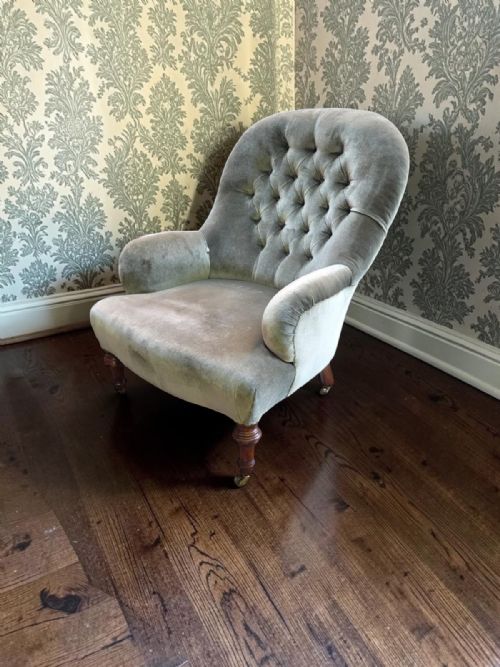
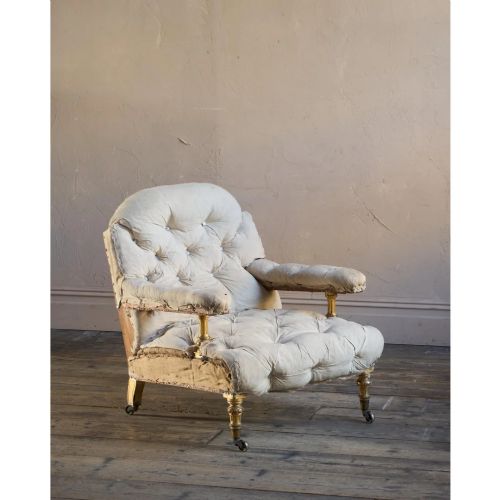
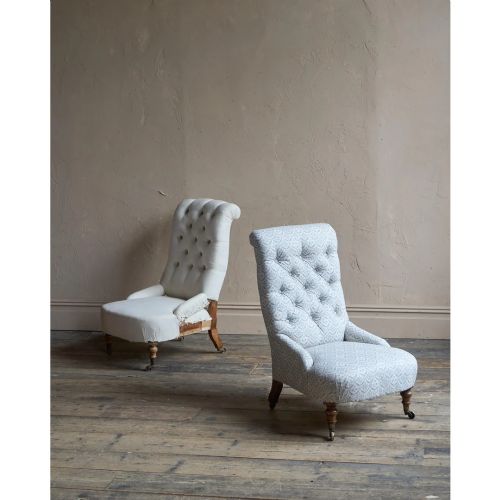
The profile is typically low to the floor, created historically for comfort near hearths or dressing tables, featuring characteristic deep buttoning across the backrest. These pieces appear in various configurations from tub backs to open arms, reflecting periods spanning the Victorian era through to the early twentieth century.
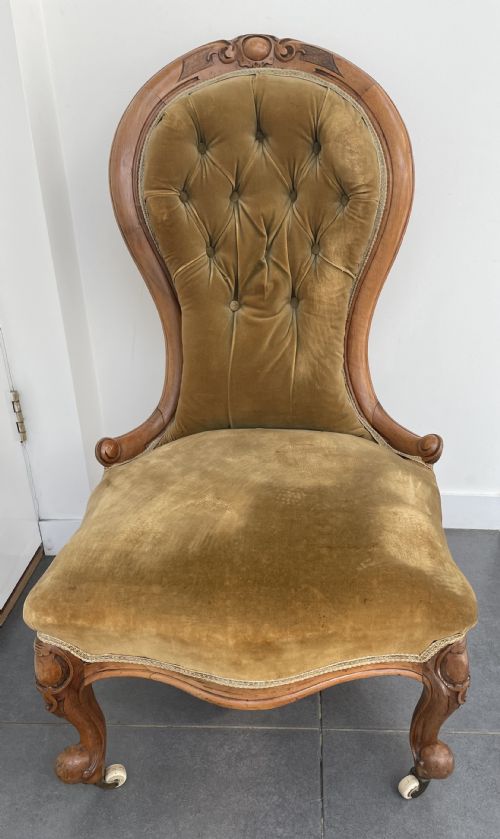
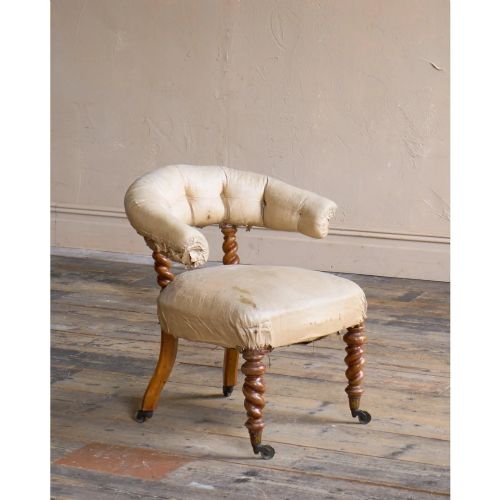
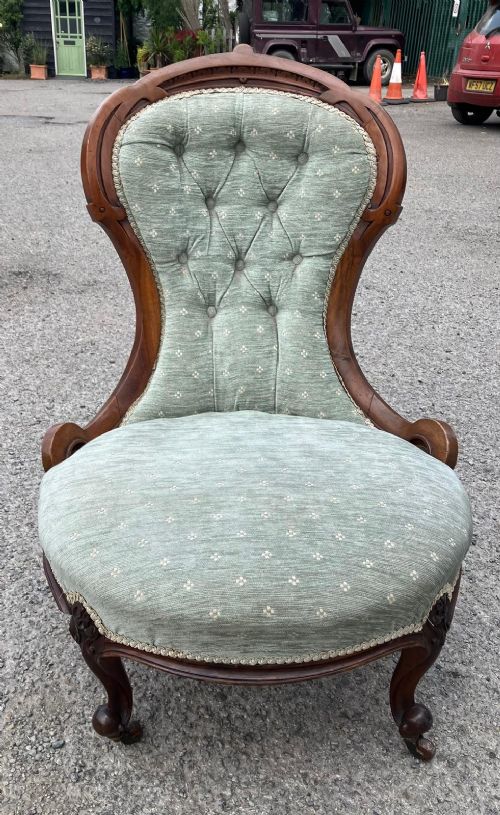
Makers and workshops of the nineteenth century produced these low-slung seats using sturdy hardwoods like mahogany, walnut, and oak, often finished with turned or barley twist supports. The selection here leans heavily towards Victorian walnut framing upholstered in velvet, calico, or specialist textiles.
How they were made
The structural framework of these low seats relies on traditional timber framing using dense hardwoods such as mahogany, walnut, oak, and rosewood, shaped into spoon backs, tub enclosures, or open arm configurations. Turners and joiners utilised techniques like barley twist detailing and brass castors to complete the lower frames.
Upholstery forms the defining characteristic, constructed with deep buttoning techniques that pull the fabric tight against internal padding to create geometric tufted patterns. Workshops employed durable covering materials including velvet, leather, and calico, occasionally finished with ceramic castors and exposed wood detailing.
The material palette spans velvet, leather, calico, and fabric, supported by brass, ceramic, and wood components.
What varies in quality
The distinction between ordinary production and superior craftsmanship rests in the crispness of the timber carving and the integrity of the internal frame construction. Finer examples display harmonious proportions, substantial hardwood frames like walnut or rosewood, and meticulous attention to the buttoning symmetry.
Attribution to notable workshops or makers elevates certain pieces, whilst the subtlety of turned legs, such as fine barley twists or aesthetic movement details, marks out better manufacturing. The choice of secondary woods and the original execution of the upholstered springs and tufting dictate the overall resilience of the piece.
Howard and Sons·C. Hindley and Sons·Gillows
The Low Buttoned Armchairs Glossary
- Button back
- A style of upholstery where depressions are formed in the padding by stitches or buttons pulled tight to the frame, creating a diamond tufted pattern.
- Nursing chair
- A low-seated nineteenth-century chair originally designed for women to nurse infants, typically built without high arms to accommodate voluminous dresses.
- Slipper chair
- An upholstered chair with very low legs, traditionally kept in a bedroom for sitting whilst putting on shoes.
- Tub back
- A curved, enclosed upholstered backrest that flows continuously into low arms, creating a rounded enclosure resembling a half-tub.
- Barley twist
- A type of decorative woodwork turned in a helical spiral resembling a twist of barley sugar, popular on nineteenth-century furniture legs and frames.
Low Buttoned Armchairs: Frequently Asked Questions
What is a low buttoned armchair?
These are compact nineteenth-century seats designed with low profiles and deep button tufting across the backrest, encompassing forms such as nursing chairs, slipper chairs, and bedroom chairs.
They were built in various regional styles, including English Victorian walnut frames and French imported pieces, intended for use in domestic bedrooms and drawing rooms.
Where were low buttoned armchairs used?
Historically, these low seats were placed in bedrooms, dressing rooms, and intimate drawing rooms where their compact size and low height suited relaxed domestic routines.
Today, they function well as accent seating in living spaces, reading corners, or studies where a smaller footprint is required.
How do I identify a Victorian example?
Victorian pieces frequently feature dark hardwoods like walnut or mahogany, often combined with spoon-backed framing, ceramic castors, and rich velvet or leather upholstery.
Look for traditional construction methods, such as hand-turned barley twist legs and dense interior stuffing beneath the buttoned fabric.
Can I recover a buttoned armchair?
Many antique chairs are offered specifically for recovering, allowing buyers to select modern or traditional fabrics that suit contemporary interiors.
When reupholstering, traditional deep buttoning techniques should be preserved to maintain the correct tension and aesthetic profile of the original design.