



Low Breakfront Shelf
A low breakfront shelf offers a stately linear profile for displaying volumes, uniting architectural presence with domestic proportion.
Low Breakfront Shelf
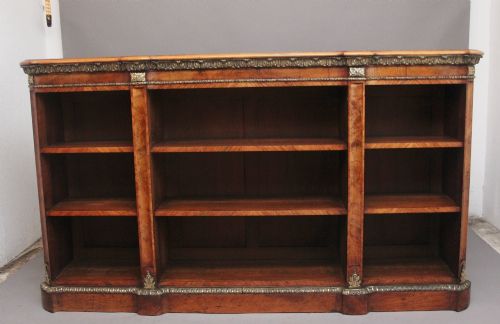
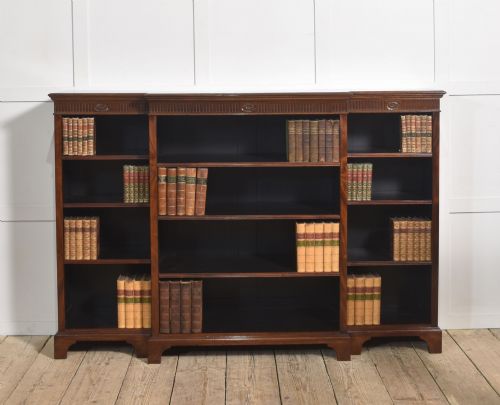
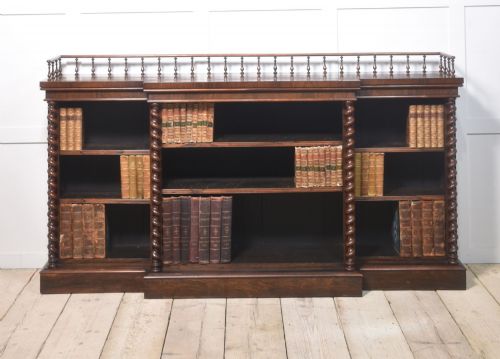
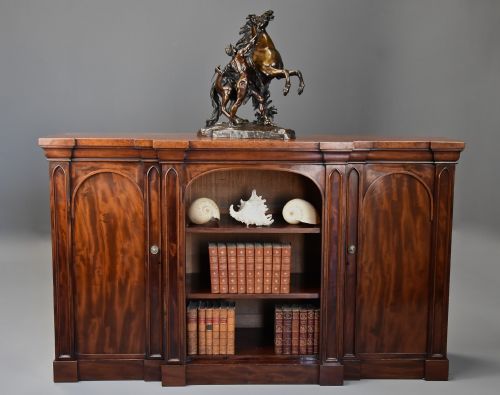
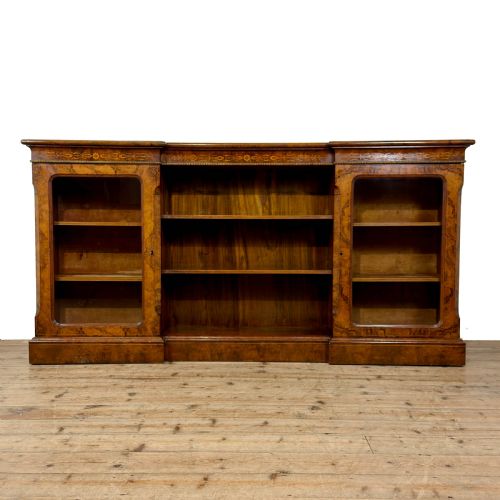
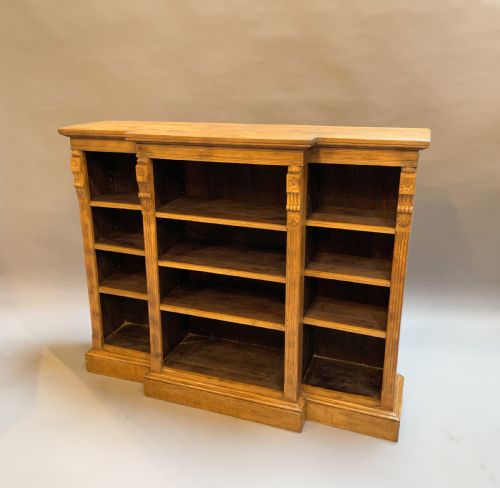
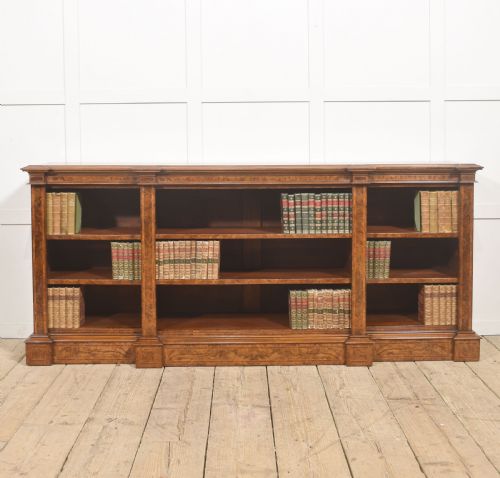
A low breakfront shelf provides accessible tiering for libraries and living spaces, taking its form from architectural projection where the central section steps forward from the flanking wings. When searching for a low breakfront shelf, buyers frequently encounter open bookcase formats constructed in mahogany, rosewood, and walnut across the nineteenth and early twentieth centuries.
The selection ranges from Regency rosewood examples featuring brass or ormolu mounts to substantial Victorian oak and walnut pieces with Gothic or classical influences. Edwardian iterations also appear alongside Napoleon III designs, maintaining the distinctive recessed and projecting facade across varied domestic scales.
Makers such as Johnstone and Jeanes, Maple and Co., and Richard Bridgens contributed notable examples to this tradition, utilising fine cabinet woods and decorative metal mounts. These pieces function primarily as open bookcases or side cabinets, often incorporating adjustable shelving and parcel gilding.
Differentiating quality in construction and detail
Quality depends upon the selection of timber veneers and solid hardwoods, where deeply figured burr walnut or richly grained rosewood indicates superior material expenditure. Plain mahogany and standard oak represent more utilitarian domestic production.
The execution of metal mounts, such as fire-gilt ormolu versus simpler brass fittings, marks the distinction between high-end commission work and standard cabinetmaking. Finely cast mounts and meticulous parcel gilding elevate the piece.
Periods represented span the early nineteenth century through the Edwardian era, encompassing Regency, Victorian, and Napoleon III styles.
Johnstone and Jeanes·Maple and Co.·Richard Bridgens
The Low Breakfront Shelf Glossary
- Breakfront
- A piece of furniture having a central section that projects forward from the flanking wings. This architectural arrangement creates shadow and depth across the facade.
- Ormolu
- Gilt bronze applied as a decorative mount upon furniture. It provides metallic contrast against dark hardwoods such as rosewood and walnut.
- Parcel gilt
- Partially covered in gold leaf or gold paint to highlight specific carved details or mouldings. It frequently complements ormolu mounts on nineteenth-century cabinetwork.
- Dummy books
- Artificial book spines applied to conceal storage compartments or side cabinet doors. They maintain the visual rhythm of a library shelf while serving a secondary function.
Low Breakfront Shelf: Frequently Asked Questions
How are these shelves used?
These pieces serve primarily as open bookcases or low side cabinets for holding libraries and decorative objects within reception rooms.
Their reduced height allows the top surface to function as an additional display area for lamps, bronzes, or collections.
What woods were commonly used?
Makers utilised dense imported hardwoods such as mahogany and rosewood, alongside native English oak and walnut.
Figured veneers like burr walnut were frequently applied to the principal exterior surfaces for decorative effect.
How do you date a breakfront bookcase?
Stylistic indicators such as Regency brass inlay, Victorian Gothic tracery, or Edwardian proportions help establish the period of manufacture.
The presence of maker stamps or specific metal mount styles also assists in determining the decade.
Are the shelves adjustable?
Many library examples incorporate adjustable wooden shelving supported by rackwork or brass pin systems.
This adaptability accommodates volumes of varying heights within the recessed and projecting bays.