
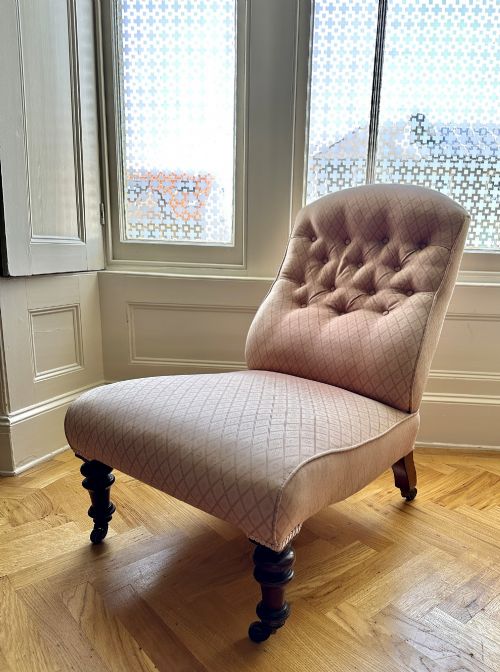

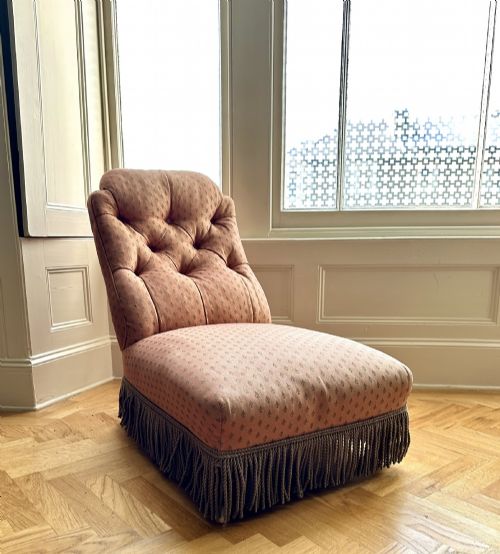

Low Back Slipper Seat
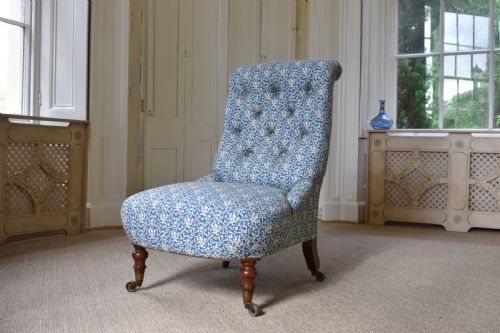
A low back slipper seat offers a low-slung perch designed for comfort in bedrooms and dressing rooms.
Low Back Slipper Seat
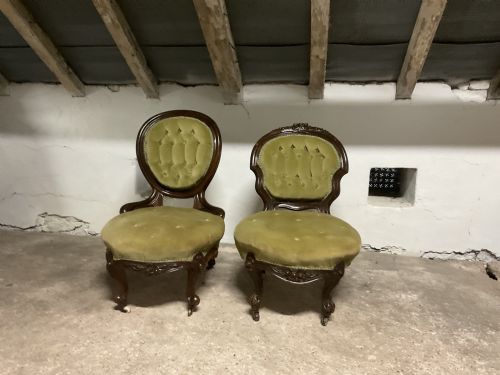
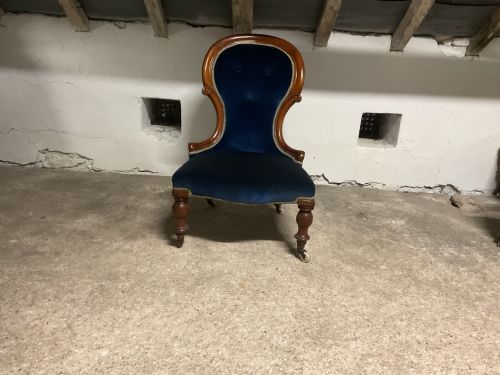
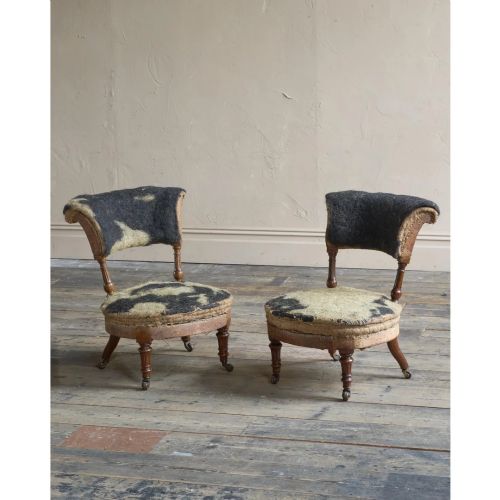
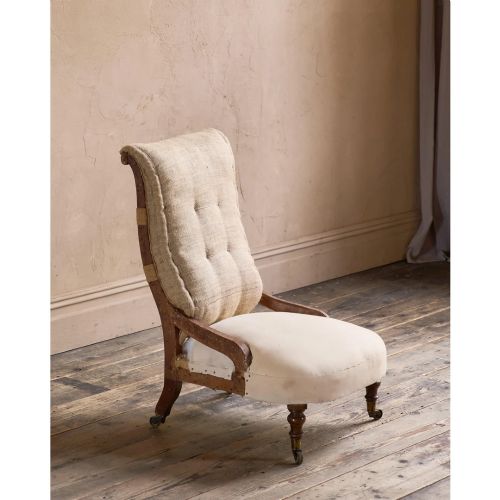
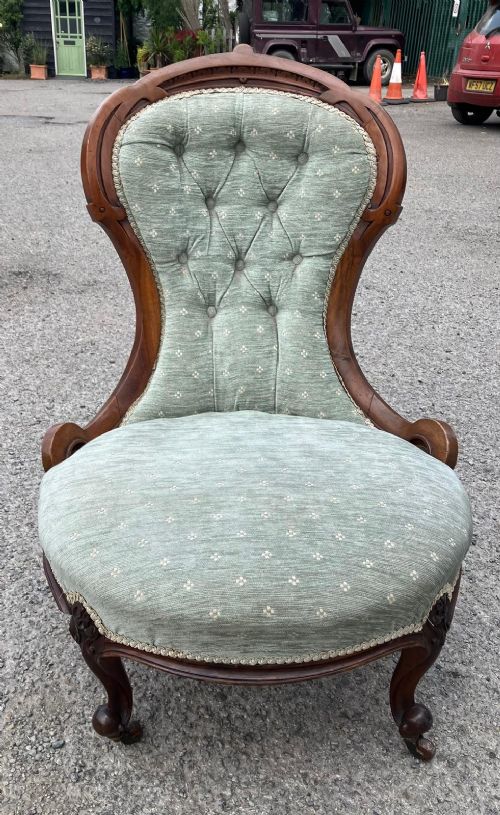
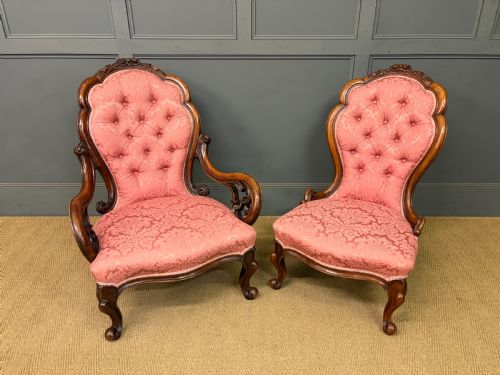
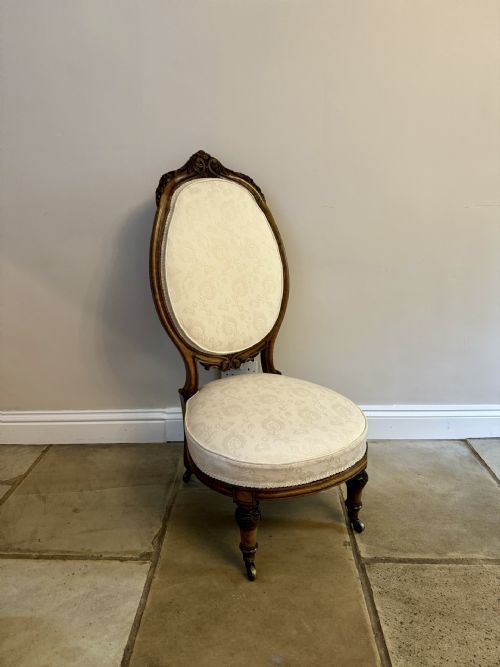
A low back slipper seat is typically encountered as a Victorian walnut or mahogany nursing chair, often featuring a low seat designed to facilitate dressing. These pieces appear alongside related bedroom chairs, salon chairs, and occasional chairs spanning the nineteenth century.
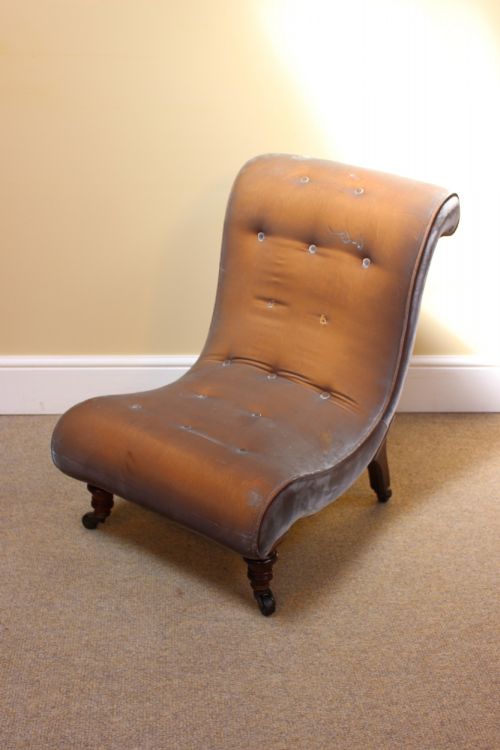
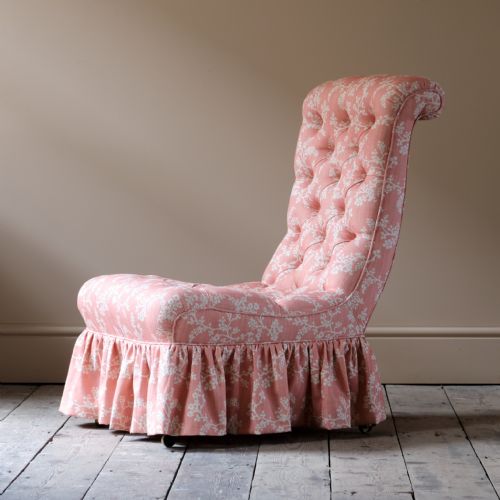
The form encompasses variations such as button-back designs, spoon-backs, and low-slung frames originating from Victorian, Edwardian, and Regency periods. Makers such as Howard and Sons and Gillows produced notable examples within these classifications.
How they were made
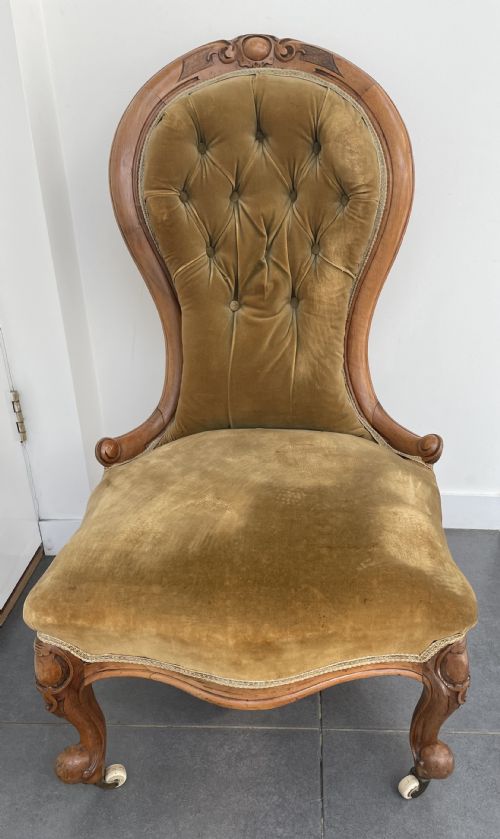
Frames are constructed from hardwoods such as walnut and mahogany, occasionally complemented by giltwood, ebonised wood, or brass elements. Carved details adorn many of the wooden structures.
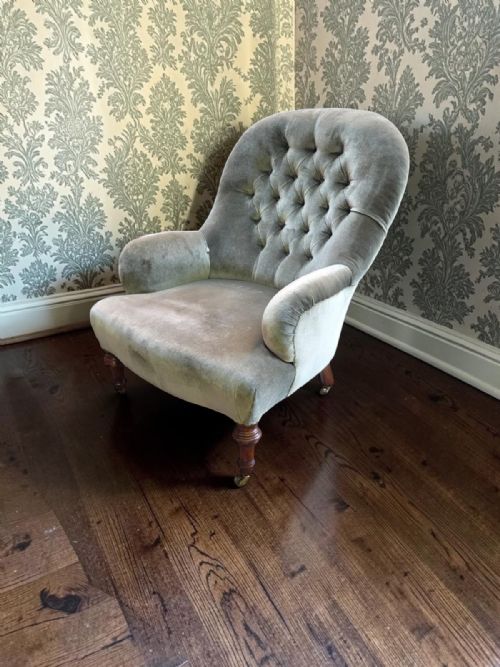
Upholstery techniques involve deep buttoning, fabric coverings including velvet, and fringe detailing. Frames are supported by internal webbing and stuffing tailored to low-profile seating.
Some nineteenth-century examples are exceptionally diminutive, designed strictly for the cramped dressing rooms of the era.
What varies in quality
The refinement of the carved woodwork and the choice of primary timber establish the baseline of a piece, with figured walnut and solid mahogany sitting above simpler secondary woods. Maker attribution, such as stamps by Gillows or Howard and Sons, elevates the standing of a frame considerably.
The execution of the upholstery work, from the precision of buttoning to the handling of edge finishes like fringe, dictates the overall finish. Proportion and balance within the low-slung frame separate standard vernacular pieces from masterworks.
Howard and Sons·Gillows·R Whytock of Edinburgh
The Low Back Slipper Seat Glossary
- Spoon-back
- A chair back carved with a concave oval shape resembling the bowl of a spoon, designed to fit the human spine. This style is frequently found on mid-nineteenth-century nursing chairs.
- Button back
- An upholstery technique where depressions are created by pulling ties or threads through the padding to secure buttons in a geometric pattern. It provides both structural firmness and decorative depth.
- Nursing chair
- A low-seated armchair historically utilised by women for nursing infants or dressing. These pieces share forms with slipper seats.
- Giltwood
- Wood that has been coated with a thin layer of gold leaf or gilt powder. It appears on decorative frames from the nineteenth century.
Low Back Slipper Seat: Frequently Asked Questions
What is a low back slipper seat?
A low back slipper seat is a low-slung chair traditionally used in bedrooms for putting on shoes or garments.
These pieces typically date from the nineteenth century and feature compact proportions designed to sit close to the floor.
How do I identify a Victorian nursing chair?
Victorian nursing chairs are characterised by low seats, exposed mahogany or walnut frames, and frequently button-backed upholstery.
They often appear with carved woodwork and short legs designed for bedroom use.
Where should I place a slipper chair?
Slipper chairs suit bedrooms, dressing rooms, and occasional seating areas where a compact profile is beneficial.
Their low height makes them suitable for dressing tables or intimate corners.
What woods were used for these chairs?
Nineteenth-century makers primarily utilised walnut and mahogany for the exposed frames of these chairs.
Ebonised finishes, giltwood, and brass accents also appear across various styles.