


Low Arm Club Chair
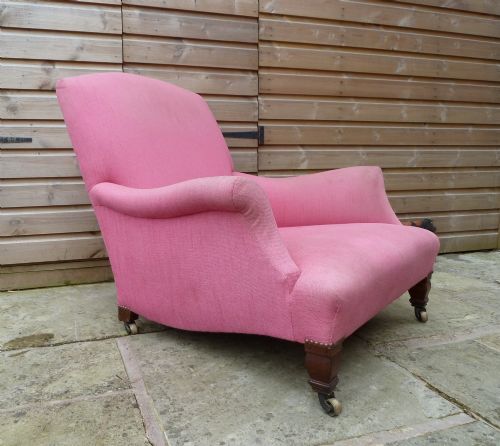
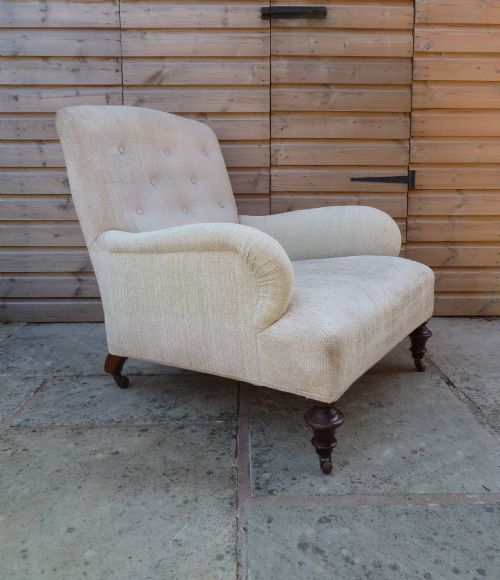
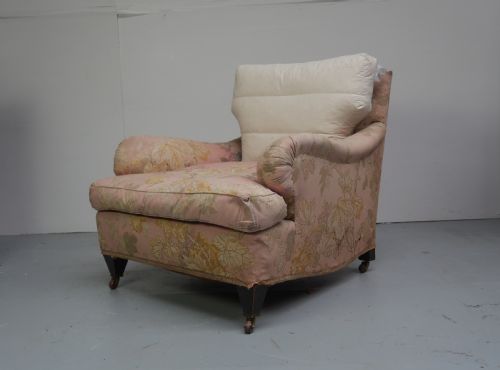
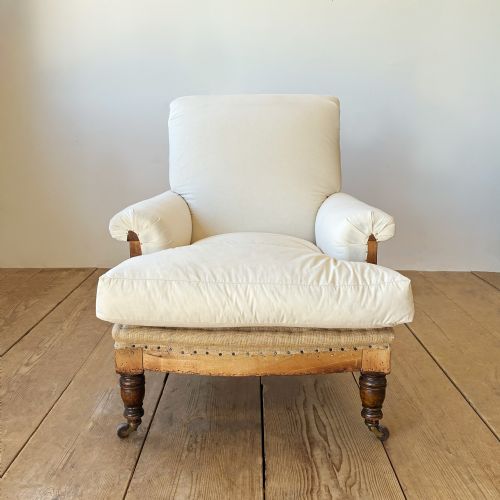
A low arm club chair brings deep-seated comfort and understated English country house character into a room.
Low Arm Club Chair
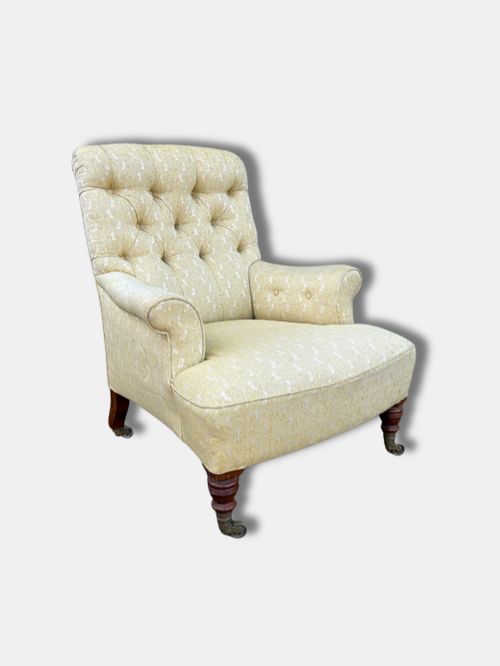
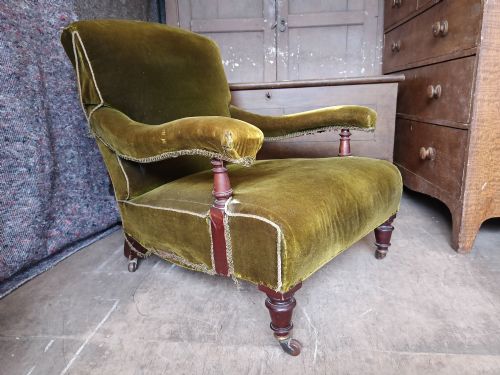
When you search for a low arm club chair, you look for a low-slung, upholstered seat designed for deep relaxation. These pieces span the Victorian and Edwardian periods up to the 1930s, often following the comfortable proportions established by notable makers.
The versions you meet most frequently on this page carry the distinct low profile of the Howard style or Bridgewater armchair. They arrive in forms ranging from traditional English country house seating to 1930s Art Deco and French Napoleon III designs.
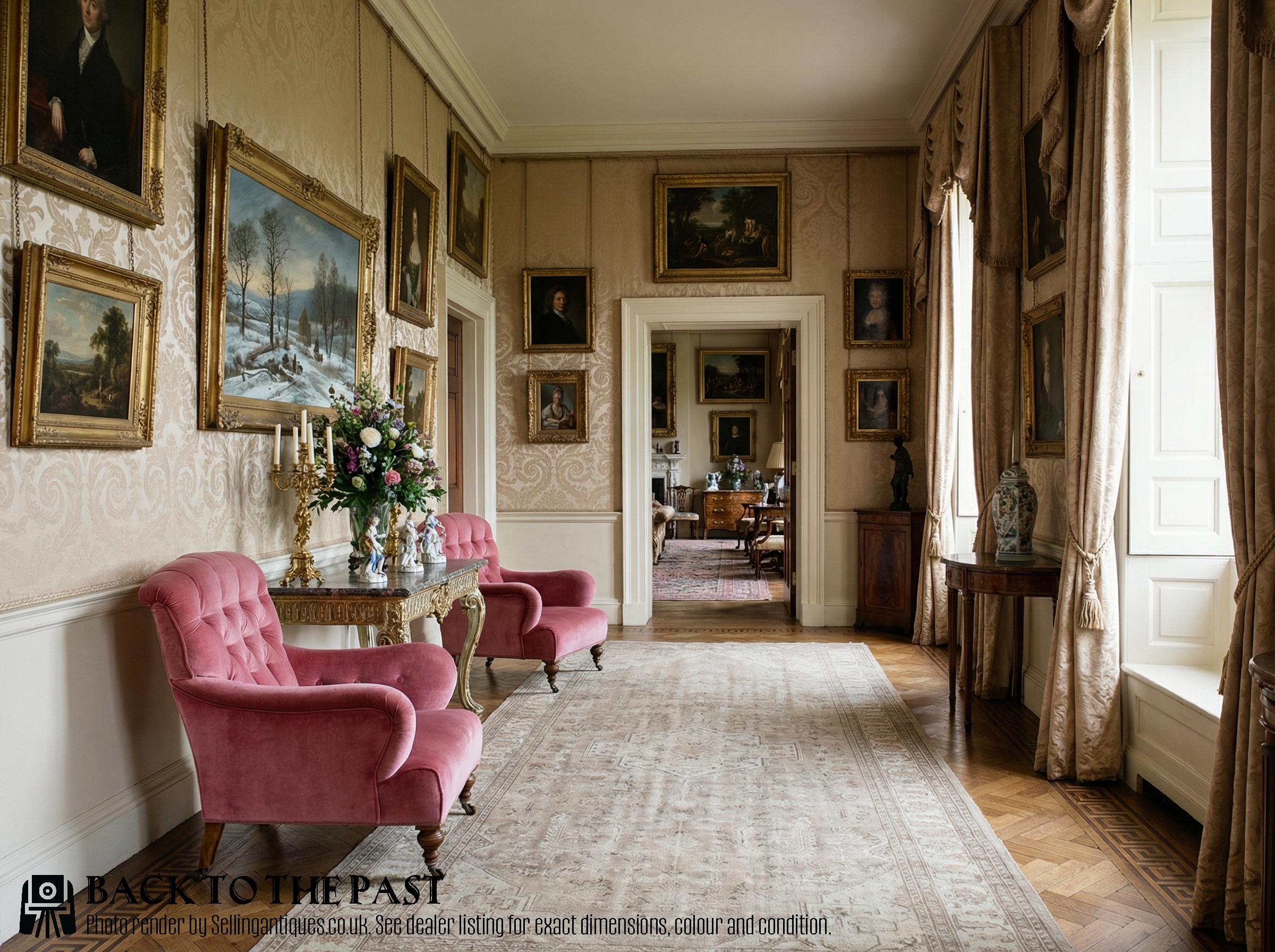
Most examples function as low armchairs with generous proportions, built for lounging rather than formal sitting. Their presence anchors a drawing room or study with informal elegance and historic charm.
What varies in quality
The distinction between ordinary output and superior quality rests in the integrity of the frame and the depth of the springing. Finer pieces demonstrate careful proportioning in the low arms and balanced weight across the wooden substructure.
Upholstery execution and material selection further separate the tiers, with top-tier examples retaining original maker stamps or high-grade textile finishes. The harmony between the low profile and the internal support dictates the overall success of the piece.
Periods represented span the Victorian era, Edwardian years, and the 1930s, alongside nineteenth-century English country house pieces.
Howard and Sons·Hampton and Sons·Waring and Gillow
The Low Arm Club Chair Glossary
- Howard style
- A nineteenth-century armchair design characterised by low arms, deep seating, and exceptional comfort. Makers often emulated this blueprint for country house seating.
- Bridgewater armchair
- A traditional upholstered seating form with low, rolled arms and a deep seat. This style provides relaxed proportions suited to domestic comfort.
- Button back
- An upholstery technique where buttons are pulled deep into the padding to secure the fabric and create a quilted pattern. This method adds both visual texture and structural firmness.
- Calico
- A plain-woven textile frequently used as the foundational inner upholstery layer on nineteenth-century seating before the final decorative fabric is applied.
Low Arm Club Chair: Frequently Asked Questions
How do I style these chairs at home?
These armchairs suit studies, drawing rooms, and reading corners where comfort takes priority. Their low profile prevents them from dominating smaller spaces while offering generous seating depth.
Pair them with reading lamps and traditional wooden side tables to complement their historic English country house origins.
Are these chairs comfortable for daily use?
The deep springing and substantial padding make these chairs exceptionally well-suited for regular daily relaxation. Their low arms provide a natural resting place when sitting back.
Original interior construction methods focused heavily on ergonomic comfort, ensuring they remain practical for modern living.
How can I tell the period of a chair?
Dating relies on examining the frame timber, upholstery methods, and stylistic cues such as Victorian buttoning or Art Deco geometry. Maker stamps and labels provide the clearest indication of origin and date.
Comparing the proportions and materials against documented nineteenth and twentieth-century examples helps confirm the era of manufacture.