

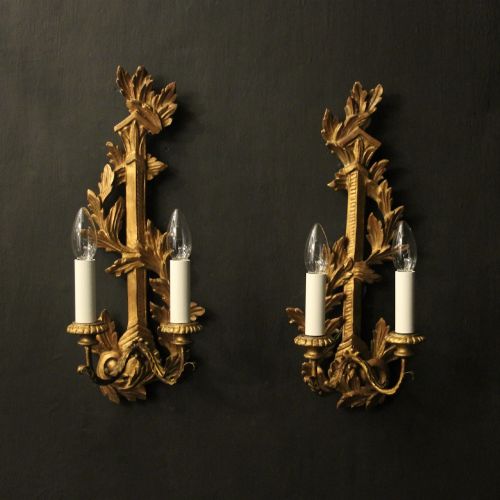
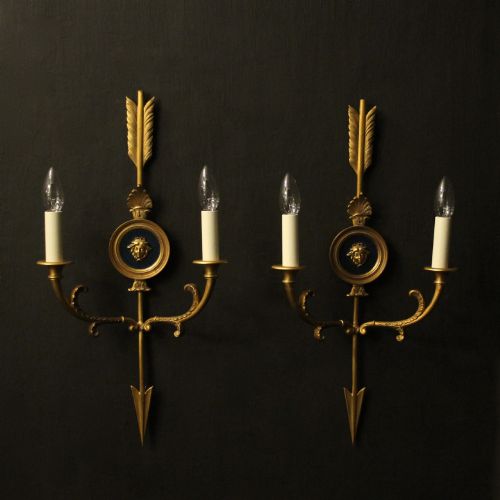
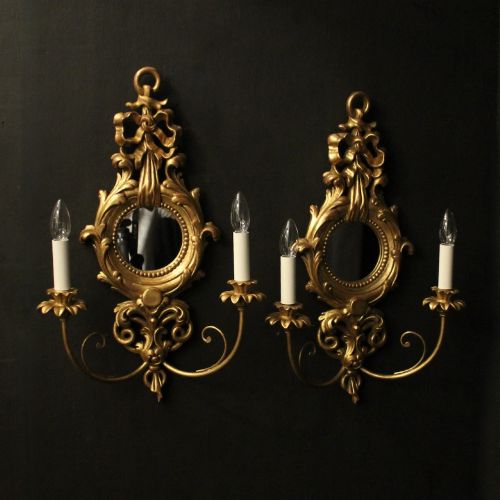
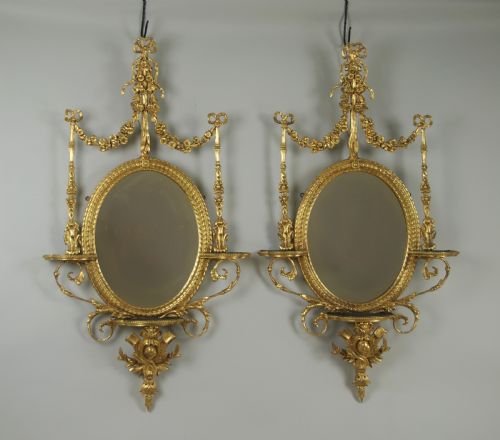


Louis XVI Wall Brackets
Louis xvi wall brackets bring classical symmetry and refined French ornament directly to an interior wall.
Louis XVI Wall Brackets
Louis xvi wall brackets encompass a range of decorative fixtures and small architectural ledges designed to project from a vertical surface. The selection spans authentic eighteenth-century examples alongside nineteenth-century and early twentieth-century revival pieces modelled in the same neoclassical vocabulary.
Most items appearing under this classification present as wall lights, girandoles, or sconces furnished with arms for candles or electric bulbs, though functional display shelves and consoles also emerge. These pieces trace their origins largely to French workshops, with occasional Victorian English interpretations joining the mix.
Buyers encounter materials running from carved giltwood and gesso to cast bronze, ormolu, and polished brass. The overarching aesthetic relies upon strict classical restraint, symmetry, and architectural motifs characteristic of the late eighteenth-century French court.
Materials and construction
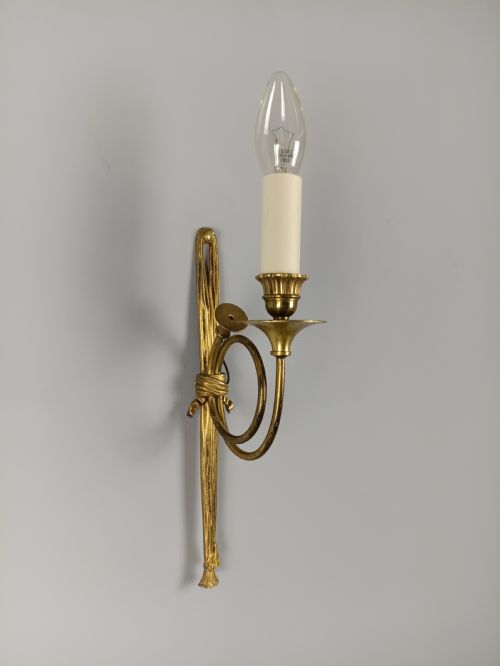
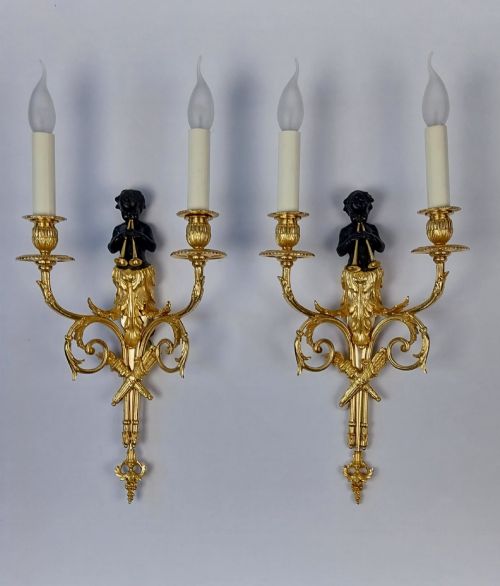
Makers utilised cast bronze, brass, and ormolu to form the structural arms and backplates of metal sconces, often applying a fine layer of gold leaf or gilt. This metalwork required skilled casting, chasing, and mounting to achieve crisp relief on acanthus leaves, ribbons, and classical urns.
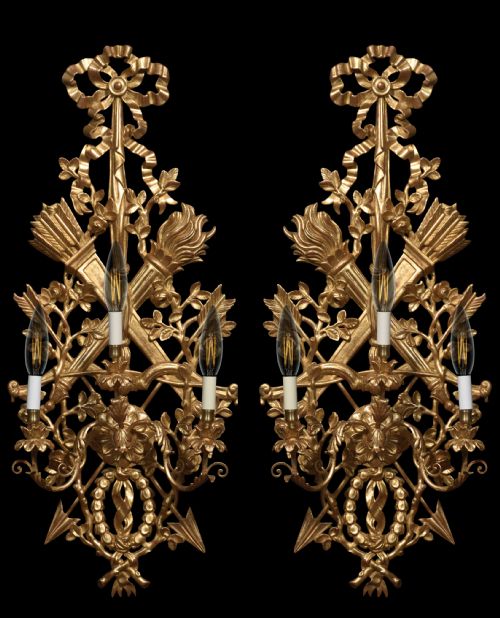
Wooden examples relied upon carved giltwood and gesso applied over a timber base, particularly for girandoles, pier mirrors, and display shelves. Artisans carved intricate details into the wood before laying gold leaf by hand to create a luminous reflective surface.
Painted and polychrome finishes appear alongside solid gilding, offering varied surface textures from stark white painted accents to silvered bronze. Each technique demanded precise hand-finishing, whether smoothing gesso prior to gilding or patinating bronze mounts.
Louis XVI Wall Brackets Retail Price Guide 2026
Typical asking prices for louis xvi wall brackets among the pieces listed under this phrase on Sellingantiques today, from the lower quarter to the upper quarter. They describe what is for sale here now, not the wider market.
Cherubs and playful winged figures frequently peer out from behind candle arms, reminding us that even strict neoclassical design kept a sense of theatre.
Assessing quality
Quality in these fixtures rests primarily upon the crispness of the casting or the depth of the wood carving. Finer pieces display sharply defined acanthus foliage, clean bead-and-reel mouldings, and well-chased bronze details rather than soft, blurred edges.
The choice of surface treatment dictates much of the visual weight, with thick, hand-applied gold leaf or genuine ormolu outlasting thinner electroplated brass finishes. The integrity of the underlying gesso and timber on carved giltwood items also determines how well the structure survives centuries of mounting.
Proportion and structural balance separate standard production from superior work. A well-designed bracket distributes the weight of its arms and sconces evenly against the backplate, maintaining classical harmony without appearing heavy or clumsy.
The Louis XVI Wall Brackets Glossary
- Ormolu
- Finely ground high-carat gold applied as an amalgam to a bronze base, creating a rich golden surface. This technique was widely employed in French neoclassical metalwork.
- Gesso
- A plaster-like mixture applied to wood surfaces as a smooth base for gilding. It allows carvers to achieve sharp decorative reliefs.
- Girandole
- An ornamental branched wall light or sconce incorporating a mirror backplate. The reflective glass serves to amplify the candlelight within a room.
- Neoclassical
- The dominant late eighteenth-century style drawing inspiration from classical antiquity. It favours straight lines, symmetry, urns, and foliate swags over baroque curves.
- Appliqué
- A decorative wall sconce or mount fixed directly onto a surface. The term often describes French fixtures with multiple candle arms.
Louis XVI Wall Brackets: Frequently Asked Questions
How do I mount these safely?
Most brackets and sconces require sturdy wall anchors suited to the weight of cast bronze or heavy giltwood. Ensuring the fixing reaches a secure stud or brickwork prevents any strain on the plaster.
Professional installation is recommended for wired wall lights to comply with current electrical standards. The original backplates often feature designated screw holes designed for secure vertical hanging.
Are these wired for electricity?
Many surviving wall lights have been adapted for modern electric bulbs over their lifespan. Some retain their original candle-holders or sockets suited to low-wattage historical use.
Buyers should inspect the internal wiring of any prospective purchase. Rewiring is a straightforward task for a qualified electrician without altering the antique metalwork.
How do I clean giltwood safely?
Giltwood surfaces require gentle dusting with a soft, dry brush to remove accumulated particles. Moisture can damage delicate gesso and lift fragile gold leaf.
Harsh chemical cleaners must be avoided entirely on both gilded wood and patinated bronze. Professional conservation is best consulted for deeper cleaning of tarnished metal mounts.
How do I date a revival piece?
Nineteenth and early twentieth-century revival pieces often display construction marks, screw types, or electrical conversions that distinguish them from eighteenth-century originals. Examining the backplate and mounting hardware reveals the manufacturing era.
Stylistic cues also help, as Victorian and Edwardian makers frequently exaggerated neoclassical proportions or utilised machine-stamped brass alongside cast elements.