

Louis XVI Table
A louis xvi table brings neoclassical restraint and fine ormolu mounts to a room.
Louis XVI Table
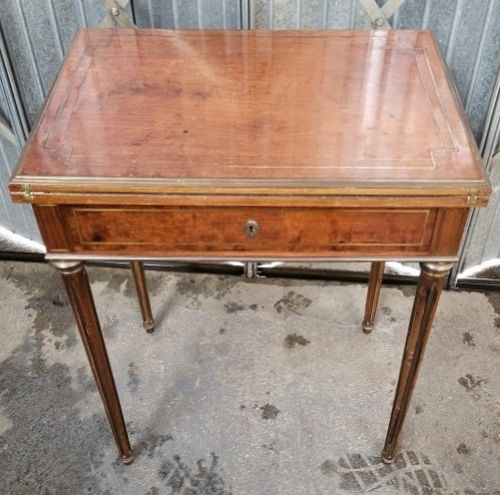
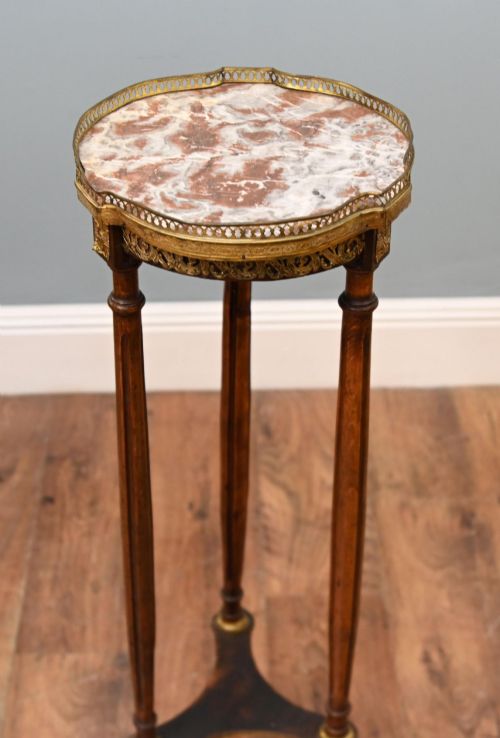
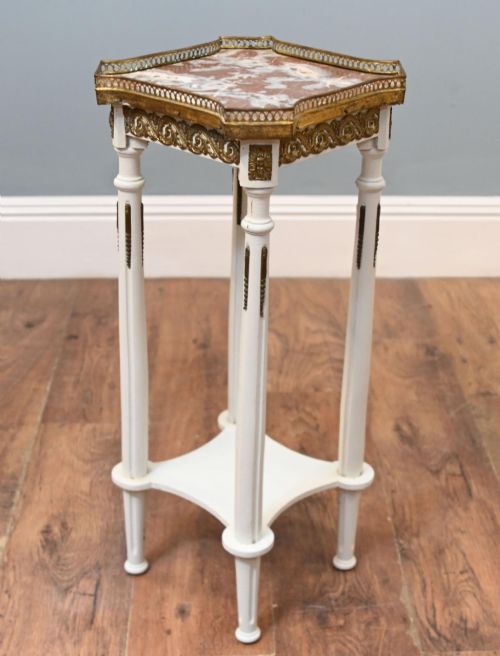
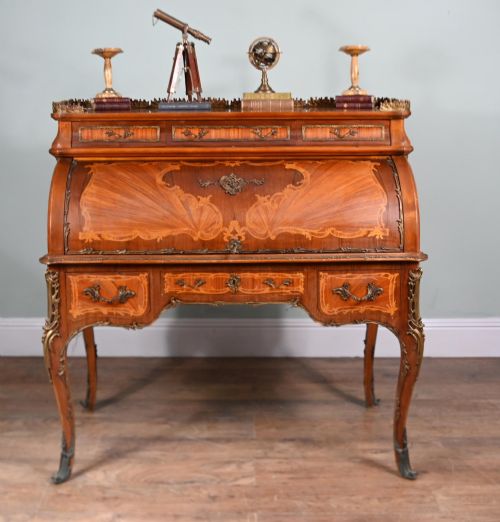
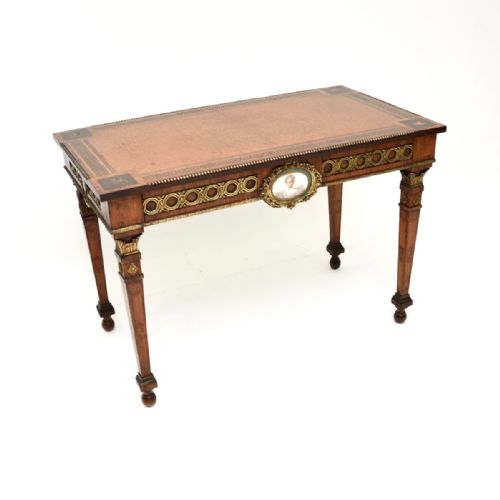
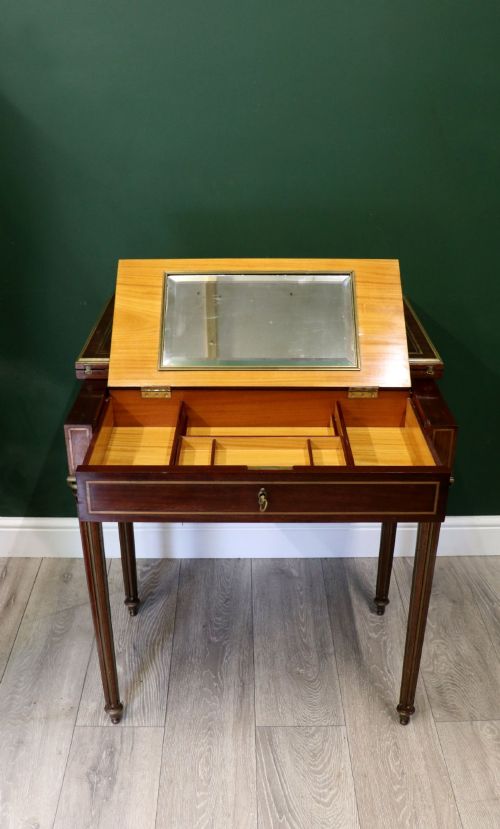
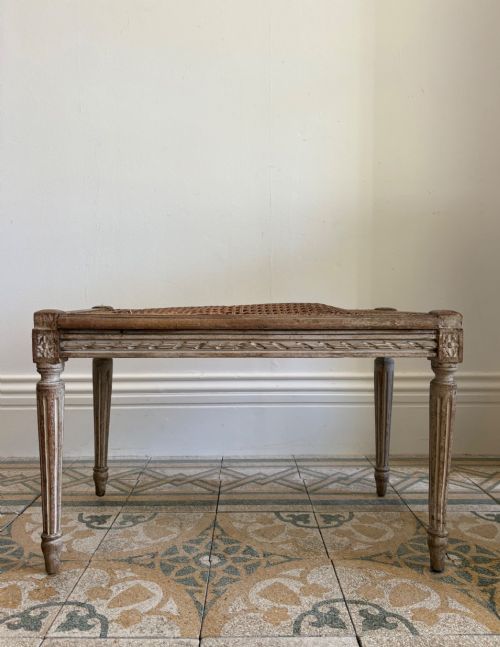
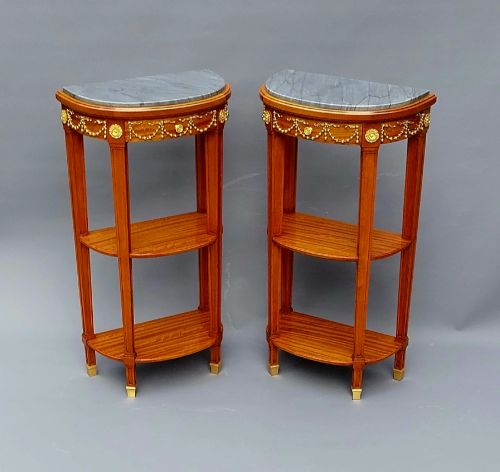
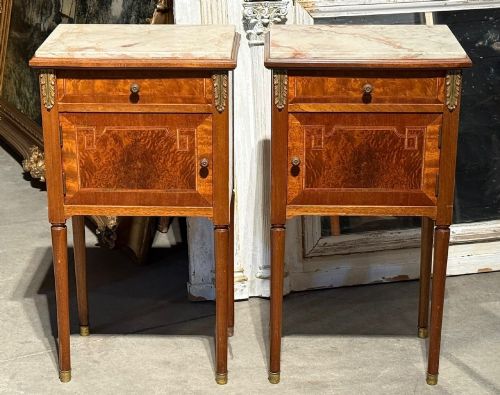
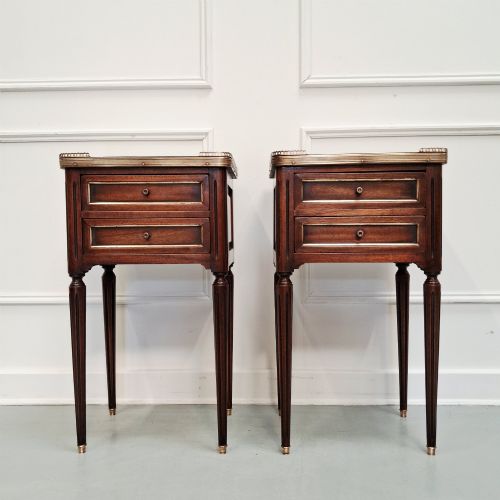
The version most commonly met on this page is the occasional or bedside table, frequently topped with marble and detailed with gilt bronze mounts. Alongside these stands, larger console tables and writing desks appear, reflecting the formal entertaining and study habits of their periods of manufacture.
Makers and workshops across France produced these pieces using traditional timber foundations embellished with marquetry, inlay, and gilt brass. The selection encompasses both eighteenth-century originals and later revival pieces from the nineteenth and twentieth centuries.
Materials and technique
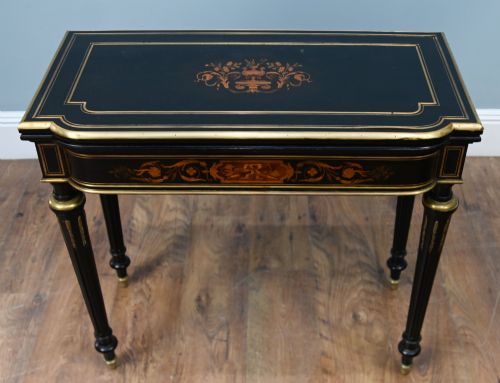
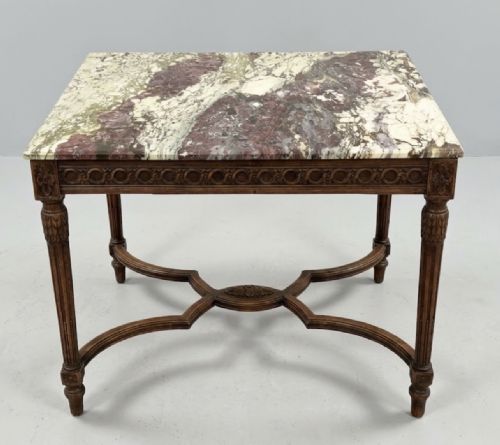
Cabinetmakers constructed the foundational carcasses of these pieces using timbers such as walnut, mahogany, satinwood, and kingwood, often applying intricate marquetry patterns across the surfaces. Tops frequently feature shaped marble slabs, ranging from white varieties to veined examples like breccia, fitted securely to the wooden frames.
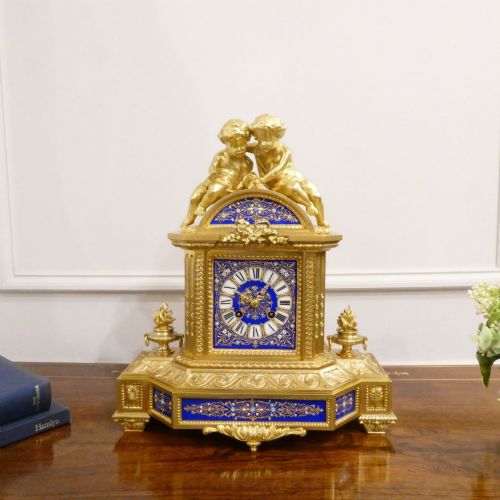
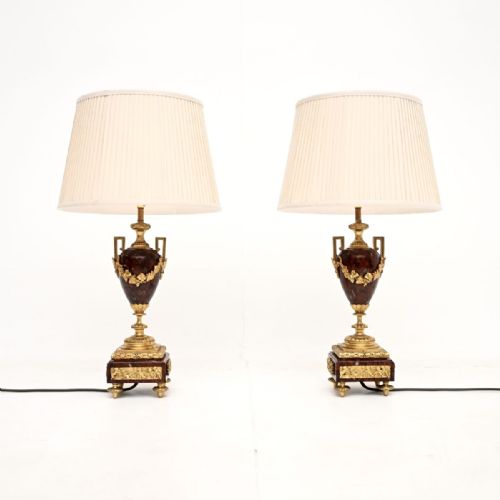
Gilt bronze and ormolu mounts provide the characteristic metallic enrichment, cast with decorative motifs and secured at corners, legs, and aprons. Giltwood carving appears on console bases and tables, combining hand-carved wooden elements with applied gold leaf finishes.
Louis XVI Table Retail Price Guide 2026
Typical asking prices for louis xvi table among the pieces listed under this phrase on Sellingantiques today, from the lower quarter to the upper quarter. They describe what is for sale here now, not the wider market.
Listings feature walnut, mahogany, and kingwood timbers paired with marble and gilt bronze across multiple periods.
Quality differences
The calibre of the bronze casting and subsequent fire-gilding dictates the visual sharpness of the mounts, where crisply chased details separate superior items from softer, flatter castings. Finer examples display meticulous hand-finishing on both visible surfaces and hidden structural joints.
Timber selection and the precision of the marquetry inlay determine the baseline excellence of the woodwork. Master workshops ensured that veneers remained stable and flush, whereas lesser examples show less refined timber matching and simpler joinery beneath the surface.
Felix-Alfred Ternisien·Japy Freres·Jean-Baptiste Delettrez·Achille Brocot·Henry Marc·Maison Millet·Paul Sormani·François Linke
The Louis XVI Table Glossary
- Ormolu
- Gilded bronze used for decorative mounts on furniture and clocks. The technique involves applying a finely ground mercury and gold amalgam to a bronze base before heating.
- Marquetry
- Decorative veneer work arranged in geometric or pictorial patterns across a wooden surface. Craftsmen cut thin slices of various coloured woods to assemble the design.
- Gueridon
- A small round table supported on one or more central columns. The form originated in seventeenth-century France and persisted through later revival periods.
- Demilune
- Half-moon shape characteristic of console and side tables designed to sit flat against a wall. This profile allows smaller tables to occupy narrow hallways or reception rooms.
- Breccia
- A composite marble stone made of angular fragments embedded in a fine-grained matrix. It yields richly patterned, multicoloured surfaces on table tops.
Louis XVI Table: Frequently Asked Questions
How do I spot a true eighteenth-century piece?
Authentic eighteenth-century examples exhibit construction methods, timber shrinkage, and hand-cut joinery consistent with the period of Louis XVI's reign. Wear patterns on touchpoints and traditional animal glues offer further clues to genuine age.
Revival pieces from the nineteenth century often employ standardised machine-sawn components and different secondary woods beneath the primary veneers. Examining the interior framework alongside the exterior style helps distinguish original eighteenth-century furniture from later nineteenth-century interpretations.
Are marble tops removable?
Most marble tops on these tables rest within a wooden rebate or upon a secured platform, held in place by their own considerable weight. Some are fixed with brackets, but many lift out entirely for transport.
Lifting a marble top requires care due to its weight and fragility. Checking how the stone interfaces with the wooden frame reveals whether it was designed to be removable.
Where should I place a console table?
Console tables fit naturally against entrance hall walls, beneath large mirrors, or in reception rooms where floor space is limited. Their flat backs and shallow depths prevent them from obstructing pathways.
Pairing a console with a matching mirror or placing decorative objects on top completes the traditional arrangement. Their decorative mounts and marble surfaces make them suitable focal points in formal living spaces.
How do I care for gilt bronze mounts?
Dust gilt bronze mounts regularly with a soft, dry artist's brush to prevent particle accumulation in the recessed chasings. Avoid harsh chemical cleaners that can strip the original fire-gilding.
Protect the metal from excessive moisture and direct sunlight. Professional conservation ensures the stable preservation of both the bronze surface and the underlying timber.