



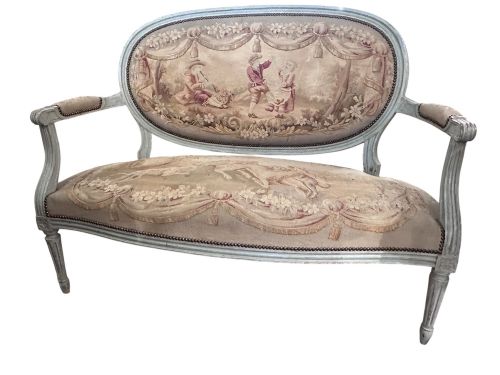


Louis XVI Style Settee
A louis xvi style settee brings neoclassical restraint and carved elegance to a room, offering refined seating with classical proportions.
Louis XVI Style Settee
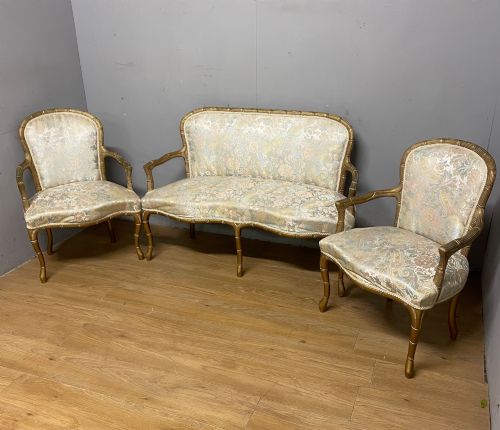
A louis xvi style settee encompasses French and English seating forms from the nineteenth and twentieth centuries, drawing heavily on eighteenth-century neoclassical design principles. These pieces typically manifest as two or three-seater sofas, canapés, daybeds, and hall seats, frequently adopting the Louis XVI or related French chateau and Regency aesthetics.
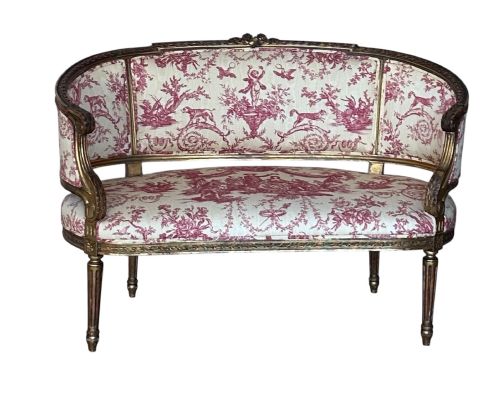
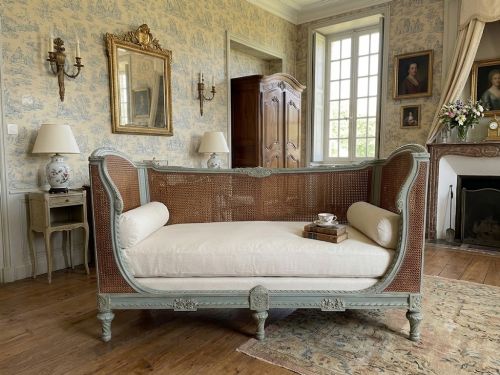
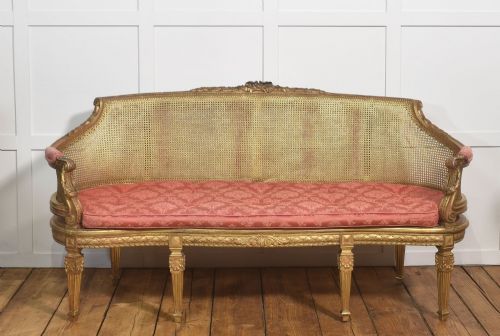
The buyer encountering this page meets pieces dominated by nineteenth-century manufacture alongside early twentieth-century examples dated around 1900, 1910, and 1920, plus occasional Regency work from 1800. Forms range from gilded showframe salon settees and corbeille sofas to painted cane day beds and walnut hall seats.
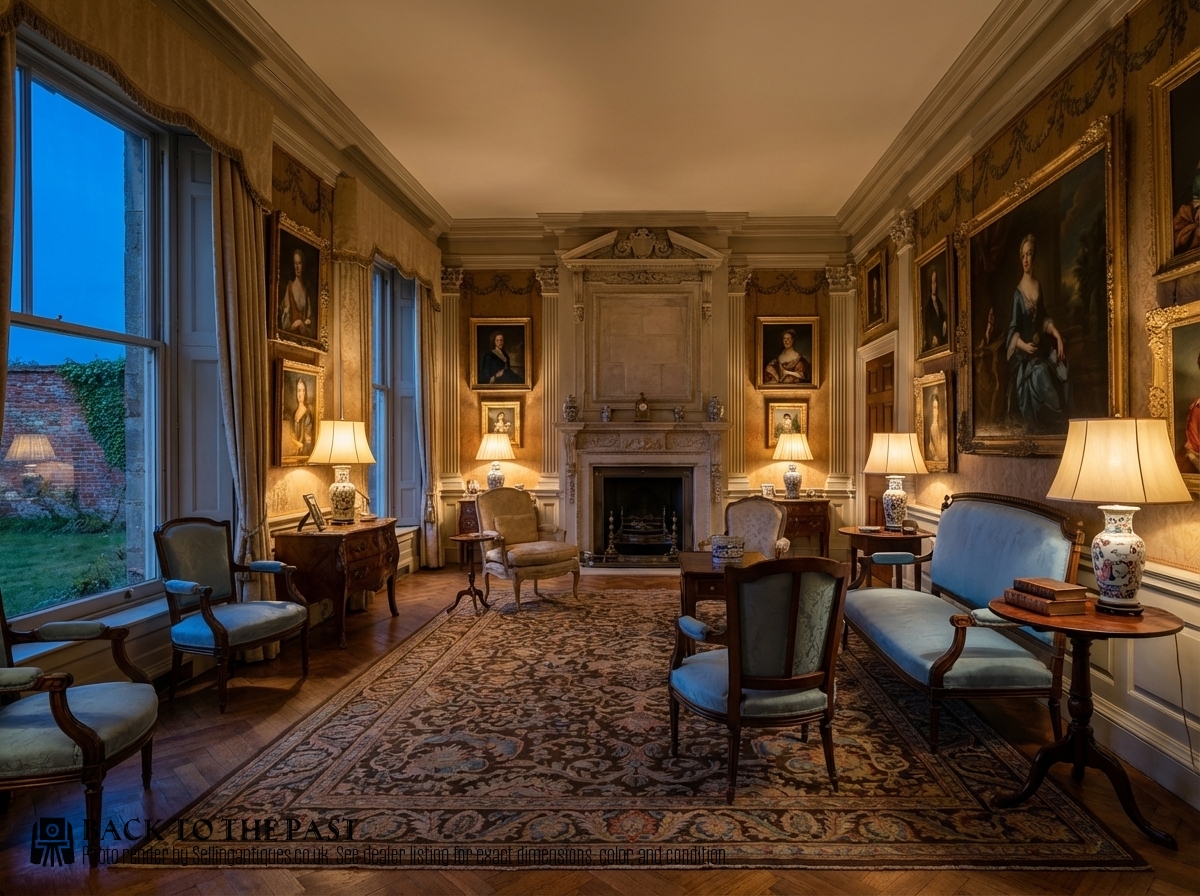
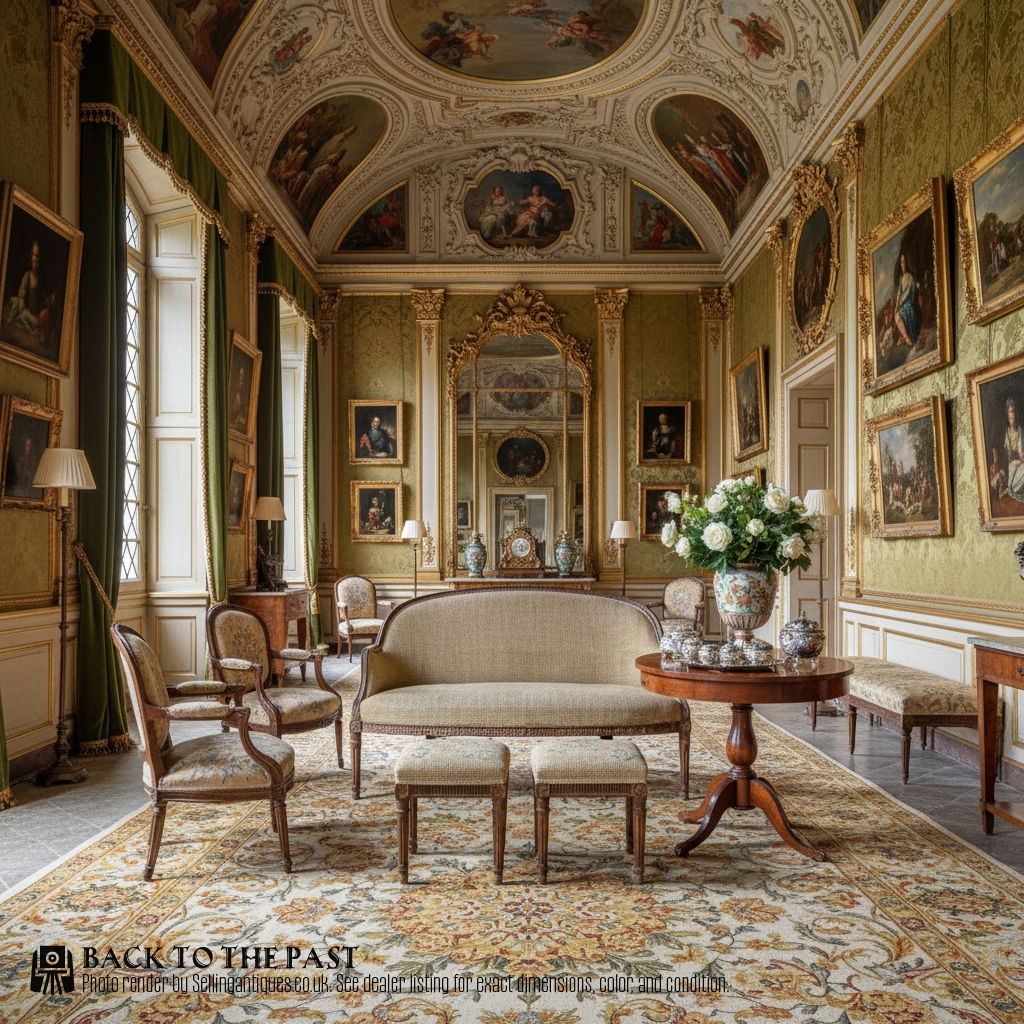
These seating pieces serve as formal focal points in drawing rooms, grand hallways, and elegant reception spaces. Their architectural lines and restrained ornamentation distinguish them from more exuberant rococo predecessors, aligning closely with classic interior schemes.
How they were made
Construction relies upon traditional timber framing, with beech, walnut, and general hardwoods providing the structural skeleton for these settees. Artisans shaped these frames through careful carving, often applying giltwood or painted finishes to the exterior surfaces.
Upholstery methods integrate diverse textile coverings such as fabric, linen, velvet, cotton, and woven cane panels. Showframes expose the carved woodwork around the back and arms, while cushioned seats provide traditional soft support.
Louis XVI Style Settee Retail Price Guide 2026
Typical asking prices for louis xvi style settee among the pieces listed under this phrase on Sellingantiques today, from the lower quarter to the upper quarter. They describe what is for sale here now, not the wider market.
Listings demonstrate materials ranging from giltwood and beech to cane, linen, velvet, and cotton across the nineteenth and twentieth centuries.
What varies in quality
The distinction between tiers of quality rests upon the crispness of the wood carving and the integrity of the giltwood or painted surface application. Finer examples display deeply defined neoclassical motifs and fluent joinery rather than shallow, mechanical shaping.
Material selection further defines the work, with dense hardwoods, substantial cane weaving, and high-grade textiles elevating the piece. The harmony between the original showframe structure and the upholstery determines the overall success of the finished object.
The Louis XVI Style Settee Glossary
- Giltwood
- Timber coated with a thin layer of gold leaf. This finish defines many formal nineteenth-century salon pieces.
- Canapé
- A traditional French term for a decorative sofa or settee. These often feature exposed carved wooden frames.
- Neoclassical
- A style reviving classical Roman and Greek motifs. It governs the straight lines and symmetry seen in these frames.
- Corbeille
- A basket-shaped furniture form with curved back and arms. It wraps around the sitter for an enclosed seat.
- Showframe
- A wooden structural skeleton left visible around the upholstered elements. It showcases the carving and finish.
Louis XVI Style Settee: Frequently Asked Questions
How do I identify a louis xvi style settee?
Look for straight tapered legs, geometric framing, and neoclassical carved details such as fluting or rosettes. These elements distinguish the style from curved rococo designs.
The materials typically include giltwood, painted beech, or walnut paired with traditional upholstery or cane panels.
Where should I place a settee in my home?
These pieces suit formal drawing rooms, large entryways, or reception spaces where their architectural lines can be appreciated. A hall seat or daybed variant also works in generous corridors.
Position the settee away from direct heat sources and strong sunlight to protect the giltwood, paint, and textile coverings.
What is the difference between a canape and a sofa?
A canapé is a traditional French term specifically denoting an ornamental upholstered settee with an exposed wooden frame. The evidence shows these terms used interchangeably for nineteenth-century French seating.
Both forms offer multi-person seating but canapés generally emphasise decorative wood carving along the top rail and arm supports.
How do I care for giltwood and painted frames?
Dust the carved wooden elements gently with a soft, dry cloth to prevent accumulation. Avoid chemical polishes that can lift or damage delicate gold leaf and painted finishes.
Inspect the joints periodically and maintain stable indoor humidity levels to preserve the underlying timber frame.