
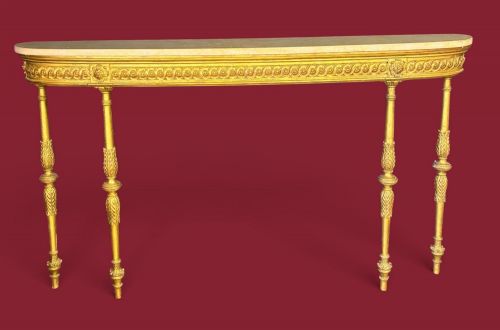


Louis XVI Style Console
A louis xvi style console brings architectural symmetry and classical restraint to a room, pairing carved giltwood or painted timber with cool marble.
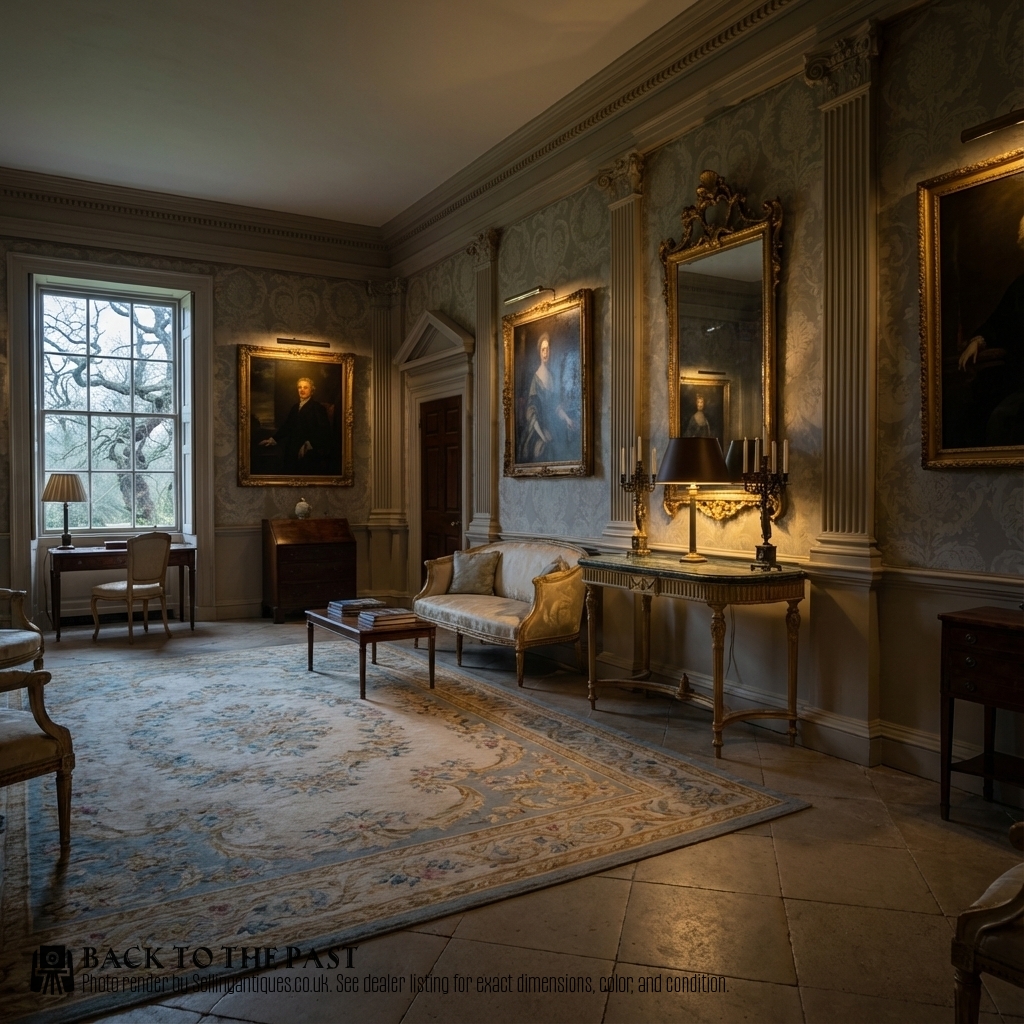
Defining the louis xvi style console
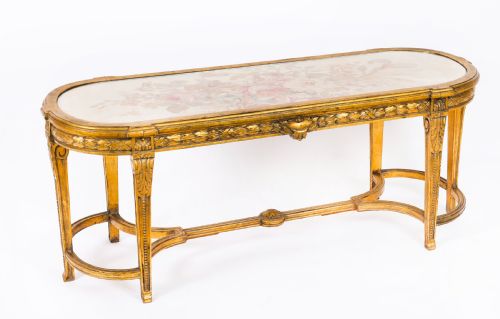
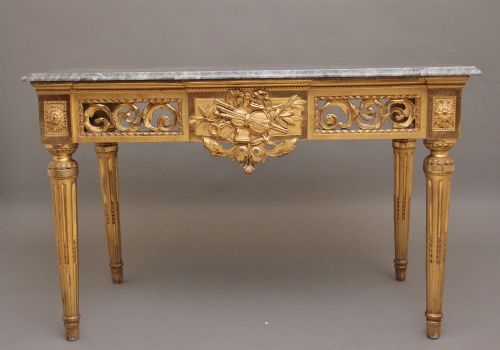
A louis xvi style console is a wall-fixing or freestanding pier table defined by classical proportions, straight tapering legs, and rectilinear or demi-lune geometry. The form draws on late eighteenth-century French design, though many examples encountered here date from the nineteenth century revival periods.
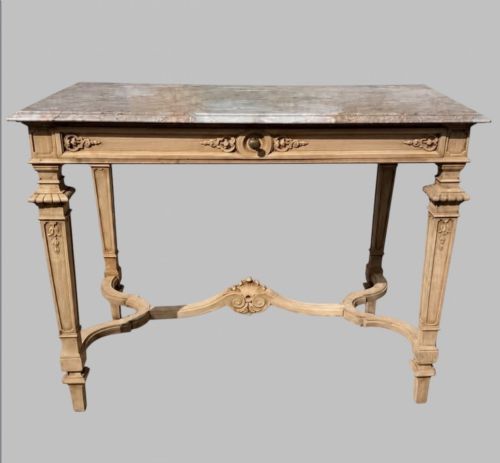
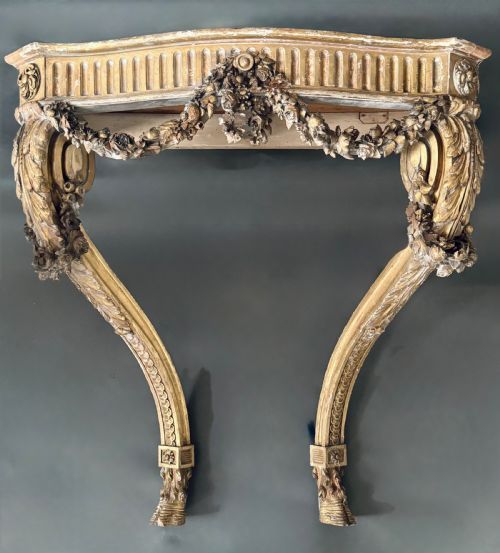
Surviving pieces span Italian and French workshops, appearing primarily as single tables or matched pairs designed to sit beneath pier glasses or mirrors. Makers worked extensively in giltwood, gesso, and walnut, often mounting the timber with heavy marble slabs.
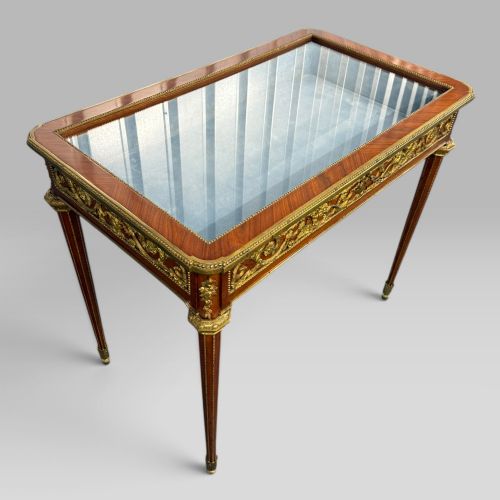
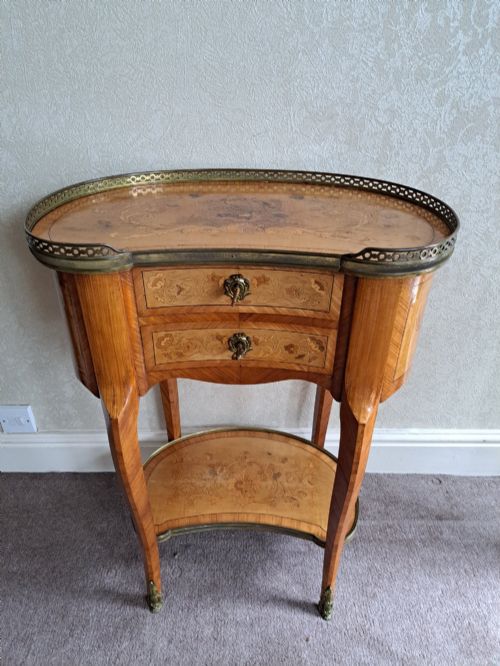
The evidence shows both grand exhibition pieces with intricate marquetry and simpler painted or gilded versions. Buyers find console tables ranging from compact nineteenth-century card-convertible formats to large carved giltwood bases designed for formal reception rooms.
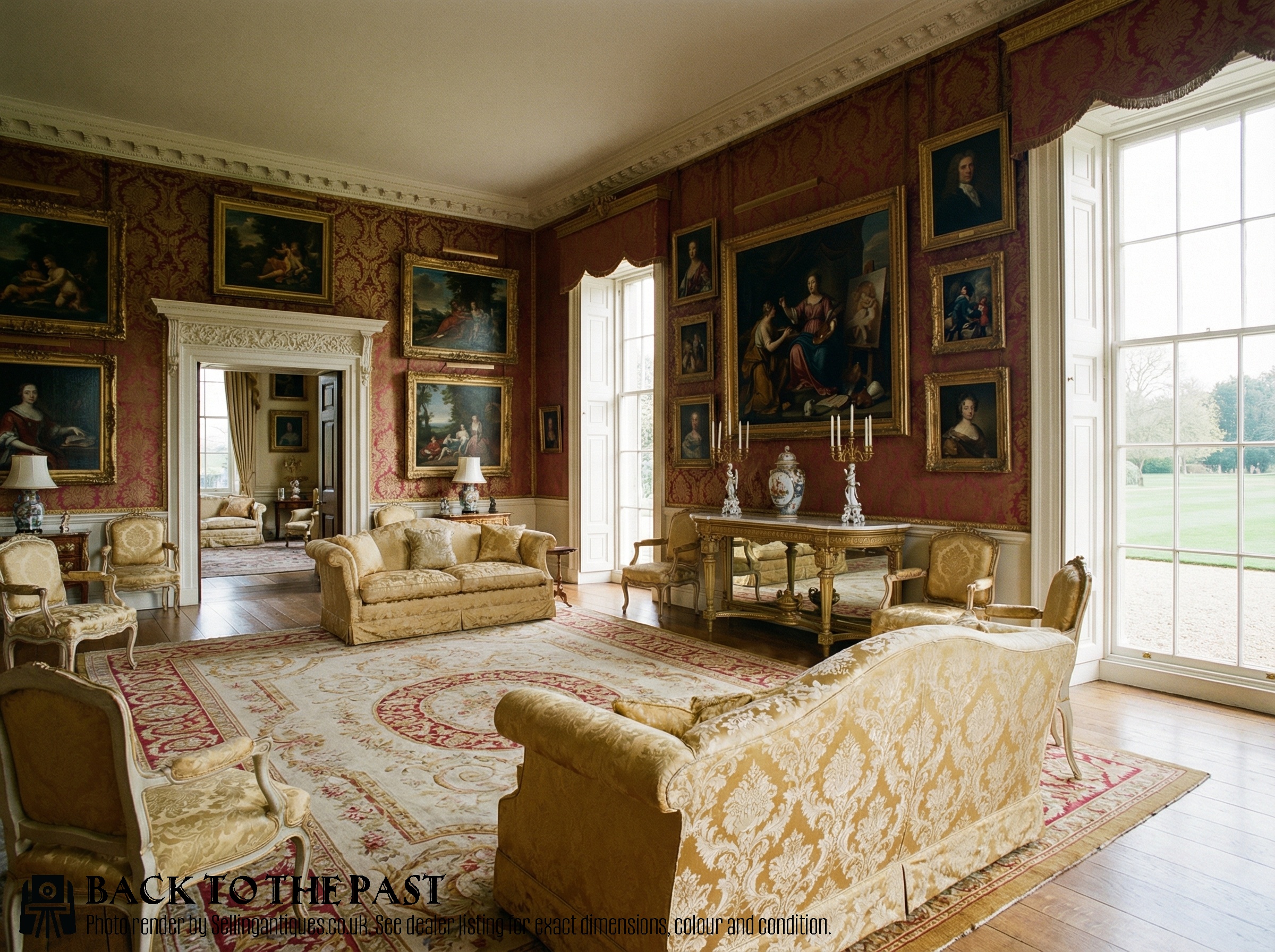
Materials and construction
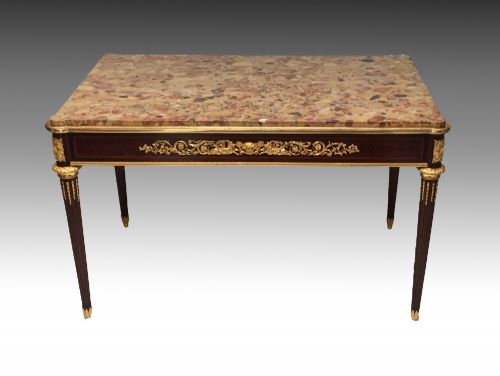
Carpenters built the structural carcases using timber such as walnut, ebonised wood, and general wood framing, applying gesso layers to smooth surfaces before gilding with gold leaf. Ormolu mounts and carved details added decorative relief to the structural rails and apron centres.
Surface ornamentation relied heavily on hand-carved giltwood and gesso work, alongside complex marquetry inlay featuring geometric or floral patterns. Heavy marble tops, cut to fit exact demi-lune or rectangular frames, rested unattached or pinned directly onto the timber bases.
Retail Price Guide 2026
Typical UK retail prices for louis xvi style console, calculated from the Sellingantiques database of over a million retail prices indexed since 2003. This retail price guide relies exclusively on Sellingantiques data; no external sources or auction records are used, so the figures do not describe the wider market.
The archive records both single console tables and matched pairs built in French Neoclassical and Victorian revival styles.
Distinctions in quality
The depth and crispness of the hand-carved gesso and giltwood separate standard nineteenth-century revival work from exhibition-grade pieces. Superior examples exhibit finely undercut foliage, sharp fluting on the legs, and unblemished gilding that reflects light evenly across the frieze.
Material selection dictates longevity and visual weight, with dense marbles and solid walnut carcases outperforming softer secondary woods. The integration between the heavy stone top and the wooden base reveals the maker's joinery skill, particularly in complex demi-lune formats.
Felix-Alfred Ternisien·Donald Ross
The Louis XVI Style Console Glossary
- Giltwood
- Timber coated with gold leaf or powder applied over a prepared gesso ground. This finish provides the bright reflective surfaces characteristic of neoclassical furniture.
- Demi-lune
- A half-moon shape used for table tops and frames. These tables sit flush against walls to conserve floor space in narrow hallways.
- Pier glass
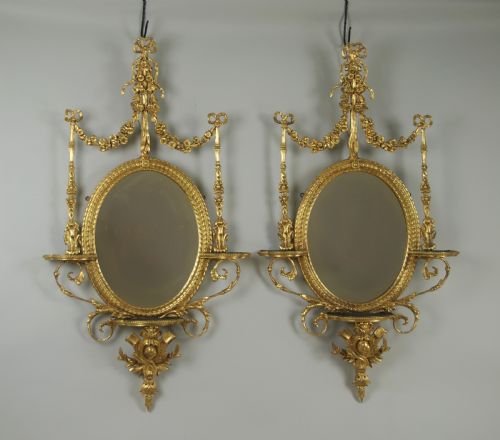
- A tall mirror designed to hang on the wall space between windows, frequently paired directly above a console table. Together they created a unified decorative scheme.
- Ormolu
- Gilded bronze mounts fitted to furniture for ornamental effect. The technique involves applying a mercury and gold amalgam to bronze.
Frequently Asked Questions
Are these tables freestanding?
Most console tables were originally designed to anchor against a wall, sometimes requiring a structural wall fixing for stability due to the weight of the marble top. Freestanding variations do exist, particularly card-table formats which feature hinged tops.
Buyers should check the depth of the rear legs and the presence of original wall brackets to determine how a specific piece was intended to be supported in a room.
How do I tell an 18th-century piece from a 19th-century revival?
Distinguishing original eighteenth-century tables from nineteenth-century revival pieces requires close inspection of tool marks, timber shrinkage, and the composition of the underlying gesso. Revival pieces often display machine-sawn framing elements hidden beneath the hand-applied gilding.
The evidence shows a high proportion of nineteenth-century interpretations, which adopted the classical Louis XVI vocabulary during periods of historic revival.
What marble is used on the tops?
The listings record stone slab tops fitted precisely to the wooden framework of the console tables. These marbles vary in colour and veining depending on the workshop origin and the date of manufacture.
Such heavy stone surfaces provided a durable, cool service resistant to water and heat, making them practical for hallway placement.
How do I clean giltwood?
Giltwood surfaces require gentle dusting with a soft, dry brush to prevent the delicate gold leaf or gesso from flaking. Moisture and chemical cleaners strip the historic finish and should be avoided entirely.
Maintaining these pieces involves keeping them away from direct sunlight and fluctuating humidity to protect the underlying timber and gesso layers.