


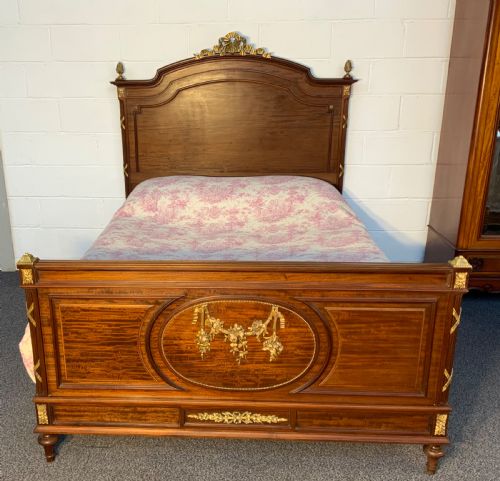


Louis XVI Style Bedstead
A louis xvi style bedstead brings neoclassical symmetry and carved proportion to a bedroom, offering grand French scale in painted wood or walnut.
Louis XVI Style Bedstead
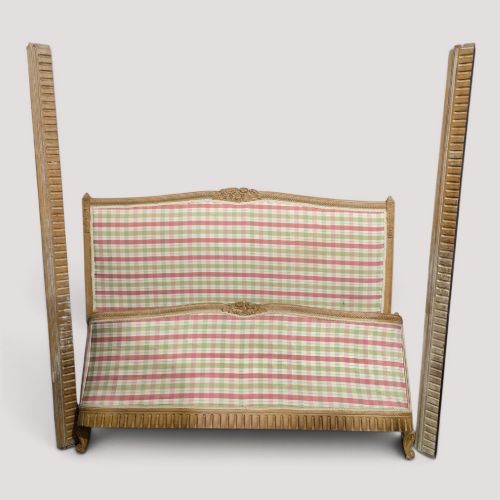
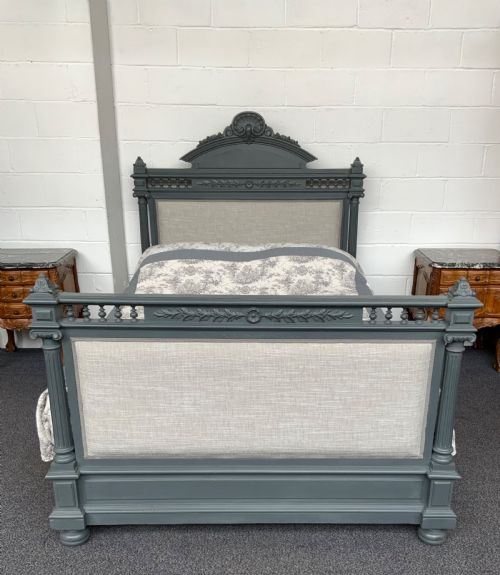
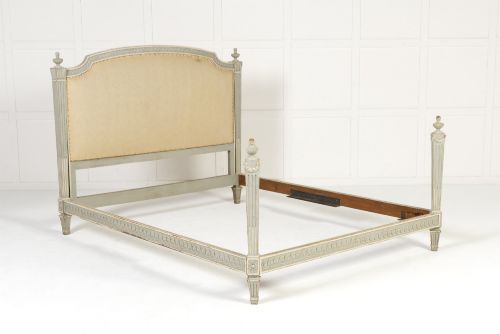
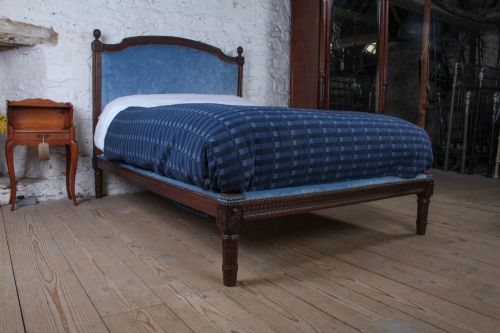
A louis xvi style bedstead represents a deliberate revival of classical restraint, moving away from extravagant curves toward straight lines, fluted columns, and balanced geometry. These frames emerge most frequently from the late nineteenth and early twentieth centuries, capturing the enduring appeal of French neoclassical design in domestic spaces.
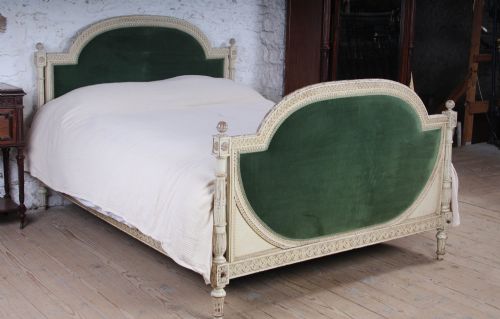
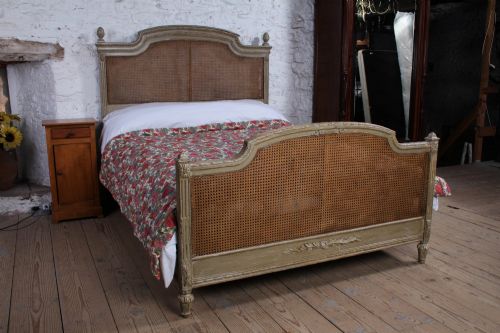
The selections available range from generous king and super king proportions to single and double variants, often appearing in pairs or alongside matching bedroom suites. Forms include low-end beds, caned panels, and upholstered headboards that anchor large rooms with quiet authority.
Origins trace primarily to French workshops and provincial makers who utilised traditional joinery methods to adapt historic palace aesthetics for modern nineteenth and twentieth century homes.
How they were made
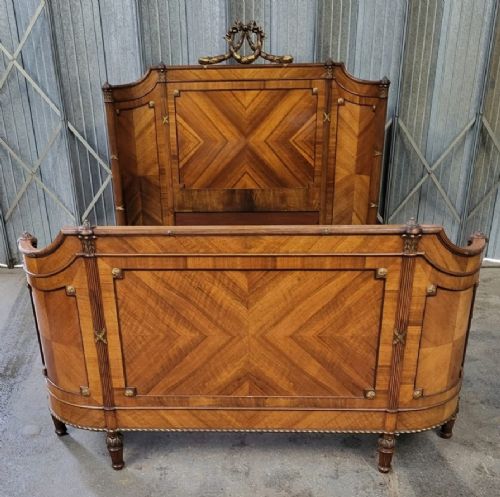
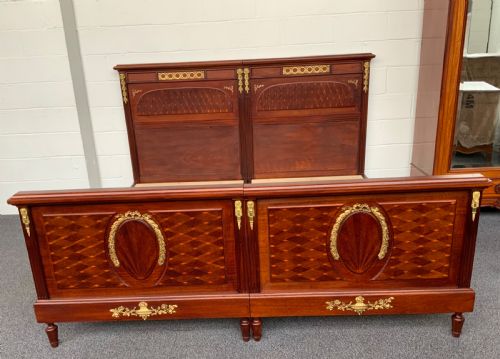
Carpenters constructed these frames using solid timbers such as mahogany, walnut, oak, and fruitwood, frequently enhancing surfaces with quarter veneers or intricate parquetry and marquetry patterns. Carved wooden elements display disciplined hand-tooling on rails and posts.
Decorative schemes rely heavily on painted wood, gilt accents, and applied ormolu or brass detailing that accentuates structural symmetry. Caned panels introduce airy texture into larger wooden structures, whilst modern or period fabric upholstery softens headboards and footboards.
The listings span construction dates from the nineteenth century through the 1930s, incorporating painted wood, cane, mahogany, walnut, and ormolu.
What varies in quality
The standard of a louis xvi style bedstead rests upon the crispness of its carved ornamentation and the precision of its parquetry or veneer work. Finer examples exhibit hand-painted portrait panels or meticulous parcel gilding that integrates seamlessly with the underlying wood.
Structural integrity depends on the depth of the timber and the rigidity of the joints, separating robust architectural frames from lighter decorative reproductions. Original surface treatments and intact cane work also elevate the distinction of a piece.
The Louis XVI Style Bedstead Glossary
- Ormolu
- Gilded bronze detailing applied to furniture mounts. This technique provides metallic contrast against dark woods like mahogany and walnut.
- Marquetry
- The art of creating decorative patterns on wood surfaces using thin veneers of different timbers. Craftsmen assemble these pieces to form geometric or floral motifs.
- Caning
- Woven rattan material utilised in headboards and footboards. This technique introduces lighter textural elements into solid wooden frames.
- Parquetry
- Geometric wood mosaic work used for floors and furniture panels. It displays precise angular arrangements of contrasting wood grains.
- Louis XVI Style
- A neoclassical design movement characterised by straight lines, symmetry, and classical motifs derived from ancient Rome and Greece. It contrasts with the previous curved rococo aesthetic.
Louis XVI Style Bedstead: Frequently Asked Questions
How do I choose the right size?
Consider the overall footprint of the frame relative to your bedroom proportions, noting that king and super king variations require substantial clearance for surrounding furniture.
Check whether the listing specifies standard modern mattress dimensions or historic sizing to ensure proper everyday functionality.
Are these beds easy to assemble?
Most antique wooden bed frames utilise traditional side-rail bolts and slot-in joints that allow for straightforward dismantling and setup.
Verify the inclusion of modern supportive bases or slats, as older frames occasionally require adapted internal supports for contemporary mattresses.
How should I care for painted wood?
Dust surfaces regularly with a soft, dry cloth and avoid harsh chemical cleaning products that might compromise delicate painted finishes or gilding.
Keep wooden frames away from direct heat sources and excessive moisture to prevent timber movement or paint cracking over time.
Can I replace the fabric upholstery?
Upholstered headboards and footboards accept new fabric easily without altering the structural integrity of the antique wooden frame.
Choose textiles that complement the surrounding period details, such as neutral linens or patterned silks suited to neoclassical aesthetics.