


Louis XVI Gueridon
A louis xvi gueridon brings classical French elegance to a room, offering a slender circular surface supported by refined legs.
Louis XVI Gueridon
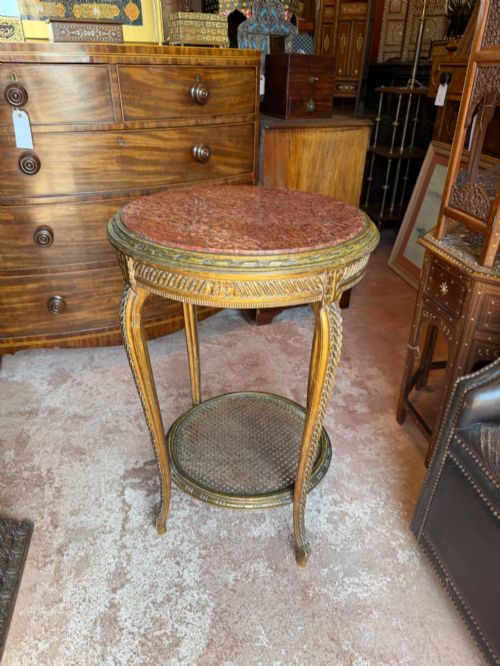
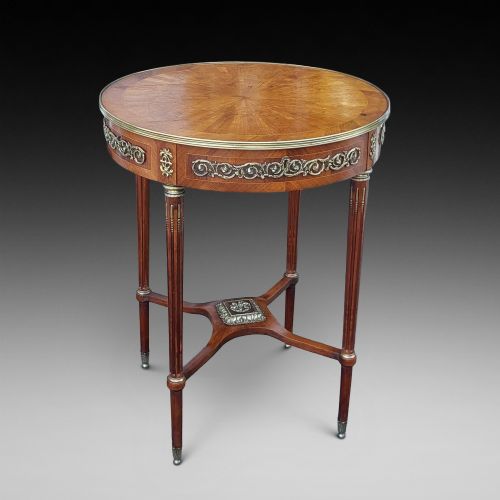
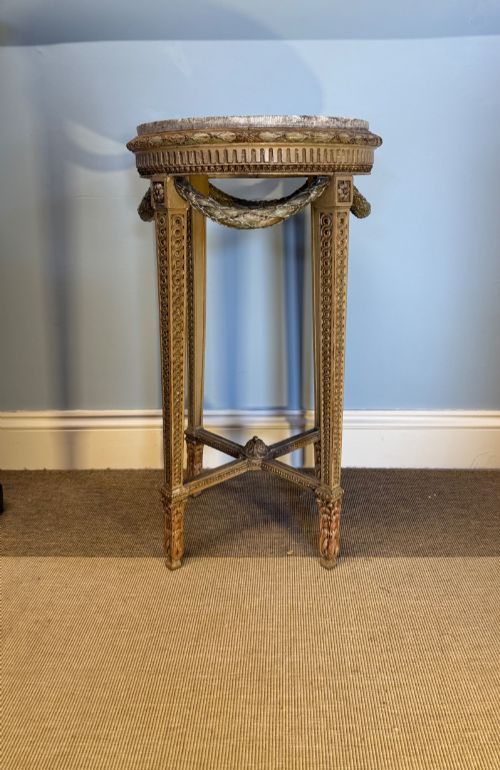
A louis xvi gueridon is a small circular table designed for versatile placement as a side table, occasional table, or centre table. The pieces found here span the nineteenth century and the early twentieth century, reflecting revival tastes and French neoclassical design.
Most examples take the form of round occasional or centre tables, frequently fitted with stone tops and supported by columnar or tapering legs. These tables served practical decorative roles in period interiors, holding lamps, plants, or small objects.
Materials and construction
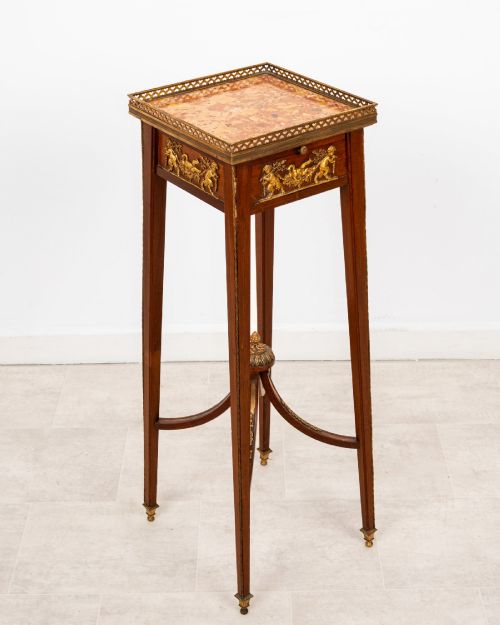
Cabinetmakers utilised hardwoods such as mahogany, walnut, kingwood, and satinwood, often enhanced with intricate parquetry or marquetry inlay. Many pieces incorporate circular marble or onyx slabs inset into the wooden tops.
Mounts in ormolu, brass, and giltwood provide structural and decorative accents, framing the timber surfaces and highlighting neoclassical motifs.
Louis XVI Gueridon Retail Price Guide 2026
Typical asking prices for louis xvi gueridon among the pieces listed under this phrase on Sellingantiques today, from the lower quarter to the upper quarter. They describe what is for sale here now, not the wider market.
Several tables include dedicated porcelain plaques inset into the wood, proving that someone long ago wanted fine ceramic art right beneath their teacup.
Distinctions in quality
Quality rests in the crispness of the bronze or ormolu mounts and the precision of the parquetry patterns. Superior pieces display meticulous hand-chasing on metalwork and finely figured veneers.
The integration of the stone top with the wooden frame also signals standard, where tightly fitted marble or onyx margins demonstrate accomplished joinery.
François Linke·Henry Dasson·A Hugnet Paris·Weisweiler
The Louis XVI Gueridon Glossary
- Guéridon
- A small French round table, typically supported by a central column or three or four slender legs. The form originated in the seventeenth century and saw major revivals during the nineteenth century.
- Ormolu
- Gilded bronze used for furniture mounts and decorative ornaments. It provides a bright metallic contrast against dark hardwoods.
- Parquetry
- Geometric wood inlay forming patterns such as cubes or chequers across the tabletop. Artisans selected contrasting timbers to create these optical designs.
- Marquetry
- Pictorial or floral wood veneer patterns inlaid into the surface of the table. This technique requires patient cutting and fitting of diverse coloured woods.
- Neoclassical
- A style drawing inspiration from classical antiquity, characterised by symmetry, straight lines, and restrained classical ornament. It defines the core aesthetic of the Louis XVI period.
Louis XVI Gueridon: Frequently Asked Questions
What is a louis xvi gueridon used for?
These tables function primarily as decorative occasional pieces or side tables. Their compact circular tops suit placement beside seating or in corners.
Historically, they held lighting, decorative objects, or served as small display stands within formal French interiors.
How do I date a louis xvi gueridon?
Dating relies on examining timber selection, construction methods, and the style of the mounts. While the original reign spans the eighteenth century, most examples date from nineteenth-century revival periods.
Makers' stamps, brass hardware details, and secondary woods help narrow the manufacturing era.
Are marble tops original to these tables?
Marble and onyx tops are a standard feature of many period examples. They provide a durable, cool surface that contrasts with polished mahogany or kingwood.
Inspecting the rebate where the stone rests helps confirm whether the top belongs to the original construction.
Where should I place a gueridon?
A round gueridon fits well in entrance halls, drawing rooms, or beside a sofa as an accent piece. Its circular footprint allows for easy movement around the room.
Placing a lamp or a small bronze ornament upon the surface completes the traditional arrangement.