

Louis XVI Bedsides
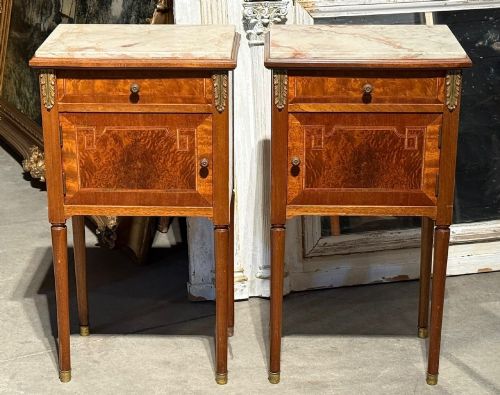
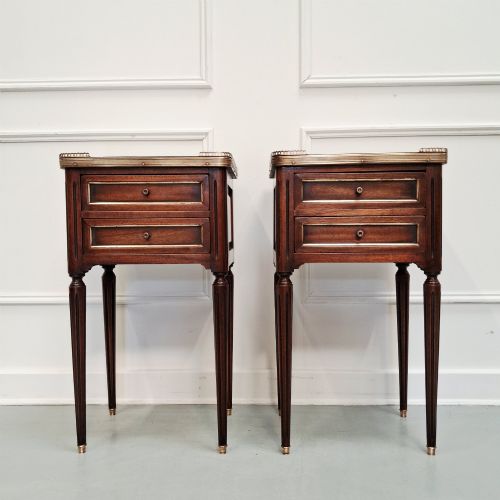
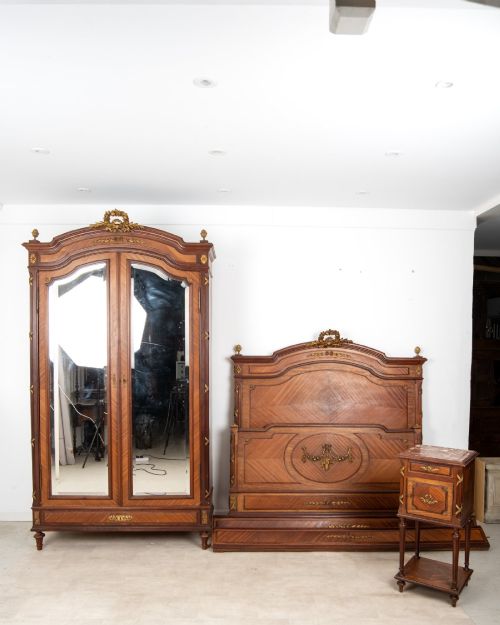
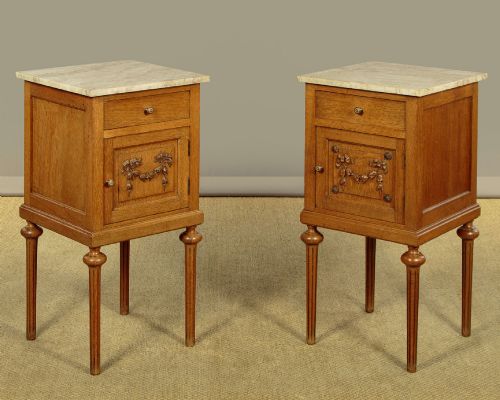
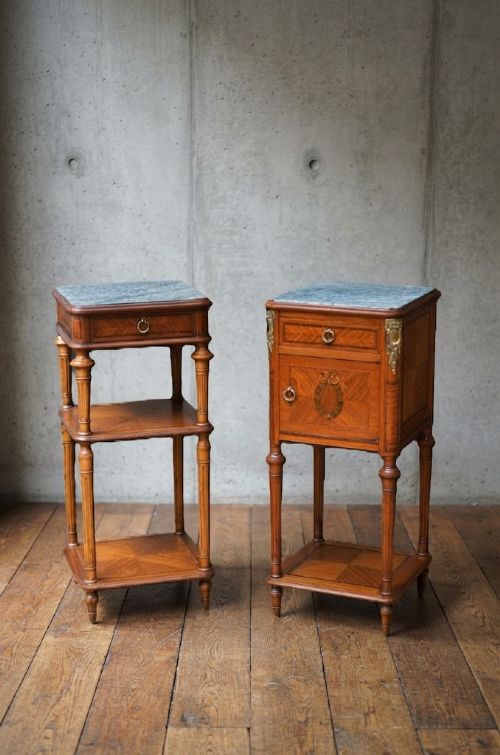
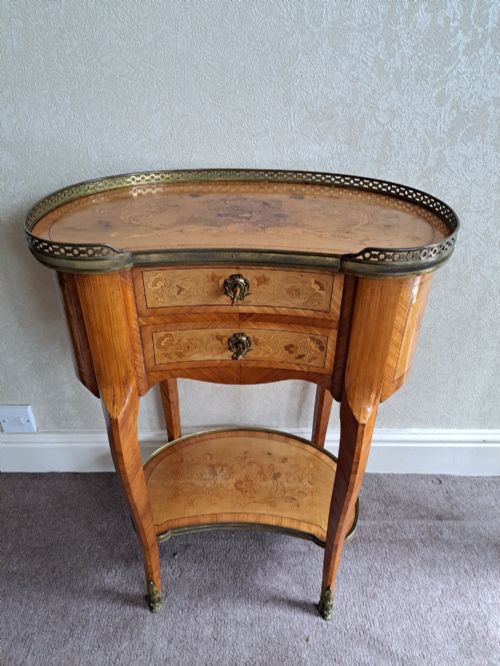
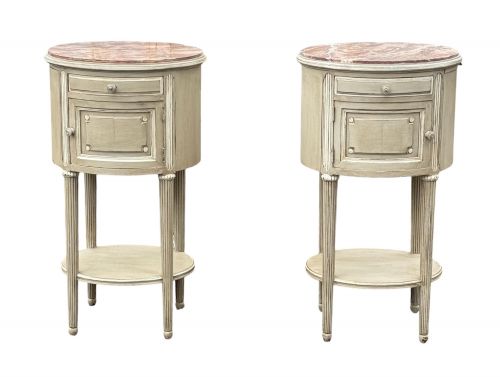
Louis xvi bedsides bring neoclassical symmetry and refined proportions to the bedroom, usually found here as matched pairs in walnut, mahogany or satinwood.
Louis XVI Bedsides
Louis xvi bedsides encompass small bedside cabinets, petite commodes and bedside chests derived from French neoclassical design. Buyers seeking this phrase encounter pieces dating mainly from the nineteenth and early twentieth centuries, spanning revival periods up to the nineteen-thirties.
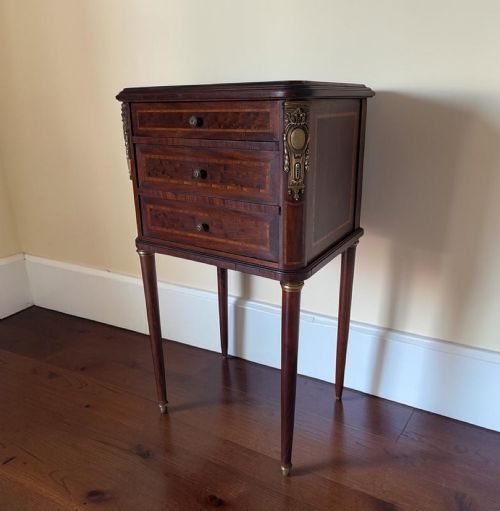
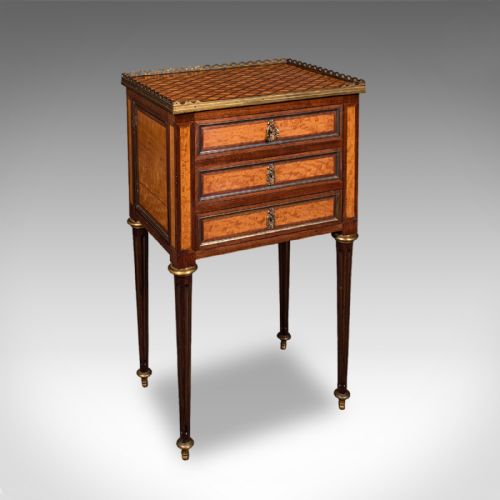
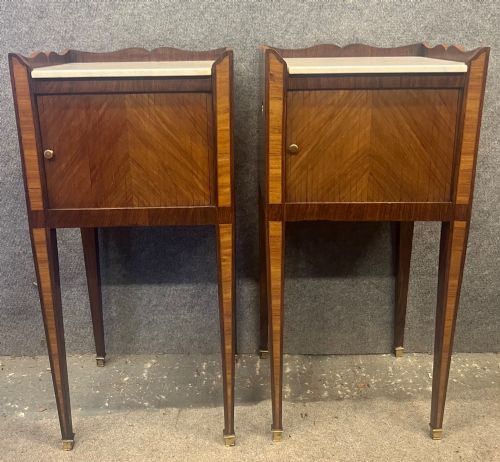
The form typically relies on straight, fluted legs and rectilinear carcasses rather than the curves of earlier rococo furniture. Cabinets frequently incorporate marble tops, single drawers and enclosed cupboards suitable for bedside storage.
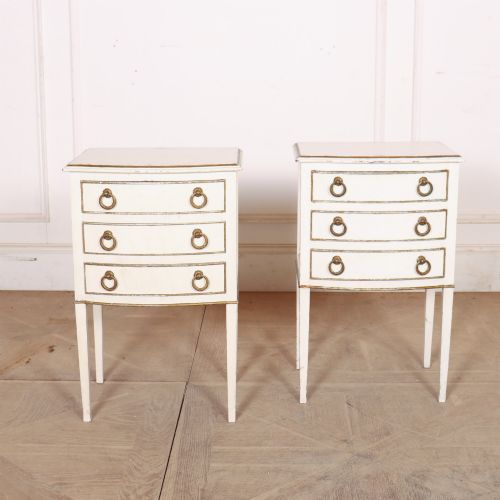
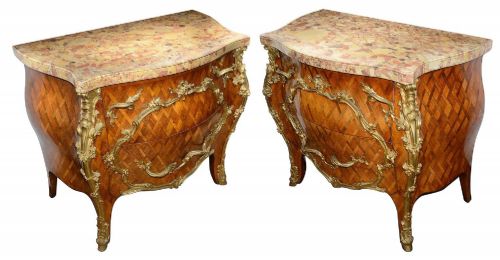
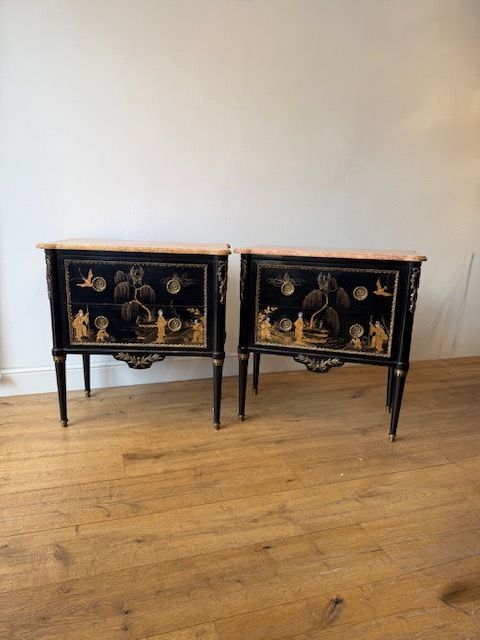
Most examples originate from French workshops adhering to Louis xvi revival and neoclassical styles. Pairs dominate the selection, showing balanced proportions and disciplined geometric ornamentation.
Materials and construction
Cabinet makers built carcasses from timbers such as walnut, mahogany, satinwood and kingwood, often applying intricate marquetry, parquetry or burr and fruitwood veneers. Structural integrity relied on traditional joinery paired with precise timber selection for decorative grain patterns.
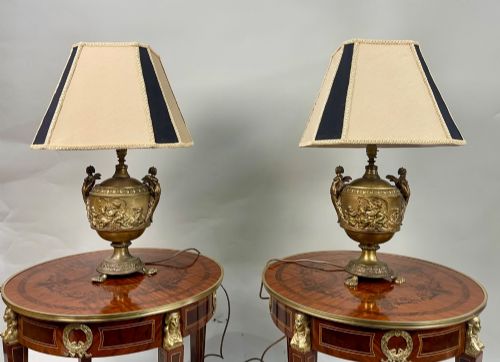
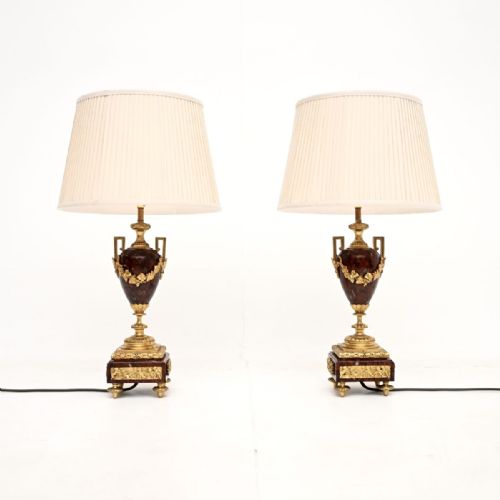
Marble tops in white, grey or rouge varieties sat flush upon the timber frames, providing durable surfaces alongside brass, ormolu and gilt bronze mounts. Cast metal mounts and handles accented the corners, aprons and drawer pulls with neoclassical motifs.
Lacquered finishes, painted surfaces and inlaid details completed the decorative scheme, echoing eighteenth-century French prototypes. Craftsmanship focused on crisp fluting, tight veneer matching and secure mount attachment.
Louis XVI Bedsides Retail Price Guide 2026
Typical asking prices for louis xvi bedsides among the pieces listed under this phrase on Sellingantiques today, from the lower quarter to the upper quarter. They describe what is for sale here now, not the wider market.
Listings feature bedside tables and cabinets spanning walnut, mahogany, satinwood and kingwood, frequently paired with marble and ormolu.
Quality differences
Quality rests upon the precision of the cabinet work and the choice of surface veneers. Finer pieces demonstrate seamless marquetry, tight parquetry patterns and stable timber selection that resists seasonal movement.
The execution of gilt bronze, ormolu and brass mounts distinguishes superior examples from standard production. Crisp chasing and substantial metal weight elevate the overall presence of a cabinet.
Original marble tops fitted accurately to the timber carcase indicate careful workshop assembly. Matched pairs showing consistent timber ageing and uniform wear maintain higher desirability.
The Louis XVI Bedsides Glossary
- Ormolu
- Gilded bronze used for decorative mounts and ornaments. This technique provided a bright golden finish that contrasted against dark cabinet timbers.
- Marquetry
- Inlaid wood veneers forming pictorial or geometric patterns. Artisans cut contrasting timber species to create intricate designs across drawer fronts and top panels.
- Parquetry
- Geometric wood inlay arranged in repetitive patterns such as cubes or chequers. This technique decorated flat cabinet surfaces with disciplined visual rhythm.
- Commode
- A low standing chest of drawers or cabinet. In bedroom settings, smaller versions functioned as bedside storage.
- Neoclassical
- A style reviving classical Greek and Roman architectural motifs. It prioritises symmetry, straight lines and restrained ornamentation over curved rococo excess.
Louis XVI Bedsides: Frequently Asked Questions
What defines louis xvi bedsides?
Louis xvi bedsides are small nineteenth and early twentieth century cabinets and tables characterised by straight fluted legs and neoclassical symmetry.
They draw inspiration from eighteenth-century French design, frequently combining timber carcases with marble tops and gilt bronze mounts.
Are these tables usually found in pairs?
Many surviving examples appear as matched pairs intended for placement on either side of a bed. Cabinet makers often produced them together to ensure identical timber grain and mount placement.
Single tables also occur, originating from suites or individual bedroom furnishings.
How do I care for marble tops?
Marble surfaces require gentle cleaning with mild soap and water to preserve the polish and prevent staining. Avoid acidic liquids and harsh abrasives that etch the stone.
Using coasters and mats protects the natural finish from moisture and scratching.
How can I date these cabinets?
Dating relies on examining construction methods, timber types, screw heads and secondary woods inside the drawers. Nineteenth-century revival pieces often exhibit machine-cut components alongside hand-finished details.
Stylistic cues and material choices help narrow the production era to specific decades.