
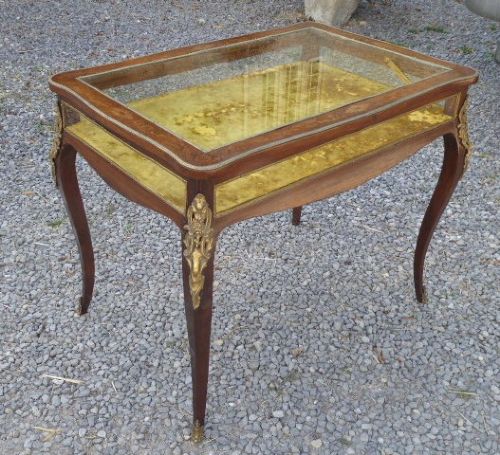
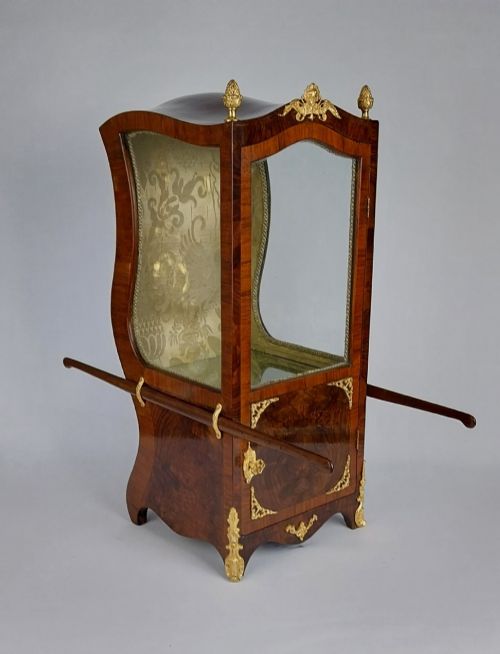


Louis XV Vitrine Table
A louis xv vitrine table brings French Rococo revival elegance to any room, offering a glass-topped showcase for precious small possessions.
Louis XV Vitrine Table
A louis xv vitrine table combines the form of a display cabinet with a low table, designed specifically for holding small treasures, medals and trinkets beneath glass. These pieces draw heavily on French Rococo revival design, manifesting in serpentine lines and decorative mounts.
Most examples encountered date from the nineteenth century, spanning Victorian and Edwardian periods, though earlier revivals and twentieth-century interpretations also appear. Common variations include kidney shapes, heart-shaped tables and table-top sedan vitrines.
Makers utilised diverse timbers such as mahogany, kingwood and rosewood, frequently enhanced with marquetry or brass inlay. The resulting furniture serves both a functional display purpose and a decorative statement in a drawing room or salon.
Judging quality
The refinement of the cast ormolu mounts sets superior pieces apart from simpler examples, showing crisp chasing and secure placement. High-grade timbers and intricate marquetry patterns also indicate a more ambitious workshop origin.
Construction details such as tight joinery, quality glass fitting and the original fabric lining contribute to the overall desirability of a table. Subtle variations in the serpentine curve of the timber frame distinguish masterly cabinet work from standard production.
One unexpected Edwardian table arrives bearing later sign-writing for Breitling watches, having spent time in a commercial shop window.
The Louis XV Vitrine Table Glossary
- Bijouterie table
- A display table with a glass top and sides intended for small valuable items and trinkets. The interior is commonly lined with velvet or silk.
- Ormolu
- Gilded bronze mounts applied to furniture for decorative effect. The technique involves mercury gilding on cast bronze.
- Marquetry
- Decorative veneer patterns formed from pieces of contrasting timber. Craftsmen arrange these woods to create floral or geometric designs.
- Kingwood
- A dense, heavy timber with rich brown and violet-black colouring, frequently used in high-status French furniture. It forms striking veneer surfaces on nineteenth-century tables.
- Vitrine
- A glass-fronted or glass-topped cabinet designed for display. These pieces protect delicate objects while keeping them visible from multiple angles.
Louis XV Vitrine Table: Frequently Asked Questions
What is a bijouterie table used for?
These tables were originally created in nineteenth-century drawing rooms to display delicate personal possessions, portrait miniatures, fans and medals.
The glass top protected objects from dust while allowing guests to admire them during social gatherings.
How do I date a louis xv vitrine table?
Dating relies on examining the timber construction, the style of the ormolu mounts and the manufacturing techniques used on the frame. Most surviving examples date from the Victorian and Edwardian periods, reflecting the nineteenth-century passion for French Rococo revival design.
Later pieces from the twentieth century often display subtle differences in timber finish and interior hardware.
Are these tables sturdy enough for daily use?
While structurally sound, these decorative tables feature delicate legs and veneered surfaces that require careful placement away from direct sunlight and heavy impacts.
They function best as display pieces rather than heavy-use furniture.
What woods were used for these tables?
Cabinet makers utilised a range of primary timbers, with mahogany forming the sturdy carcase of many English and continental examples.
Exotic hardwoods such as kingwood and rosewood provided the patterned veneer surfaces characteristic of French revival styles.