
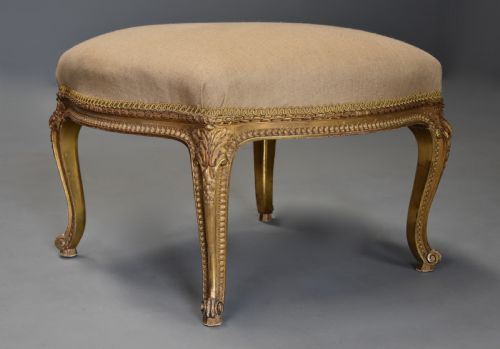


Louis XV Style Ottoman
A louis xv style ottoman brings fluid rococo curves and generous upholstery to a room, offering both decorative presence and comfortable seating.
Louis XV Style Ottoman
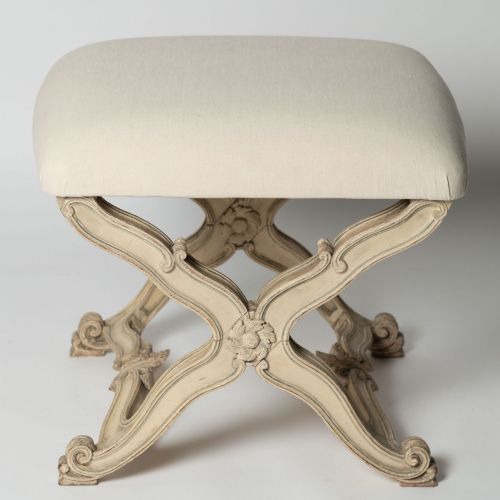
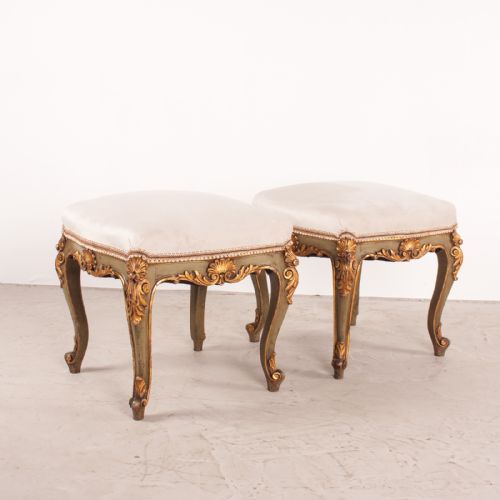
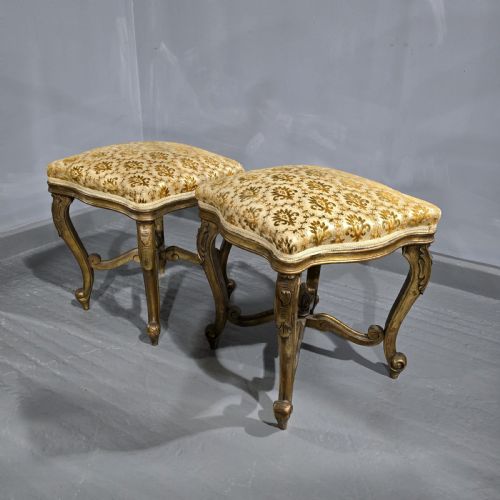
When searching for a louis xv style ottoman, buyers encounter nineteenth-century revival pieces alongside earlier examples functioning as footstools, long stools, and duet seats. These low seats draw heavily from continental rococo traditions, appearing in forms such as carved footstools, painted benches, and large giltwood centre pieces.
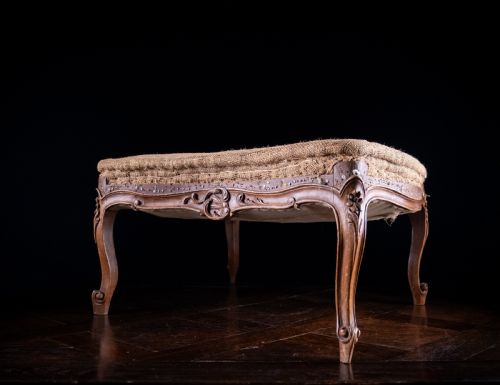
The selection ranges from compact beech footstools to substantial walnut and giltwood forms created during the nineteenth and early twentieth centuries. Many pieces adopt French chateau and provincial aesthetics, integrating seamlessly into traditional interiors as functional footstools or low occasional seating.
Materials and Construction
Carved timber frames form the structural core, utilising hardwoods such as beech, walnut, and painted or gilded wood. Craftsmen shaped these frames with hand-carved floral and scroll motifs characteristic of the rococo revival.
Upholstery completes the piece, employing traditional fabric, linen, and needlework coverings secured over supportive padding. Brass details occasionally accent the timber structures of these French-inspired seats.
Some nineteenth-century makers stamped their timber frames directly, leaving silent signatures hidden beneath layers of old French polish.
Assessing Quality and Execution
The distinction between standard and superior pieces rests in the crispness of the hand-carved wood and the integrity of the gilded or painted surfaces. Finely articulated floral motifs and substantial timber frames indicate a higher grade of craftsmanship.
The depth and execution of the original gilding or decorative paintwork further separate ordinary examples from exceptional ones. Heavier structural timbers and preserved period needlework elevate the standing of a stool within this tradition.
LOIDRAULT FRERES PARIS
The Louis XV Style Ottoman Glossary
- Giltwood
- Timber coated with a thin layer of gold leaf. This surface treatment appears frequently on nineteenth-century decorative stools.
- Duet stool
- An elongated seat designed for two people, often utilised as a window or music seat. These forms provide greater length than standard footstools.
- Rococo revival
- A nineteenth-century design movement inspired by eighteenth-century French styles. It prioritises asymmetrical scrolls, organic curves, and naturalistic floral carvings.
- Centre stool
- A freestanding piece finished on all sides for placement in the middle of a room. These larger forms often feature elaborate giltwood or carved walnut frames.
Louis XV Style Ottoman: Frequently Asked Questions
What is a louis xv style ottoman?
A louis xv style ottoman is a low, upholstered seat drawing on eighteenth-century French rococo design principles. These pieces typically feature carved wooden frames and decorative fabric coverings.
They serve multiple functions in a room, acting as footstools, long benches, or occasional seats. Most examples encountered today date from the nineteenth-century revival periods.
How do I date an antique footstool?
Dating relies on examining the timber species, tool marks, and degradation patterns on the frame. Nineteenth-century pieces often display machine-assisted elements alongside hand carving.
Upholstery techniques and materials also offer clues, though most surviving items have been re-covered. Comparing the carved motifs to documented revival periods helps narrow the timeframe.
Where should I place a long stool?
Long stools and duet seats suit placement at the foot of a bed or beneath a window. Their extended proportions fill horizontal wall spaces effectively.
In living areas, they function well as flexible seating or low coffee table alternatives when topped with a stable tray. Their decorative carved frames allow them to sit away from walls.
Are giltwood and painted stools authentic?
Nineteenth-century makers frequently employed gilding and painted finishes to emulate earlier French chateau furniture. These finishes are period-correct for revival pieces.
Distinguishing between original surface treatments and later re-decoration requires examining the wear patterns and the interaction between the paint and the underlying timber.