


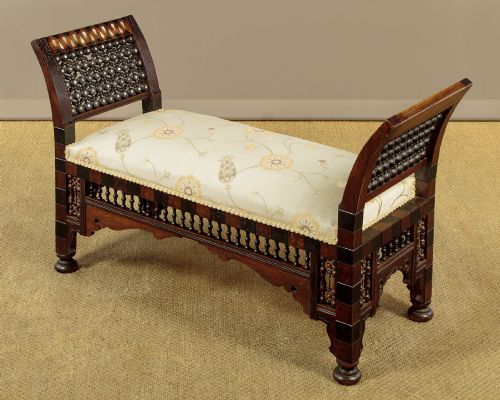


Carved Wooden Ottoman Bench
A carved wooden ottoman bench brings tactile warmth and versatile seating to a room, spanning styles from Victorian revival to Anglo-Indian design.
Carved Wooden Ottoman Bench
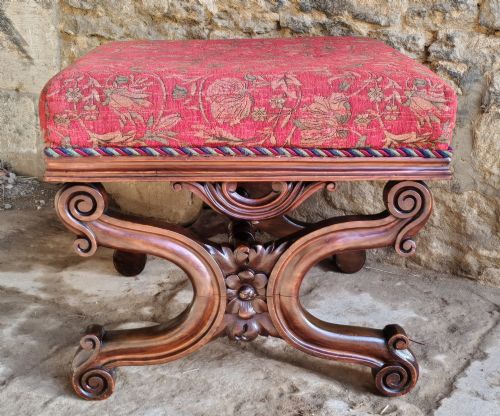
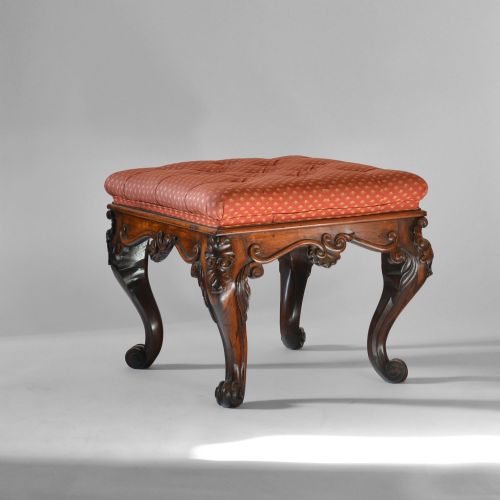
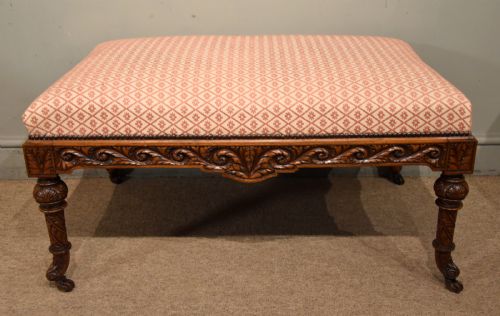
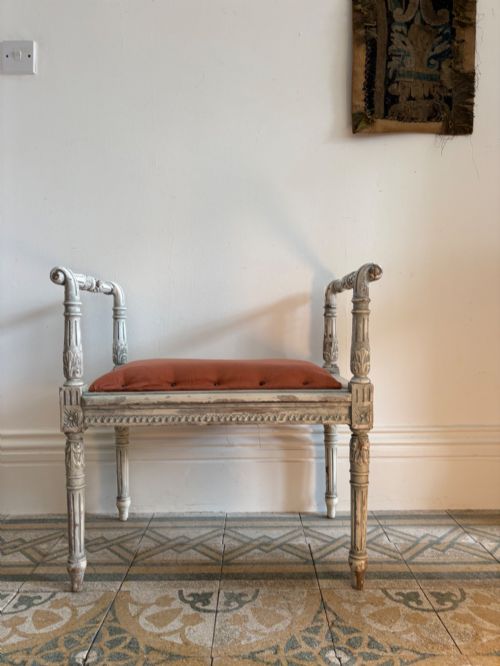
When you search for a carved wooden ottoman bench, you are looking at low seating forms that function as stools, footstools, window seats, and hall benches. These pieces emerge predominantly from the nineteenth century, with occasional examples stretching back to the mid-eighteenth century and forward into the nineteen-twenties.
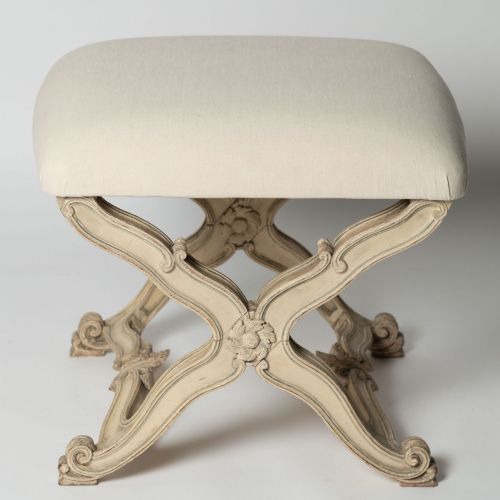
Origins span widely across English, French, Swedish Gustavian, Italian, and Syrian traditions. You will encounter painted wood, giltwood, oak, mahogany, teak, and rosewood frameworks paired with diverse top surfaces.
Materials and construction methods
Workshops relied heavily on solid hardwoods like walnut, mahogany, rosewood, and oak to build sturdy structural frames. Artisans carved intricate details directly into the timber, reflecting styles from Gothic and Jacobean revivals to French neoclassical and Baroque aesthetics.
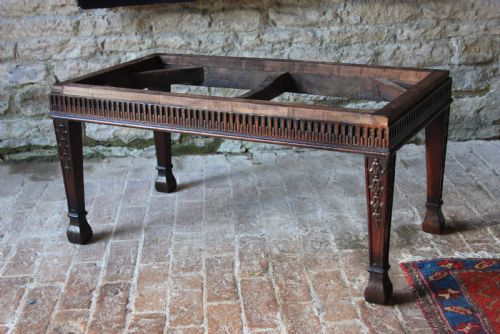
Surface ornamentation involved elaborate hand-carving, pearl inlay, giltwood finishes, and painted treatments. Upholstery techniques utilised traditional webbing and padding, covered in fabrics such as silk, linen, textile, and woven rattan.
The listings here feature timber frames in walnut, rosewood, oak, mahogany, and teak, alongside painted and giltwood finishes.
Distinguishing quality in period seating
The distinction between standard examples and top-tier pieces lies in the crispness and depth of the timber carving. Superior seating displays fluid, confident hand-chiselled detailing rather than mechanical smoothing or soft edges.
Integrity of construction and material selection further set pieces apart. Dense, richly grained timbers like rosewood and walnut, combined with intact traditional joinery and period-appropriate upholstery materials, command greater attention.
The Carved Wooden Ottoman Bench Glossary
- Ottoman bench
- A long, low seat designed for resting feet or sitting, often featuring upholstered surfaces above a wooden frame.
- Window seat
- A specialised bench built to fit within the architectural recess of a window, typically long and narrow in proportion.
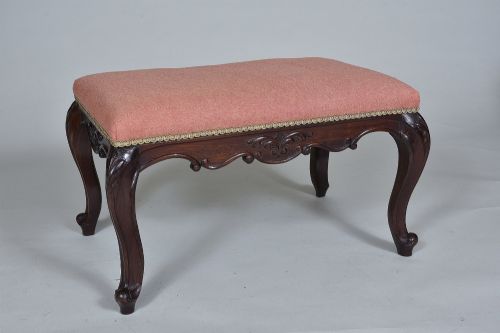
- Cabriole leg
- A furniture leg that curves outward in a convex arc and tapers inward in a concave arc, ending in a pad or foot.
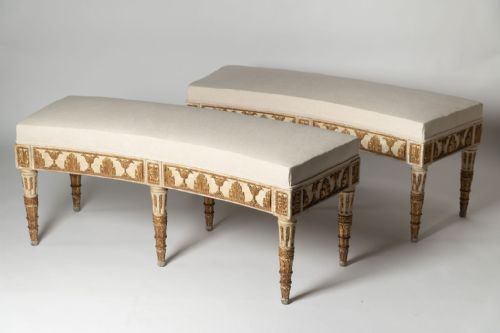
- Giltwood
- Timber that has been coated with a thin layer of gold leaf or gold paint to create a luminous decorative surface.
- X-frame
- A structural furniture base formed by intersecting curved or straight wooden members shaped like the letter X.
Carved Wooden Ottoman Bench: Frequently Asked Questions
What is the difference between a stool and an ottoman bench?
Stools generally offer compact, square, or round seating footprints intended for individual use.
Ottoman benches present elongated proportions designed to serve multiple sitters or accommodate stretched legs.
Where were these benches typically placed in a historic home?
These pieces found placement in hallways, beneath tall windows, or beside principal reception room fires.
They provided flexible seating that could be moved easily across rooms as household needs required.
How do I identify a Victorian piece from an 18th-century example?
Nineteenth-century pieces frequently display heavier walnut or rosewood frames with dense, revival-style carving.
Eighteenth-century examples tend to exhibit lighter mahogany construction with more restrained, elegant proportions.
What fabrics are appropriate for reupholstering these frames?
Traditional choices include heavy linens, woven textiles, and silks that complement the period of the woodwork.
Buttoned upholstery and muted patterned fabrics suit Victorian styles, while plain linens enhance Gustavian frames.