




Louis XV Style Card Table
A louis xv style card table brings the fluid curves and gilt mounts of eighteenth-century France into nineteenth-century drawing rooms.
Louis XV Style Card Table
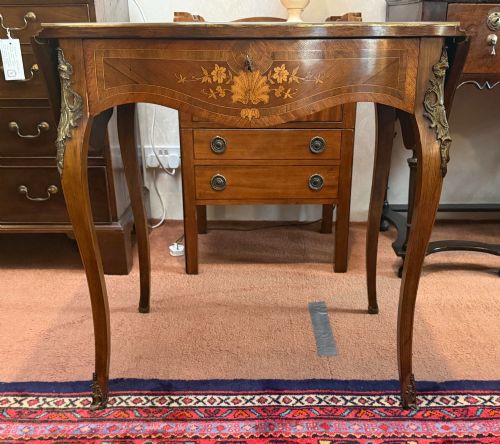
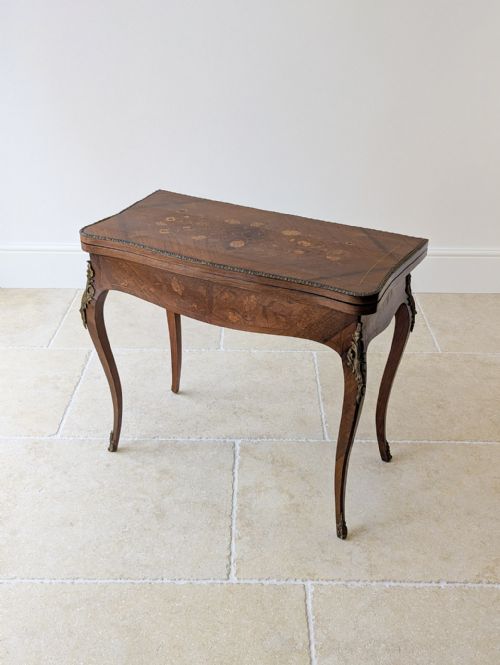
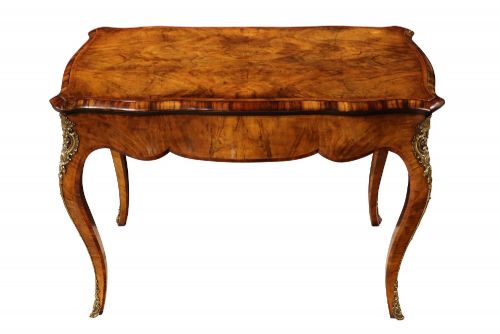
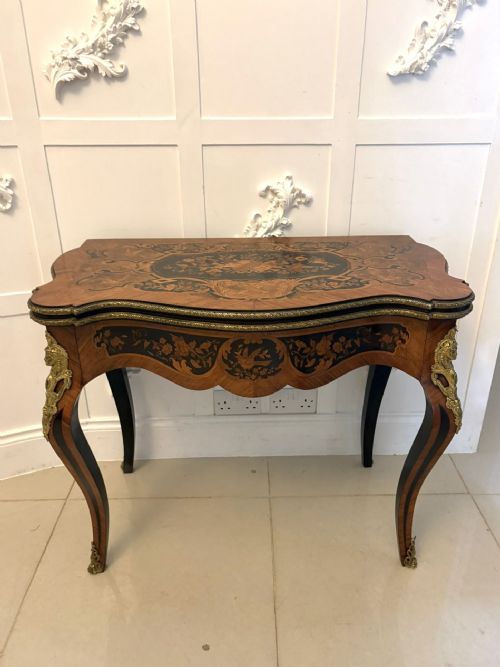
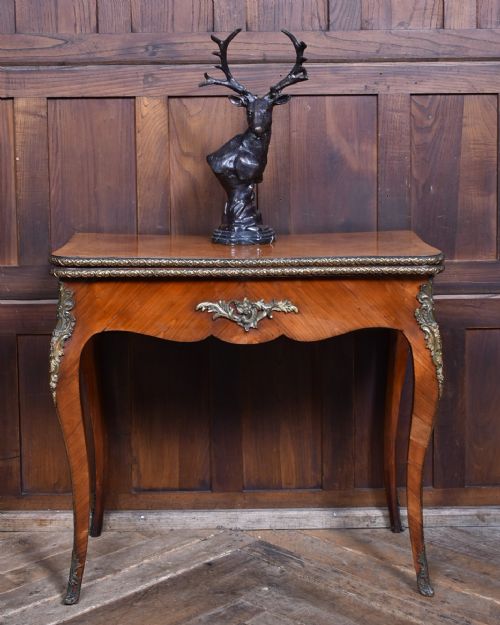
A louis xv style card table combines the serpentine lines and asymmetric floral marquetry of the rococo revival with practical surfaces for gaming and social display. These pieces emerge predominantly across the nineteenth century, spanning the Victorian era and French chateau aesthetics.
Makers of this period interpret the louis xv style through various forms, ranging from fold-over card tables and demi-lune games tables to envelope designs and console hybrids. Walnut, kingwood, and mahogany form the primary carcasses, frequently embellished with intricate wood veneers and brass inlay.
The evidence shows examples surfacing from both English workshops and French ateliers during the 1850s, 1860s, 1880s, and 1890s. Buyers frequently encounter pieces retaining their original folding mechanisms alongside elaborately decorated tops intended to double as side tables.
Judging the workmanship
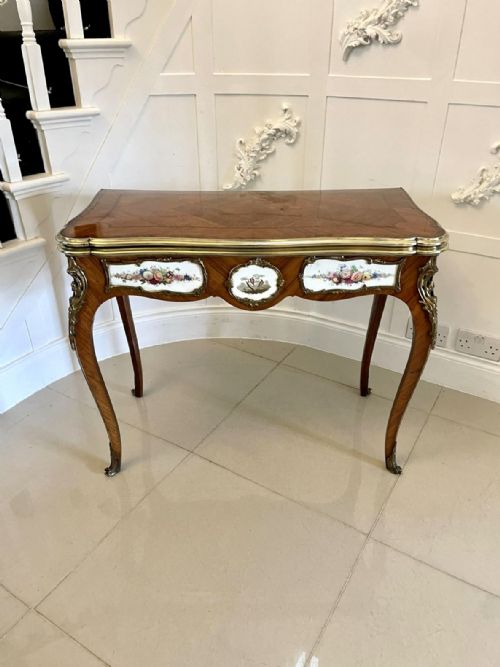
Quality rests in the crispness of the bronze chasing and the precision of the marquetry work, where fine timbers fit flush without gaps. Superior examples demonstrate fluid joinery in the complex curves of the cabriole legs and serpentine aprons.
The caliber of the interior finishing, the weight of the ormolu mounts, and the integration of the folding mechanism distinguish standard production from master cabinetmaking.
Secret compartments occasionally wait inside, ready for a forgotten counters cache.
G T Morant·Joseph-Emmanuel Zwiener·Maison Millet·Edwards & Roberts
The Louis XV Style Card Table Glossary
- Ormolu
- Gilt bronze applied as mounts and decorative highlights on furniture. This technique involves gilding a mercury and bronze base to create a rich golden finish.
- Kingwood
- A dense, heavily figured Brazilian timber prized for its rich brown colour and dark violet-brown streaks. Cabinetmakers frequently use it for contrasting veneers and geometric marquetry.
- Marquetry
- The art of applying pieces of veneer to a structure to form decorative patterns and pictures. Craftsmen utilise various coloured woods to achieve floral or architectural scenes.
- Cabriole leg
- A furniture leg that curves outward and then tapers inward, mimicking an animal's limb in motion. This form is a defining characteristic of the rococo revival.
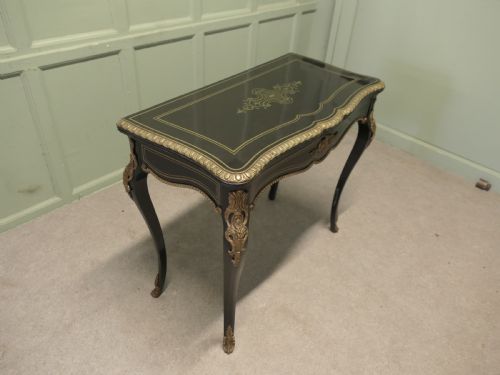
- Boulle
- A type of marquetry consisting of tortoiseshell and brass inlaid in delicate arabesque patterns. Named after the famed French cabinetmaker, it adds dramatic contrast to dark woods.
Louis XV Style Card Table: Frequently Asked Questions
How do I use a card table today?
These tables function as versatile console or side surfaces against a wall when folded shut, hiding the baize top from view.
Opening the fold-over leaf transforms the piece into a practical surface for games, writing, or display during gatherings.
Are these tables strictly French?
While many examples originate from French workshops or follow French design idioms closely, English cabinetmakers produced significant numbers during the Victorian era.
London firms frequently adopted the aesthetic to satisfy domestic demand for continental revival furniture.
How do I date a nineteenth-century table?
Dating relies on examining the timber veneers, the casting quality of the ormolu mounts, and the construction methods of the interior pivot hinges.
Stylistic shifts between the 1850s and the 1890s reveal a progression from restrained walnut models to more exuberant marquetry and ormolu decoration.
What is the difference between louis xv and louis xvi styles?
Louis xv style pieces feature flowing curves, asymmetrical shapes, and organic rococo motifs without straight lines.
Louis xvi style shifts toward neoclassical symmetry, featuring straight fluted legs, right angles, and geometric parquetry patterns.