
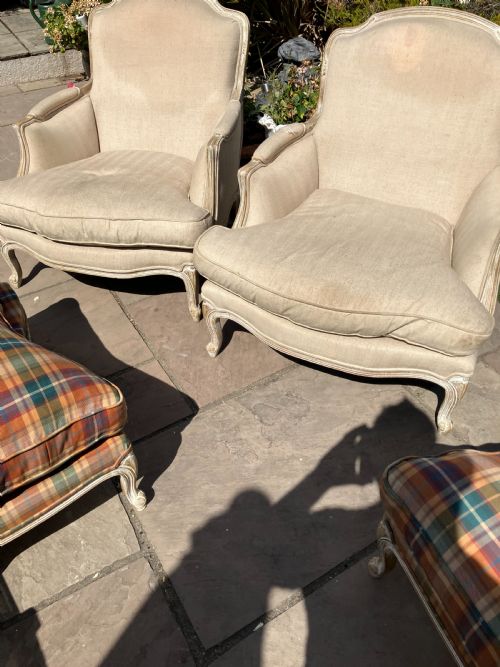
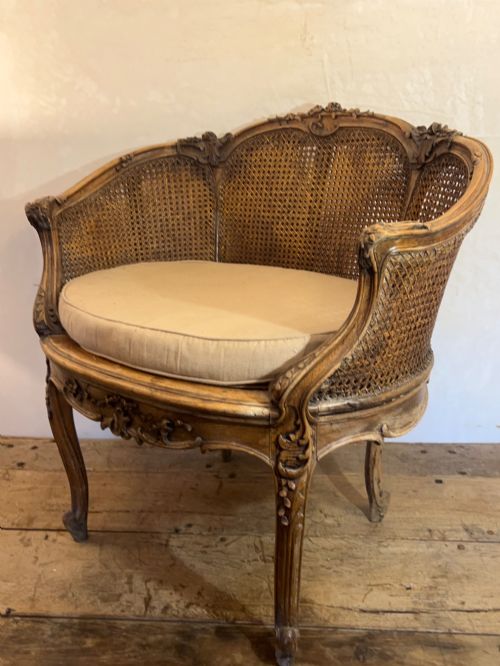
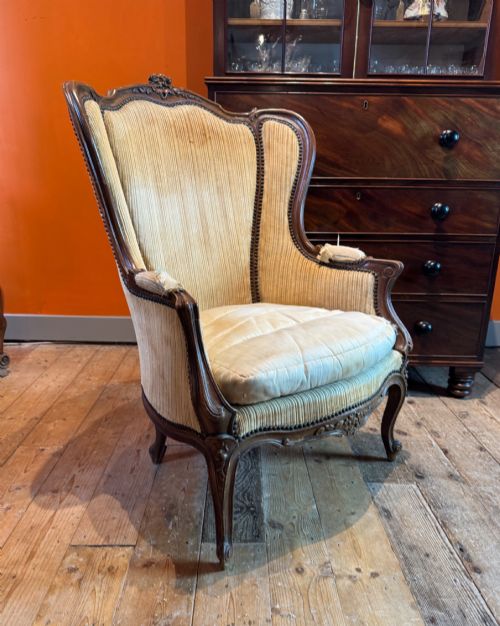
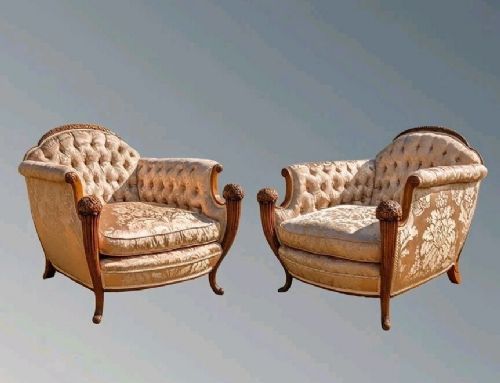


Louis XV Style Bergeres
Louis xv style bergeres are welcoming upholstered seats offering deep, curving comfort rooted in eighteenth-century French design.
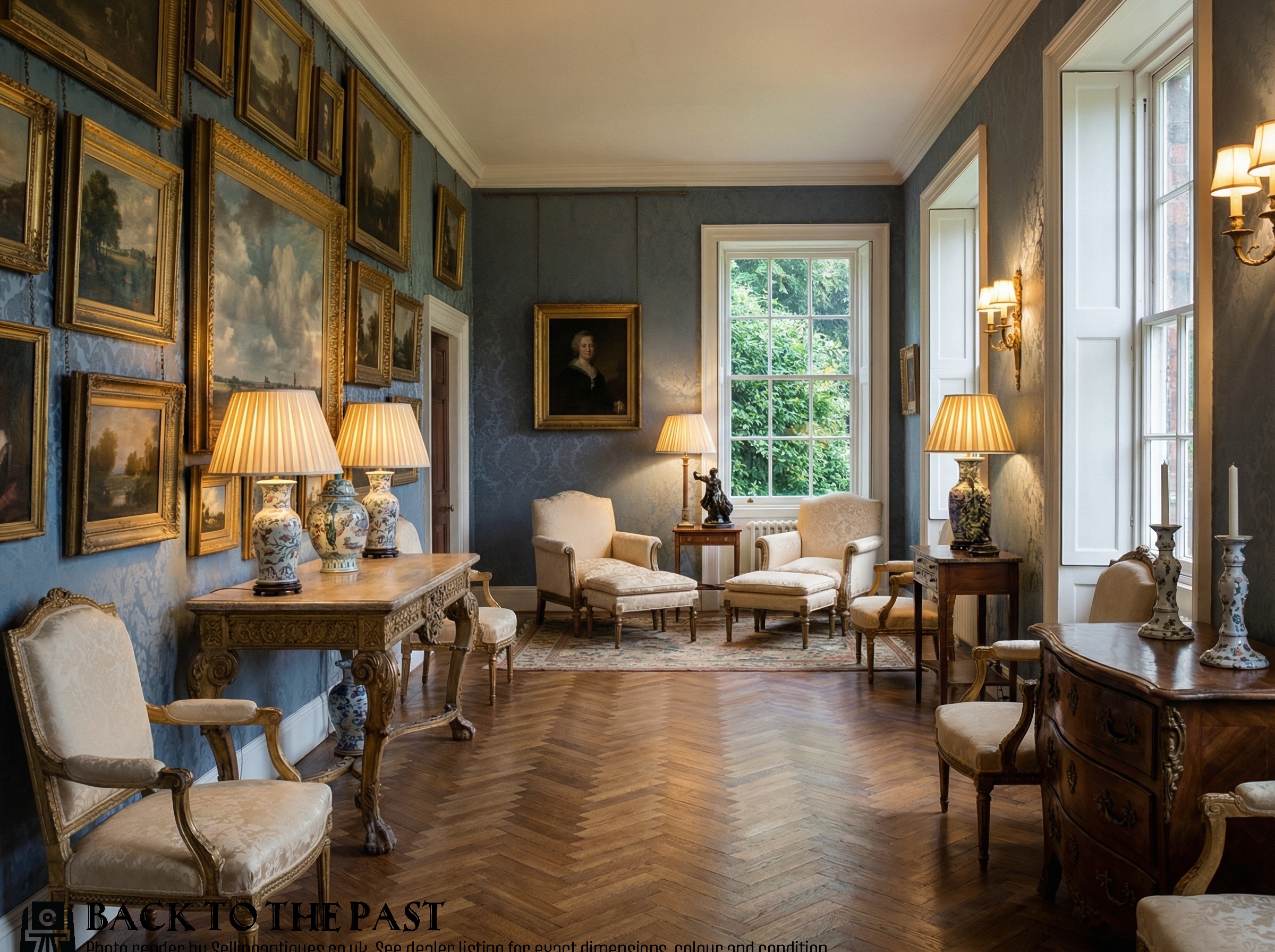
Louis XV Style Bergeres
When buyers search for louis xv style bergeres, they are looking for enclosed French seating designed for relaxed sitting rather than formal posture. The versions most commonly met on this page date from the nineteenth and early twentieth centuries, spanning revival periods up to the nineteen-sixties.
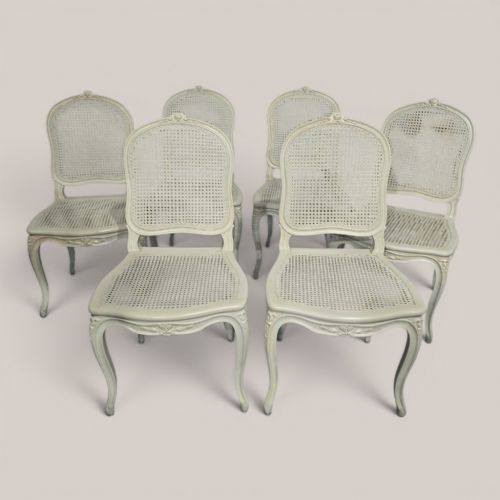
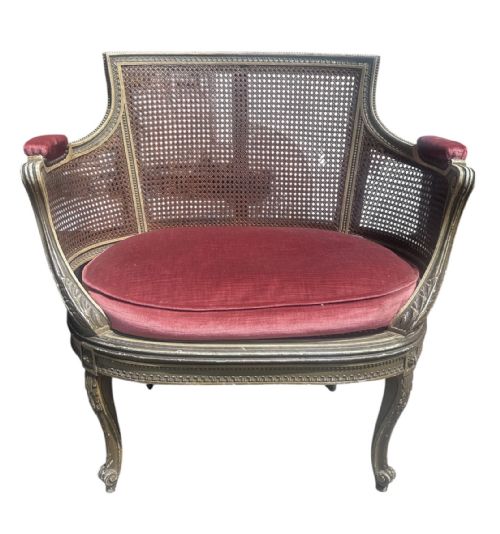
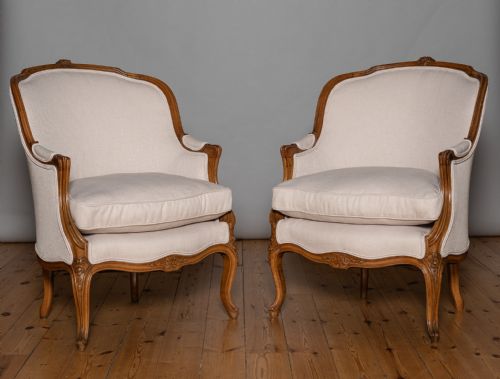
These armchairs and side seats appear in forms including tub chairs, library chairs, and larger matching pairs. Examples range from simple painted frames with woven cane panels to ornate giltwood and carved walnut constructions finished in silk or velvet.
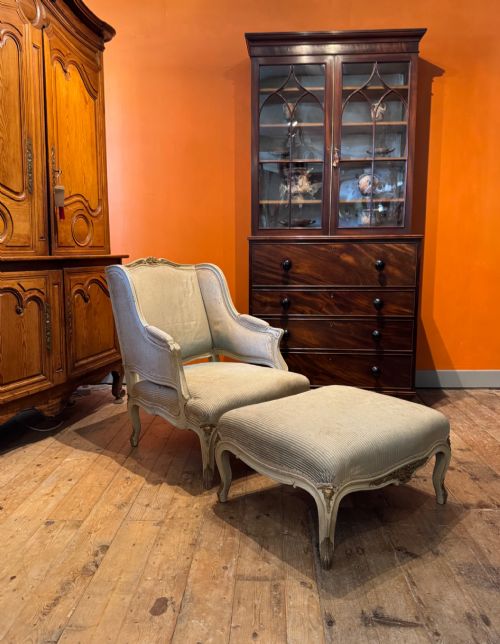
The selection also includes related chaise longues and duchesse brisée pieces alongside dining sets. Their origins trace back to French chateau workshops and provincial interpretations brought over to British homes.
How they were made
Makers shaped structural timber such as walnut, beech, and oak into sweeping cabriole legs and serpentine rails using hand-carving techniques. Giltwood surfaces received thin layers of gold leaf over preparation grounds, while painted frames retained their original or subsequent decorative coatings.
Caning material, including rattan cane, was hand-woven through drilled holes to form taut side and back panels on breathable seating. Upholstery combined traditional webbing and stuffing beneath top coverings of pure silk, velvet, and patterned fabric.
Some chairs retain original nineteenth-century silk velvet that has survived generations of quiet reading.
What varies in quality
The distinction between ordinary and exceptional pieces rests upon the crispness of the hand-carved floral and foliate motifs on the wooden frames. Deep relief work carved directly into solid walnut or beech indicates superior craftsmanship compared to shallow or mechanical shaping.
Structural integrity of the integrated cane panels and the weight of the underlying timber frame dictate lasting utility. Original surface treatments, such as untouched period paint or genuine gilding, elevate an example above later repainted or stripped equivalents.
The Louis XV Style Bergeres Glossary
- Bergere
- An enclosed upholstered armchair with solid wooden sides and a loose seat cushion. This form developed in France during the reign of Louis XV to provide draught-free comfort.
- Duchesse brisee
- A multi-part chaise longue comprising an armchair combined with one or two footstools to form a continuous resting surface. It translates literally as a broken duchess.
- Giltwood
- Timber decorated with a thin layer of gold leaf applied over a gesso base. This finish was used on high-status salon furniture.
- Cane
- A woven material derived from the peeled inner portion of rattan palm stems. It provides a flexible, lightweight backing for chairs.
- Cabriole leg
- A furniture leg that curves out in a convex shape at the top and tapers inward in a concave shape below, ending in a pad or scroll foot.
Louis XV Style Bergeres: Frequently Asked Questions
What is a bergere?
A bergere is a French upholstered armchair characterised by enclosed sides filled with upholstery or woven cane. They differ from open-sided armchairs by offering a cosier, deeper seat.
These chairs were designed for indoor drawing rooms and boudoirs where comfort took precedence over upright posture.
How do I identify Louis XV style?
The style is identified by asymmetrical curves, cabriole legs, and carved floral motifs free of straight lines. Wood frames often display sweeping serpentine shapes rather than geometric angles.
Looking at the joins and carving depth helps distinguish nineteenth-century revival pieces from original eighteenth-century items.
Where should I place these chairs?
These armchairs suit sitting rooms, bedrooms, and studies where their decorative carved frames can be viewed from multiple angles. Pairs work well positioned opposite a fireplace or flanking a low table.
Because of their enclosed sides, they create a distinct seating zone without blocking light.
Are cane panels fragile?
Hand-woven rattan cane is surprisingly resilient when treated with care and kept away from direct heat sources. It flexes under weight to support the sitter.
Avoid pushing heavy objects against the woven sides to prevent snapping the individual strands.