
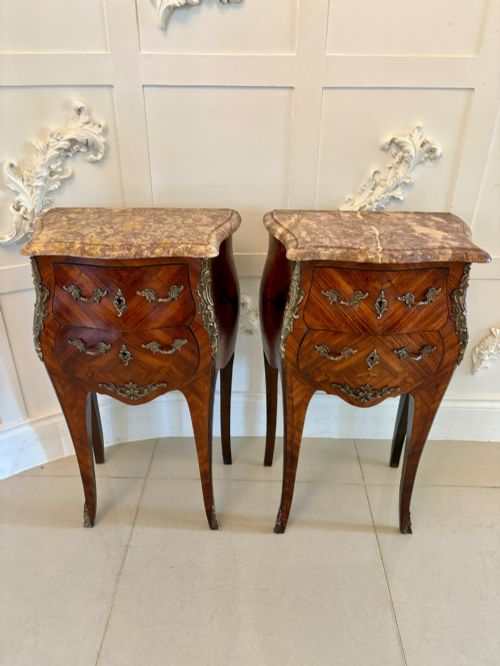
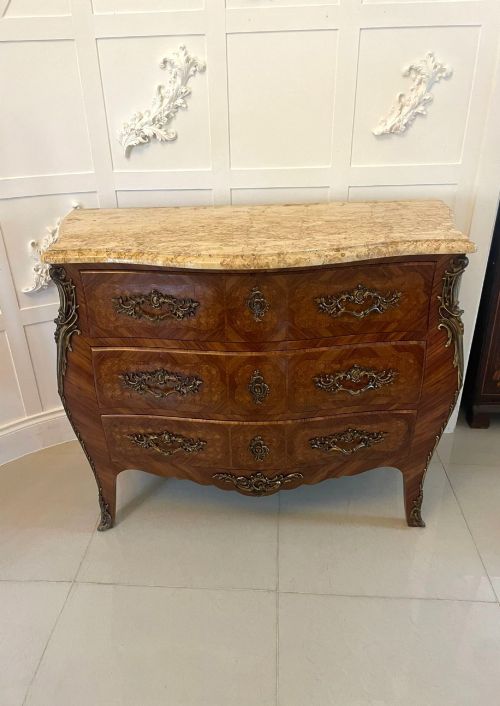
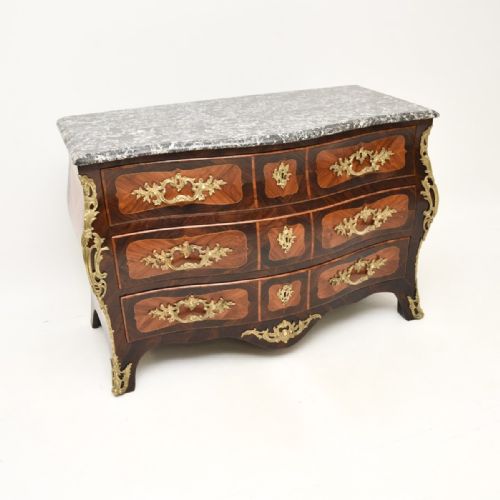
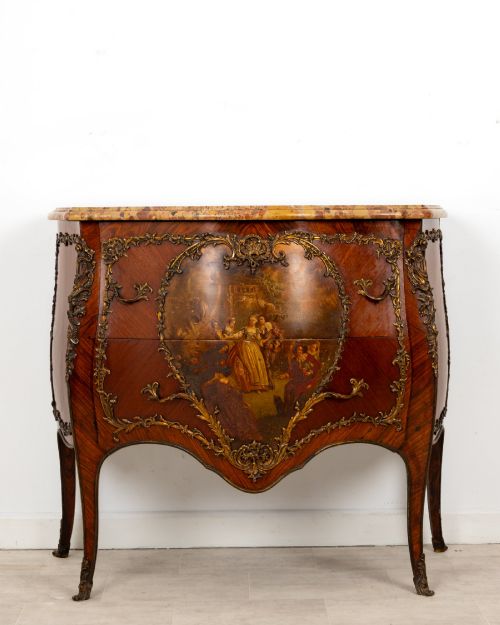
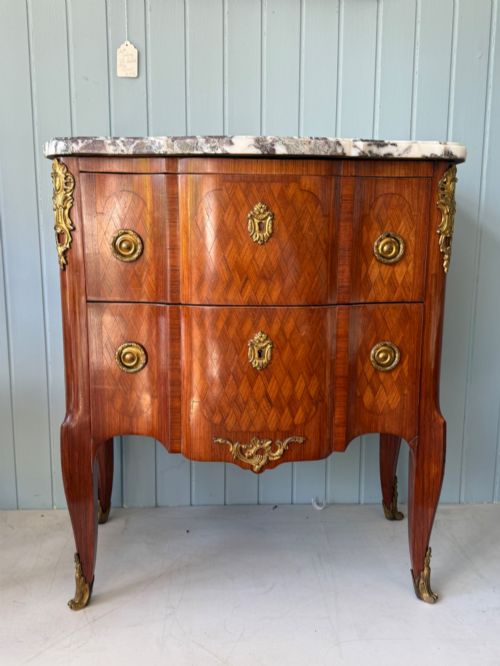
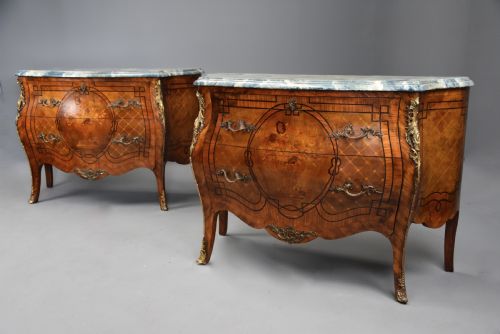
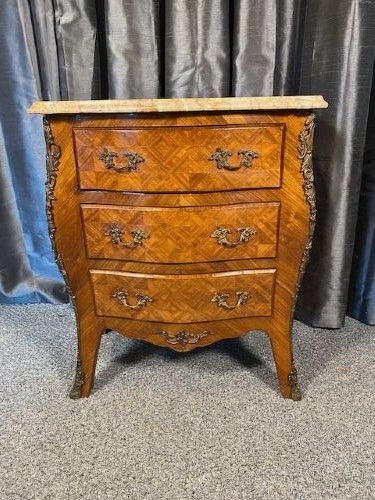
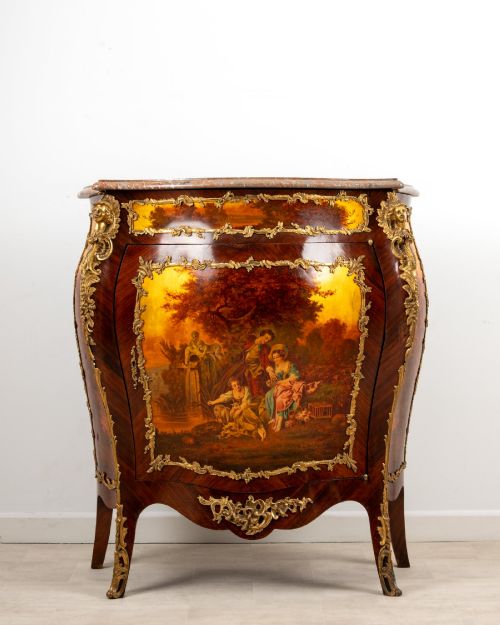
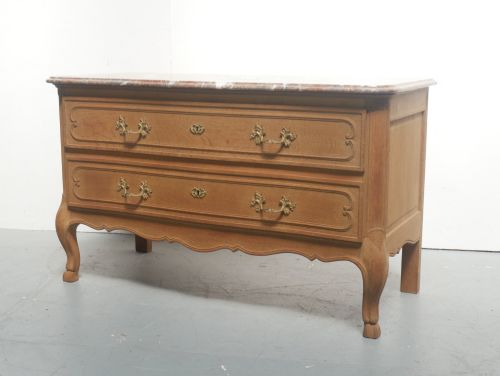
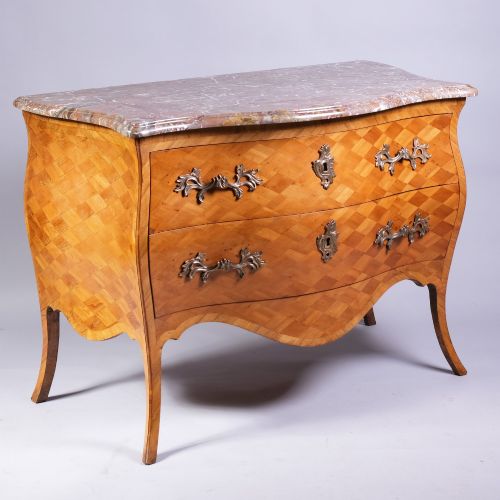
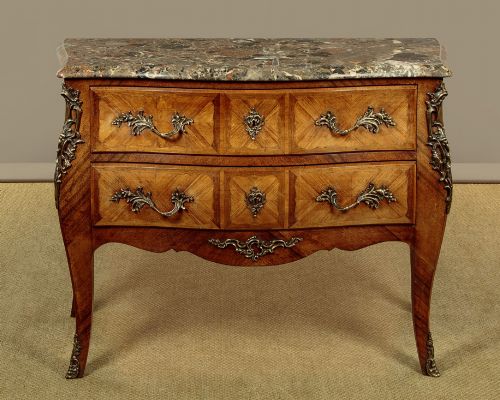
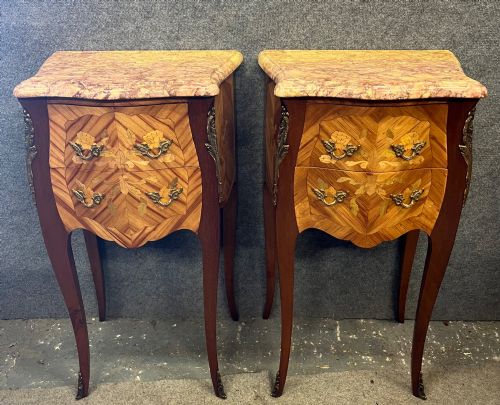
Louis XV Marble Top Commode
When you search for a louis xv marble top commode, you seek a distinguished French chest of drawers crowned with stone.
Louis XV Marble Top Commode
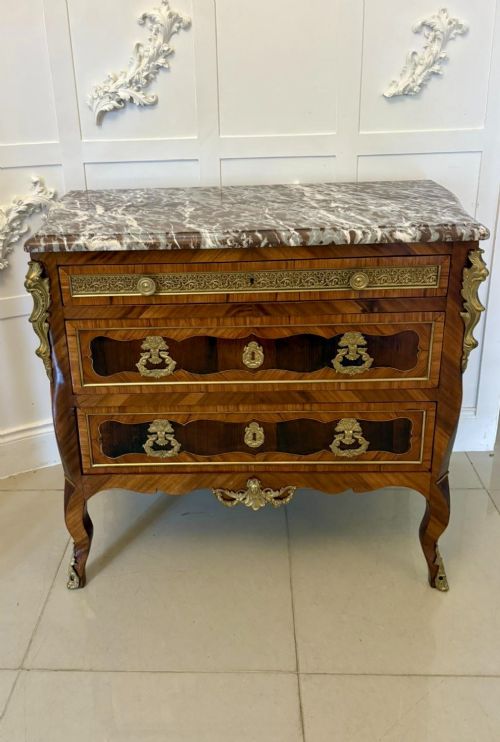
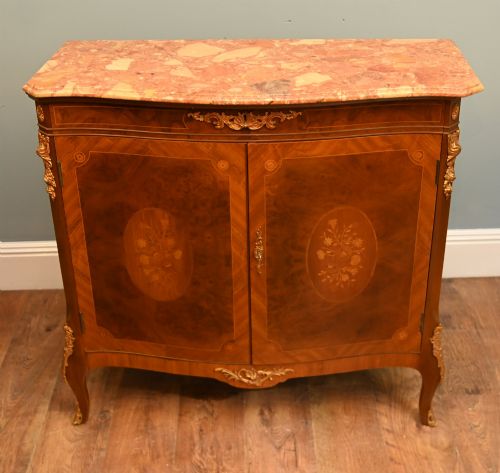
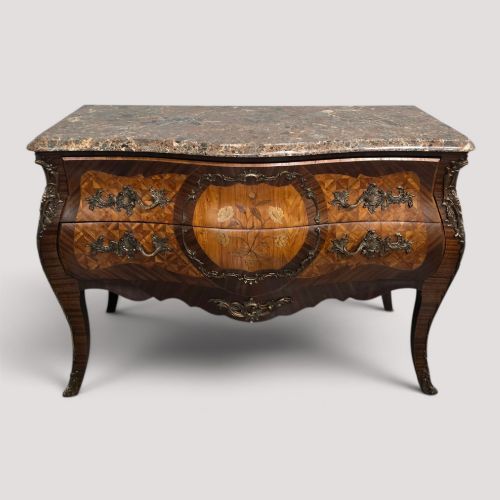
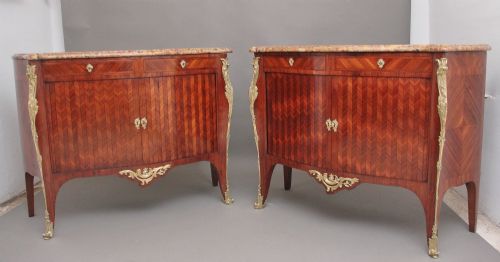
A louis xv marble top commode functions as a low chest of drawers or side cabinet, historically placed in formal reception rooms and bedchambers. These pieces combine utilitarian storage with decorative presence through serpentine and bombe silhouettes.
The material profile on this page spans eighteenth-century origins to nineteenth-century revival interpretations, alongside twentieth-century iterations. Buyers encounter compact bedside cabinets as well as grander proportions suited to principal living spaces.
Originating predominantly from French workshops, the pieces exhibit regional variations from provincial oak designs to elaborate Parisian marquetry. The defining element remains the fitted marble slab resting upon the wooden carcass.
Evaluating Craftsmanship
The precision of the veneer work and the complexity of the marquetry signal higher workshop standards. Crisp articulation in the bronze or ormolu mounts, showing sharp chased details rather than soft casts, elevates an individual piece.
Construction methods visible within the drawer linings and carcass joints distinguish bespoke cabinetmaking from mass production. The integration and thickness of the stone top, alongside the harmony between bronze mounts and wooden contours, determine overall distinction.
Listings feature walnut, kingwood, oak, and rosewood timbers paired with ormolu mounts and marble tops across eighteenth and nineteenth-century periods.
Jacques Bircklé·E. Kahn
The Louis XV Marble Top Commode Glossary
- Bombe
- A swelling, outward-curving contour on the front and sides of a cabinet. This curved profile demands advanced woodworking skill to shape veneers accurately.
- Ormolu
- Gilded bronze used for decorative mounts and handles. The technique involves applying a mercury and gold amalgam to cast bronze before heating.
- Marquetry
- Inlaid wood veneers forming pictorial or geometric patterns. Artisans cut various coloured timbers together to create seamless interlocking designs.
- Parquetry
- Geometric wood veneer patterns arranged in repeating grids. Squares, triangles, and lozenges form structured architectural surfaces across the drawer fronts.
- Serpentine
- A line curving inward centrally and outward at the ends. This undulating shape appears frequently on the front edges of both the wooden carcass and the marble top.
Louis XV Marble Top Commode: Frequently Asked Questions
How do I identify a revival piece?
Nineteenth-century revival pieces emulate eighteenth-century aesthetics using contemporary mechanical tools and standardised hardware construction. Examining internal secondary timbers and drawer dovetailing often reveals the later nineteenth-century manufacturing date.
Stylistic cues such as heavier ormolu mounts and specific revival proportions also distinguish these later interpretations from period originals. Many bear workshop stamps or plaques from prominent nineteenth-century Parisian cabinetmakers.
How should I care for the marble top?
Marble surfaces require gentle cleaning with warm water and neutral soap to preserve the polish and prevent staining. Acidic substances like citrus juice or wine etch the stone surface immediately if left unattended.
Using coasters and avoiding harsh chemical abrasives maintains the natural finish of the stone over decades of daily use. Periodic professional polishing restores the sheen if the historical top loses its lustre.
Where should I place a commode at home?
These chests suit hallway entryways, living rooms, and bedrooms as statement storage furniture. Their finished backs and refined sides allow freestanding placement away from walls in larger spaces.
Smaller bedside cabinets function effectively as lamp tables or occasional storage beside seating areas. The stone surface provides a durable landing space for decorative objects and lighting.