


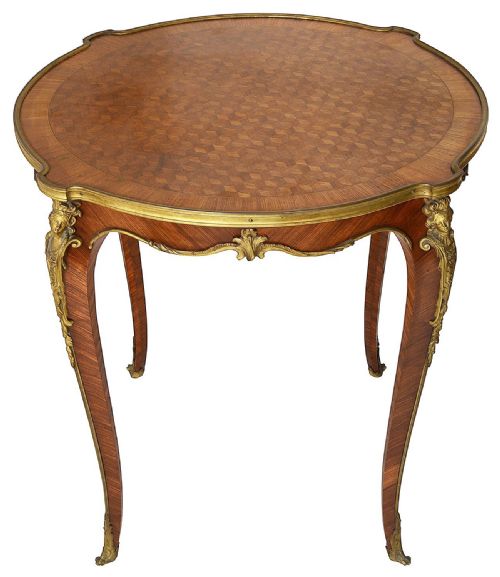
Louis XV Gueridon
A louis xv gueridon brings continental grace to a room, offering a small, decorative surface rooted in French Rococo design.
Louis XV Gueridon
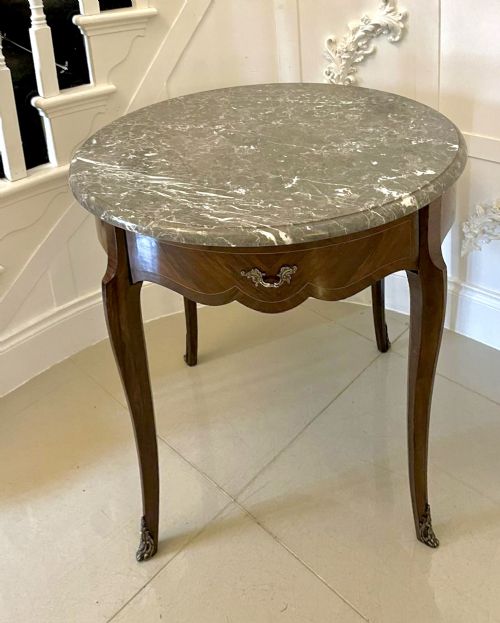
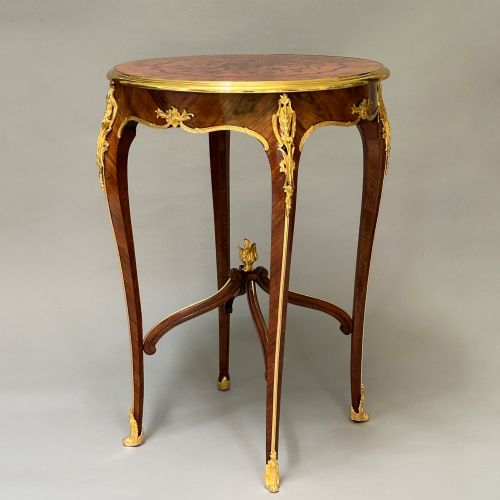
A louis xv gueridon functions primarily as an occasional, wine, or lamp table, designed for portability and display rather than heavy dining use. These pieces emerge in various forms across the nineteenth and early twentieth centuries, drawing heavily on French Rococo Revival styles.
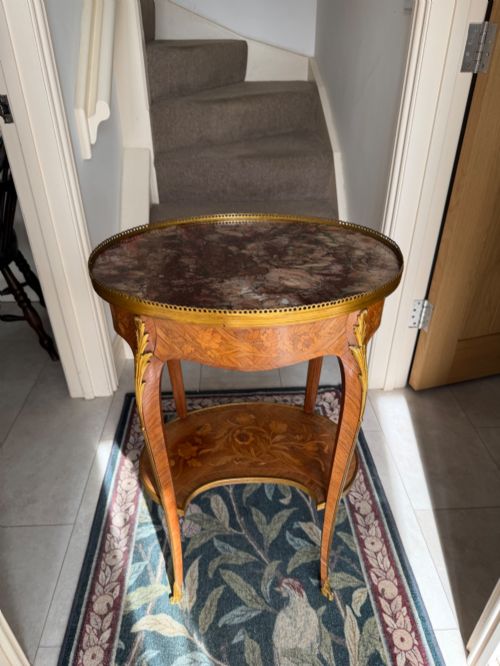
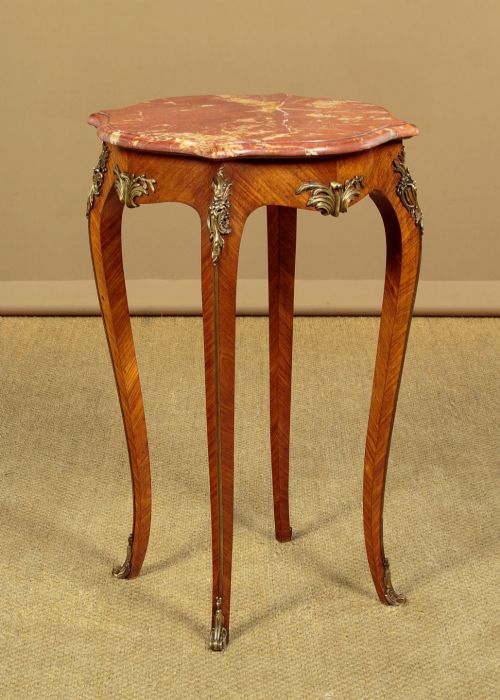
The versions met most frequently on this page feature circular tops of marble or inlaid wood, supported by slender cabriole legs. Such tables embody the curved lines and lightness associated with the Louis XV aesthetic, even when manufactured during later nineteenth or twentieth-century revivals.
Makers often fashioned these small tables to serve multiple functions in a Parisian interior, functioning as centre tables or pedestals. Surviving examples demonstrate the enduring popularity of French design motifs well beyond their original eighteenth-century epoch.
Assessing Quality and Execution
The refinement of the cast ormolu and gilt bronze mounts distinguishes superior examples from standard production pieces. Finely chased metalwork exhibits crisp detail and secure attachment to the surrounding wood or stone.
The execution of the timber inlay and the quality of the marble or onyx top indicate the original maker's skill. Heavier, more substantial stone slabs and precise parquetry patterns reflect higher tiers of craftsmanship.
Materials recorded on this page include ormolu, marble, brass, kingwood, walnut, gilt bronze, mahogany, and onyx.
Francois Linke·L.Martin of Paris·Zwiener Jansen Sucesseur
The Louis XV Gueridon Glossary
- Gueridon
- A small occasional table or stand, often round and supported by a central pillar or slender legs. This French form gained popularity during the seventeenth century and inspired numerous revivals.
- Ormolu
- Gilding technique utilising ground gold applied to a bronze or brass base object. This decorative metal appears widely on French revival furniture mounts.
- Marquetry
- Decorative veneer applied to furniture in pictorial or geometric patterns using various coloured woods. Artisans cut these thin pieces together to fit flush across tabletops.
- Cabriole leg
- Furniture leg featuring a double curve, typically arching outward then bending inward toward the foot. This form derives from animal limbs and defines the Louis XV style.
- Parquetry
- Geometric mosaic woodwork used for flooring and furniture surfaces. It differs from marquetry by employing repeating angular shapes rather than pictorial designs.
Louis XV Gueridon: Frequently Asked Questions
What is a gueridon table?
A gueridon is a small, movable French table used historically for holding lamps, wine, or decorative objects. These pieces typically feature circular tops and slender legs suited to domestic display.
Today, buyers use them as occasional or side tables in sitting rooms and hallways. Their compact footprint allows them to fit easily into smaller spaces.
Are these tables from the eighteenth century?
Most pieces found here date from the nineteenth and early twentieth centuries, created during revivals of the Louis XV style. Makers of this later era adopted the forms and techniques of earlier French cabinetmakers.
These nineteenth and twentieth-century interpretations carry the stylistic hallmarks of the original period. They offer a way to acquire French design aesthetics without the eighteenth-century provenance.
What tops do these tables have?
Surviving tables commonly feature circular tops made from marble or onyx, often surrounded by a pierced metal gallery. Alternatively, many showcase wood surfaces adorned with kingwood marquetry or parquetry inlay.
Both stone and inlaid wood tops sit atop gilt bronze or ormolu mounts. The choice of material influences the overall weight and decorative character of the piece.
How do I care for marble tops?
Marble surfaces require gentle cleaning with a damp cloth and mild soap to protect the polished finish. Acidic liquids should be wiped away promptly to prevent staining the stone.
Wooden bases and gilt mounts benefit from dusting with a soft dry cloth. Avoiding direct sunlight helps preserve the colour of the timber veneers.