




Louis XV Beds
Louis xv beds bring sweeping organic lines and classic French provincial elegance directly into the modern bedroom.
Louis XV Beds
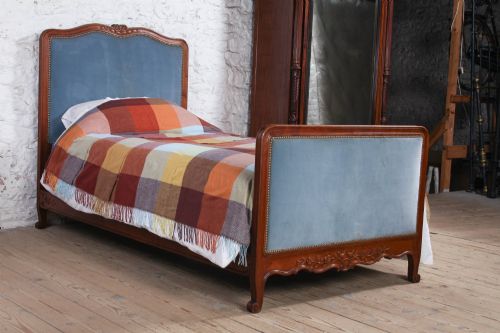
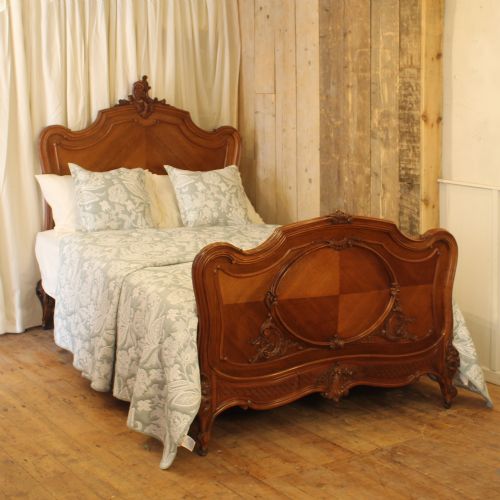
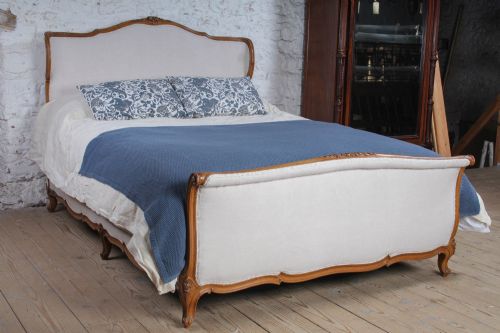
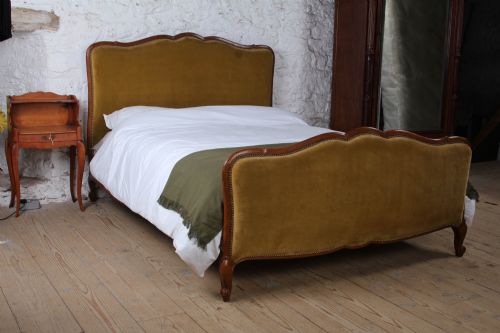
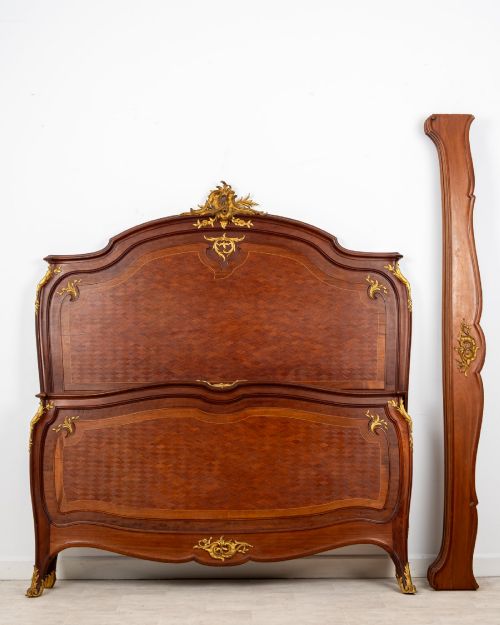
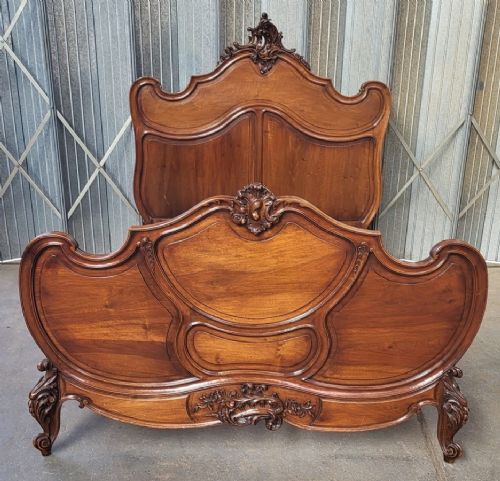
When searching for louis xv beds, buyers encounter graceful timber bedframes distinguished by curving cabriole legs, asymmetric scrollwork, and flowing floral cartouches characteristic of the Rococo aesthetic. The pieces appearing on this page span from the late nineteenth century through the early twentieth century, capturing revivals that echo eighteenth-century court furniture.
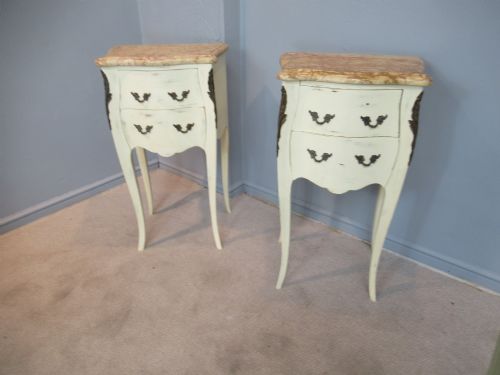
Most examples emerge in rich hardwoods or painted finishes, frequently paired with upholstered headboards in neutral fabrics or traditional textiles. Alongside full bedsteads, the selection occasionally incorporates complementary forms such as daybeds, bedside tables, and matching bedroom suites that share the signature curvilinear silhouette.
How they were made
Cabinetmakers constructed these bedframes primarily using solid walnut, oak, and kingwood, often applying intricate parquetry or marquetry veneers to curved surfaces. Artisans shaped the timber by hand, carving deep floral motifs and sweeping mouldings directly into the structural wood.
Finishes ranged from natural polished grain and bleached oak to painted and giltwood treatments designed to emulate high-status court pieces. Many bedsteads integrated applied brass or ormolu mounts to highlight the joints and accentuate the flowing structural lines.
Louis XV Beds Retail Price Guide 2026
Typical asking prices for louis xv beds among the pieces listed under this phrase on Sellingantiques today, from the lower quarter to the upper quarter. They describe what is for sale here now, not the wider market.
Listings feature walnut, oak, and painted wood finishes across nineteenth and early twentieth century bed frames.
What varies in quality
The distinction between ordinary and exceptional pieces rests upon the depth and crispness of the hand-carving along the headboard and footboard. Superior examples display fluid, undercut floral reliefs rather than shallow, mechanically stamped ornamentation.
Construction integrity also defines the tier, with finer bedsteads utilising dense native hardwoods and precise joinery that maintains rigidity across larger king and emperor proportions. The quality of matching ormolu mounts and the precision of veneer work further elevate an individual piece.
The Louis XV Beds Glossary
- Cabriole leg
- A furniture leg that bends outward in a convex curve and tapers inward in a concave curve, ending in a modest foot. This profile mimics animal limbs and forms a cornerstone of Rococo design.
- Ormolu
- Gilded bronze mounts applied to furniture to accent corners, feet, and crests. These decorative elements add metallic contrast to the polished wood surface.
- Marquetry
- The art of applying small pieces of veneer to a structure to form decorative patterns or pictorial scenes. It demands high precision from the woodworker.
- Cartouche
- An ornamental frame resembling a rolled-up piece of paper or parchment, frequently carved centrally on headboards to enclose foliage or crests.
- Rococo Revival
- A nineteenth-century artistic movement that resurrected the ornate, flowing, and asymmetrical design principles of the original French eighteenth-century court style.
Louis XV Beds: Frequently Asked Questions
How do I fit a modern mattress?
Many older French bedsteads were constructed to non-standard continental dimensions rather than modern standard sizes. Adapting them often requires custom slat rolls or bespoke mattress ordering to ensure a secure fit within the antique wooden rails.
Checking the internal length and width dimensions before purchase prevents fitting issues. Modern upholstery techniques also allow base supports to be tailored discreetly for daily sleeping comfort.
Are these beds structurally sturdy?
Solid hardwood frames from the nineteenth and twentieth centuries offer robust durability when the original joinery remains tight. Periodic maintenance of side rails and bolt connections keeps the structure stable under modern weight loads.
Careful handling during assembly prevents stress on carved decorative elements and slender cabriole legs. Professional tightening of internal brackets preserves the long-term integrity of the bedstead.
How do I clean the wood finish?
Dusting regularly with a dry, soft cloth prevents particulate buildup on carved surfaces and delicate veneer work. Waxing polished walnut or oak periodically maintains the natural moisture and sheen of the timber.
Harsh chemical cleaners and excessive water should be avoided entirely to protect aged varnish and gilt highlights. Gentle care preserves the historical patina accumulated over decades of use.
Can I match these with other furniture?
Pairing these pieces with complementary walnut or painted items creates a cohesive bedroom scheme without requiring an exact suite. Matching bedside tables and small wardrobes often appear alongside the larger bedframes to complete the aesthetic.
Mixing wood tones works successfully when the period styles share similar decorative restraint or carved detailing. Coordinated textiles on upholstery further unify disparate bedroom elements.