

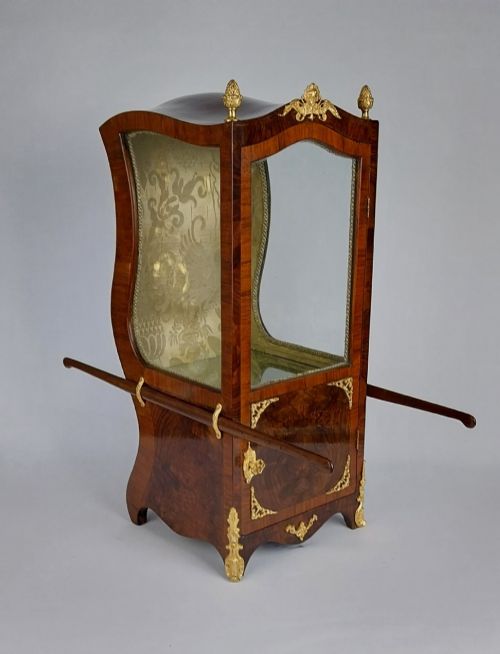
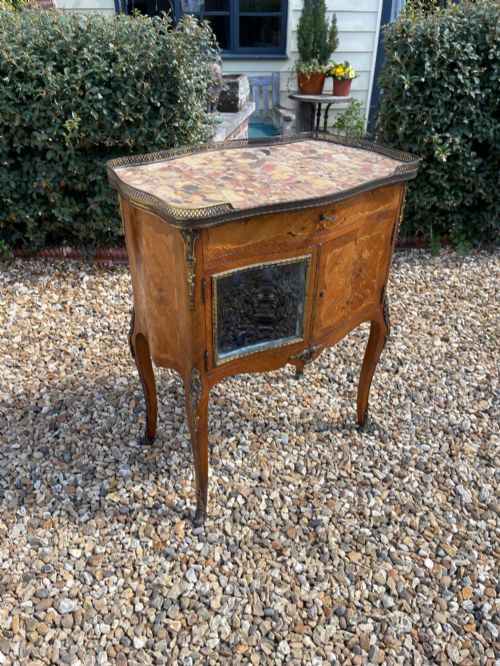


Louis Style Display Table
A louis style display table brings continental elegance into a room, offering a glazed or tiered surface designed to showcase small treasures.
Louis Style Display Table
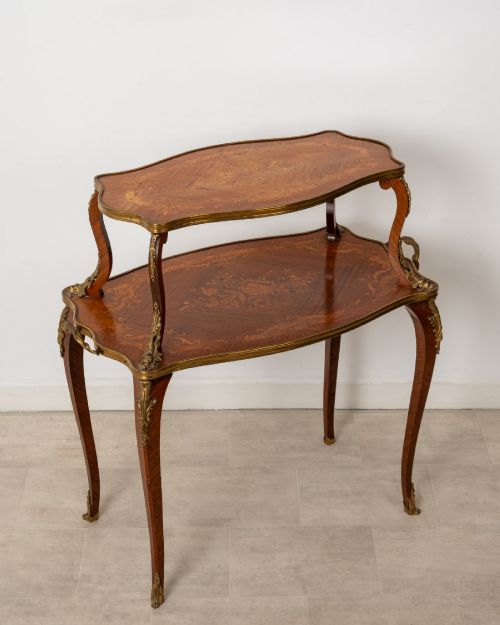
When you search for a louis style display table, you find pieces that span the nineteenth century into the twentieth, drawing on French Rococo Revival and Louis XV or Louis XVI aesthetics. These items appear as bijouterie tables, etageres, and glazed cabinets designed to hold and exhibit collections.
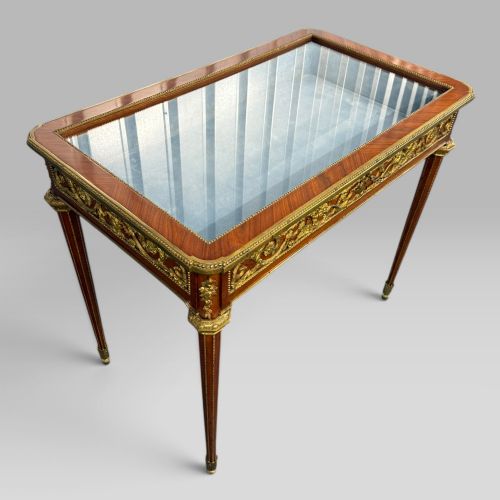
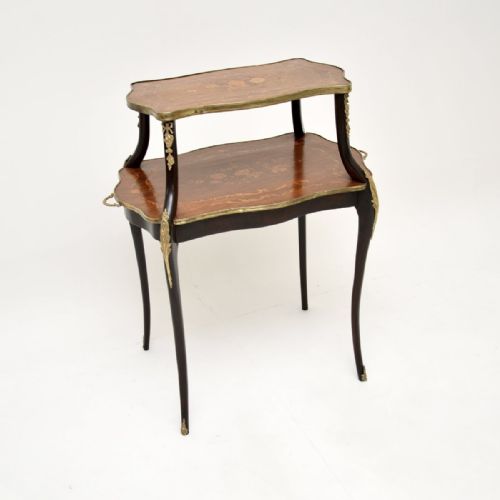
The version you are most likely to meet on this page combines mahogany, walnut, or kingwood with glass panels and metal mounts, often taking the form of a multi-tiered etagere or a hinged display table. Their origins stretch across French and continental workshops from the eighteen-fifties onward.
Such furniture served a domestic purpose in boudoirs and salons, where hosts displayed intimate possessions, medals, or fine ornaments under glass. Today, they function in modern interiors to hold small collectibles while retaining a distinct period character.
How they were made
Cabinetmakers built these pieces using dense hardwoods like mahogany, walnut, kingwood, and rosewood, frequently applying intricate marquetry or parquetry veneers in geometric and floral patterns. Frames often incorporate curved cabriole legs or slender uprights suited to support glass tops and shelves.
Mounts and decorative details rely on cast brass and ormolu, which provide gilded accents along table rims, legs, and corners. Glazing encloses the display sections, requiring precise joinery to house glass panels securely within wooden or metal frames.
Listings feature woods such as mahogany, walnut, kingwood, and rosewood alongside glass and ormolu mounts.
What varies in quality
The distinction between ordinary and superior pieces rests on the crispness of the bronze or ormolu mounts and the complexity of the wood marquetry. Finer examples display hand-chiseled metalwork and carefully matched veneers that wrap seamlessly around curved surfaces.
Structural refinement also defines the upper range, seen in the smooth operation of hinged vitrine lids and the weight of the glass used in shelves and trays. Lesser examples rely on simpler turned supports and minimal inlay.
The Louis Style Display Table Glossary
- Bijouterie table
- A glass-topped table specifically constructed with a glazed compartment to display small ornaments, jewellery, or medals. These pieces typically feature hinged lids for easy access.
- Etagere
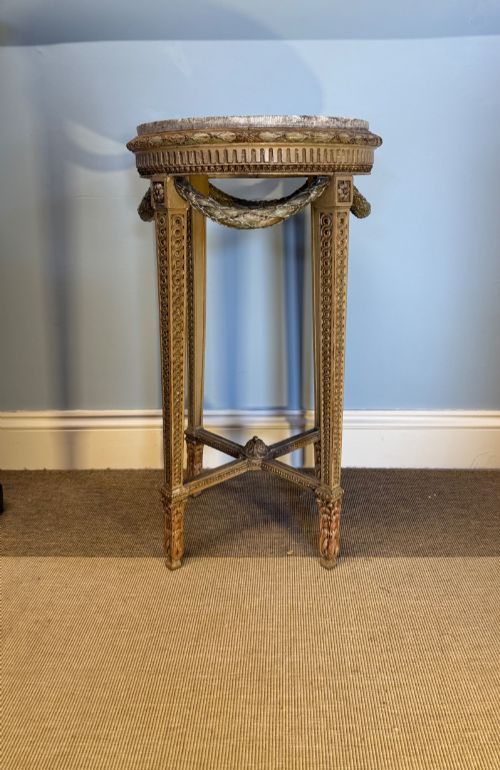
- An open tiered piece of furniture designed for displaying objects across multiple levels. They appear in circular, oval, or kidney shapes with wood or glass surfaces.
- Ormolu
- Gilded bronze used for decorative mounts and accents on furniture. The technique involves applying a gold amalgam to bronze before firing.
- Marquetry
- The art of applying decorative pieces of veneer to a structure to form intricate pictorial or geometric designs. Craftsmen utilise various coloured woods to achieve contrast.
- Vitrine
- A glass cabinet or display case designed to protect and exhibit delicate items. They range from tabletop display boxes to freestanding floor cabinets.
Louis Style Display Table: Frequently Asked Questions
What is a bijouterie table used for?
These tables were originally placed in drawing rooms and boudoirs to showcase personal collections of small valuables, coins, or curiosities under glass.
Today, they serve the same decorative function, allowing collectors to exhibit small items while keeping them protected from dust.
How do I date a louis style display table?
Dating relies on examining the timber construction, the style of the brass or ormolu mounts, and the cut of the glass. Most pieces on this page originate from the nineteenth-century revival periods up through the Edwardian era.
Makers often drew inspiration from earlier French royal reigns, so the decorative vocabulary mimics eighteenth-century forms while utilising nineteenth or twentieth-century manufacturing techniques.
Where should I place an etagere in my home?
An etagere works well in a sitting room or hallway where its multiple tiers can be seen from various angles. Because many versions incorporate glass trays or open shelves, they provide vertical display space without blocking light.
Avoid placing them in direct sunlight to protect vulnerable wood veneers and antique textiles or velvets set inside the display areas.