

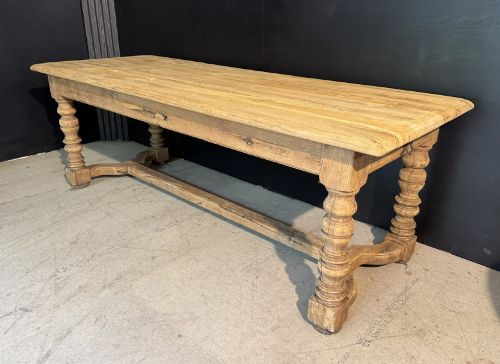
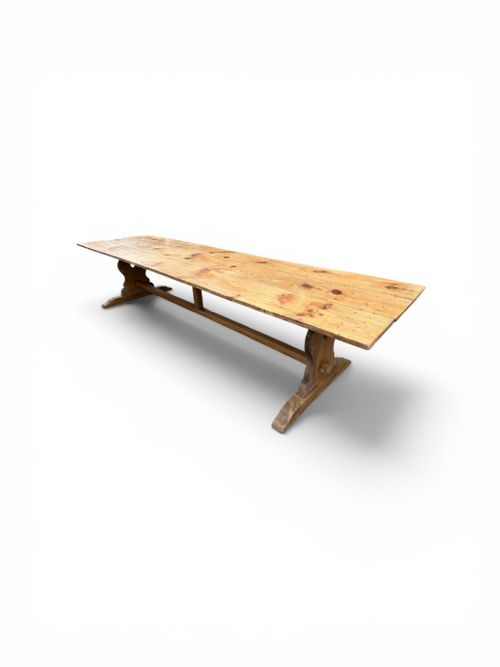


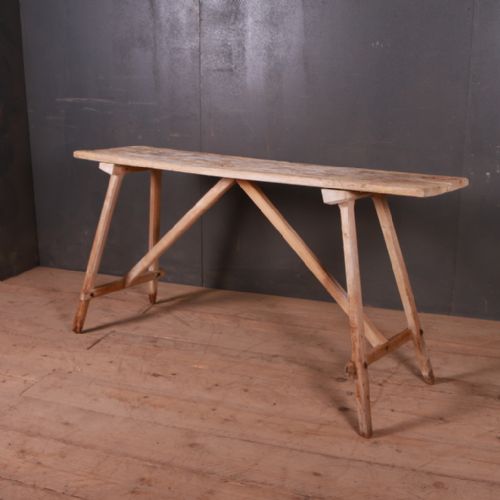


Long Timber Trestle Table
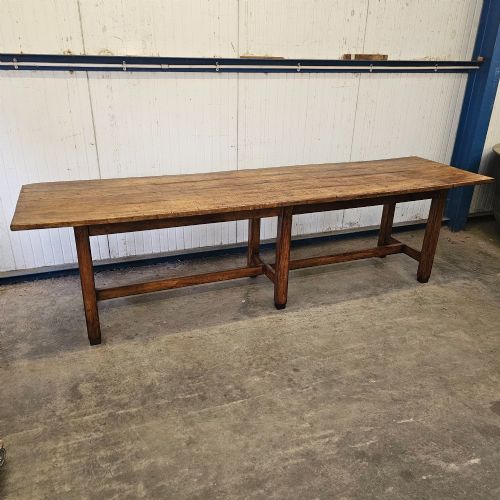
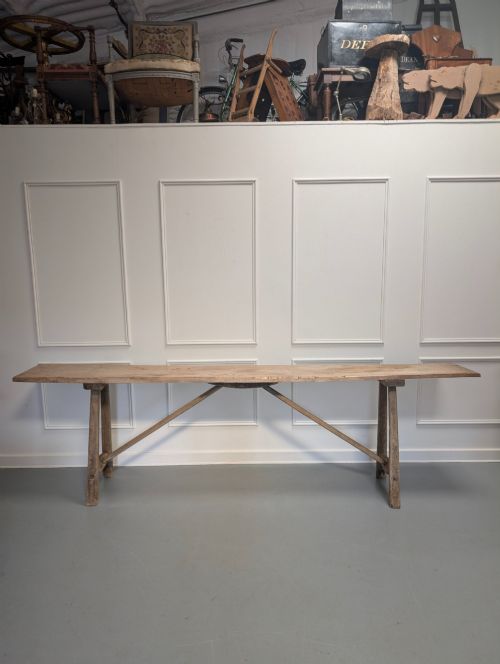
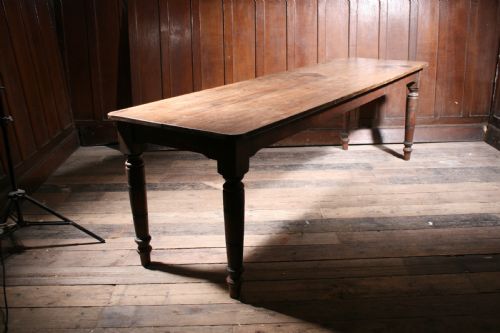
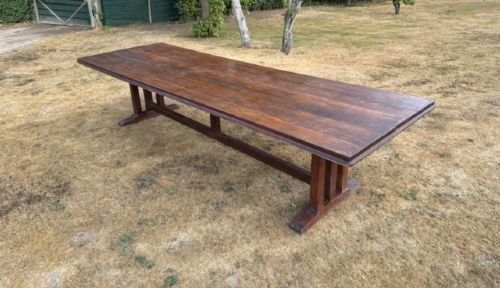
A long timber trestle table provides a generous surface for gathering, built with distinct supporting ends rather than standard corner legs.
Long Timber Trestle Table
When you search for a long timber trestle table, you are looking at substantial dining, kitchen, and preparation surfaces designed with board tops resting on supporting end structures. The pieces available here span the nineteenth century, the Edwardian era, and the early decades of the twentieth century, with distinct regional styles emerging from English, French, and Scandinavian workshops.
You are most likely to meet French country and provincial examples, often constructed from scrubbed poplar, oak, or pine. These forms frequently incorporate trestle ends that allow maximum legroom along the length of the board.
Alternative configurations in the evidence include refectory formats, preparation tables, and paired elm benches. These variations share a utilitarian past, moving from kitchens and workrooms into domestic dining spaces.
Materials and construction methods
Makers utilised solid timbers native to their regions, relying heavily on pine, oak, elm, and poplar for the primary tops and structural frames. These woods were chosen for their density and availability, resulting in heavy boards capable of withstanding daily labour and dining use.
Secondary materials appear in specific structural roles, with iron and brass components sometimes providing bracing or mechanical support. Joinery techniques prioritize stability, locking thick timber tops securely onto sturdy trestle bases without complex modern hardware.
Long Timber Trestle Table Retail Price Guide 2026
Typical asking prices for long timber trestle table among the pieces listed under this phrase on Sellingantiques today, from the lower quarter to the upper quarter. They describe what is for sale here now, not the wider market.
Listings feature timber varieties including pine, oak, elm, poplar, and walnut across French, English, and Scandinavian styles.
Judging quality in a trestle table
Quality in these surfaces rests upon the selection and thickness of the primary timber board. Dense hardwoods like oak and elm command greater respect than softer pines, showing deeper patination and enduring strength across the centuries.
The sophistication of the trestle base design dictates the architectural merit of the piece. Well-proportioned supports that distribute weight effectively without excessive bulk separate standard utility boards from finer provincial examples.
The Long Timber Trestle Table Glossary
- Trestle table
- A board supported by two or more upright structures at each end. This design maximises legroom by eliminating corner legs.
- Refectory table
- A long, narrow dining table traditionally used in monastic or institutional dining halls. These examples often feature stretcher bars connecting the lower legs for added rigidity.
- Scrubbed finish
- A timber surface washed repeatedly to remove surface grime and reveal the pale grain beneath. This treatment is common on kitchen and preparation tables.
- Patina
- The surface sheen and colour developed through decades of handling, cleaning, and use. It indicates age and physical history.
Long Timber Trestle Table: Frequently Asked Questions
What is a trestle table?
A trestle table consists of a long, horizontal top supported by vertical end assemblies rather than four individual corner legs. This construction style offers practical advantages for seating arrangements.
The design dates back centuries for communal dining and work spaces where benches needed to slide completely underneath the surface.
How were these tables used?
These pieces served heavy domestic and functional roles in kitchens, preparation rooms, and dining halls. They provided stable surfaces for food preparation, daily meals, and communal gatherings.
Over time, their sturdy utility made them natural candidates for modern dining rooms and open-plan living areas.
How do I date a table?
Dating relies on observing material choices, construction tool marks, and regional style indicators. Nineteenth-century and early twentieth-century examples display specific timber cuts and joinery methods consistent with their period.
Comparing the primary wood species, such as oak, pine, or poplar, against known regional furniture traditions helps narrow the timeline.
Can I use these tables daily?
These surfaces were built for heavy, practical work long before entering the antique market. Solid timber construction makes them exceptionally resilient for everyday dining and family use.
Maintaining the wood with appropriate oils or waxes protects the historic surface while accommodating modern domestic routines.