

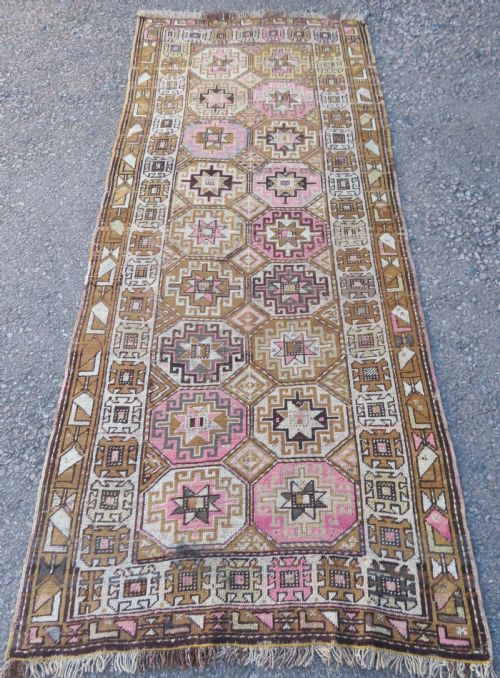
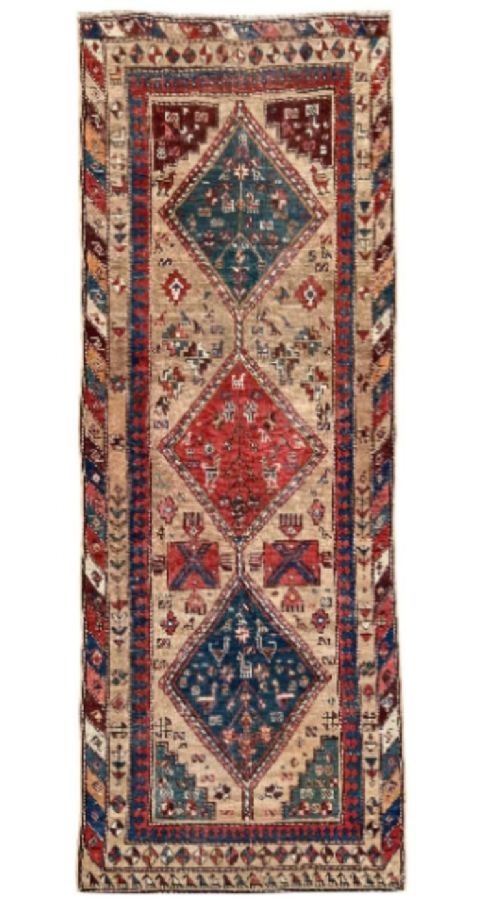
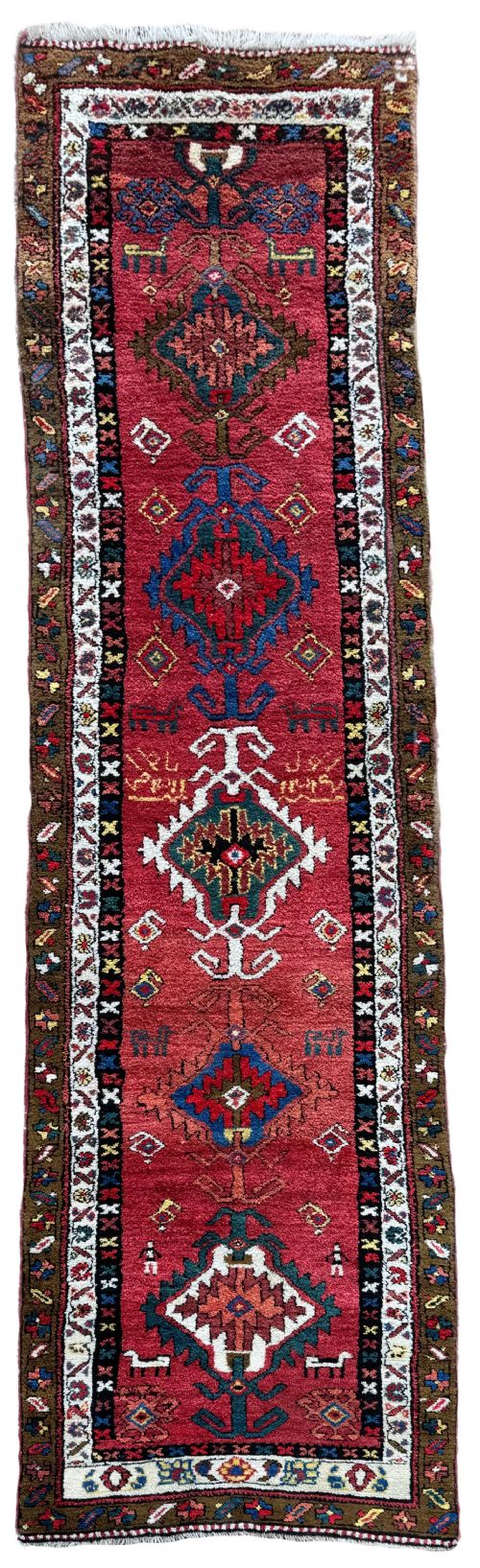
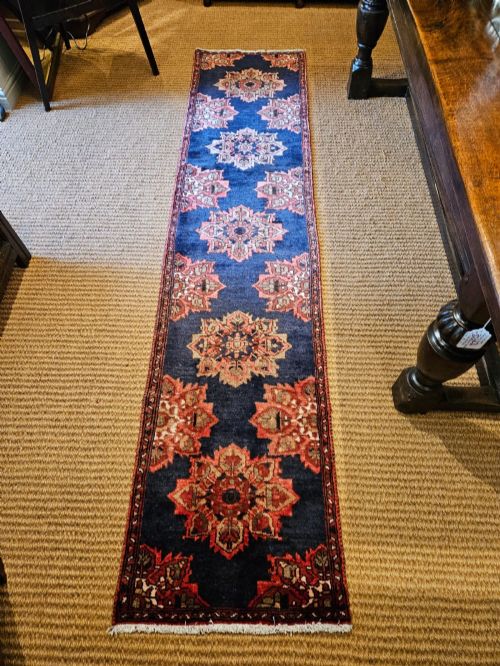
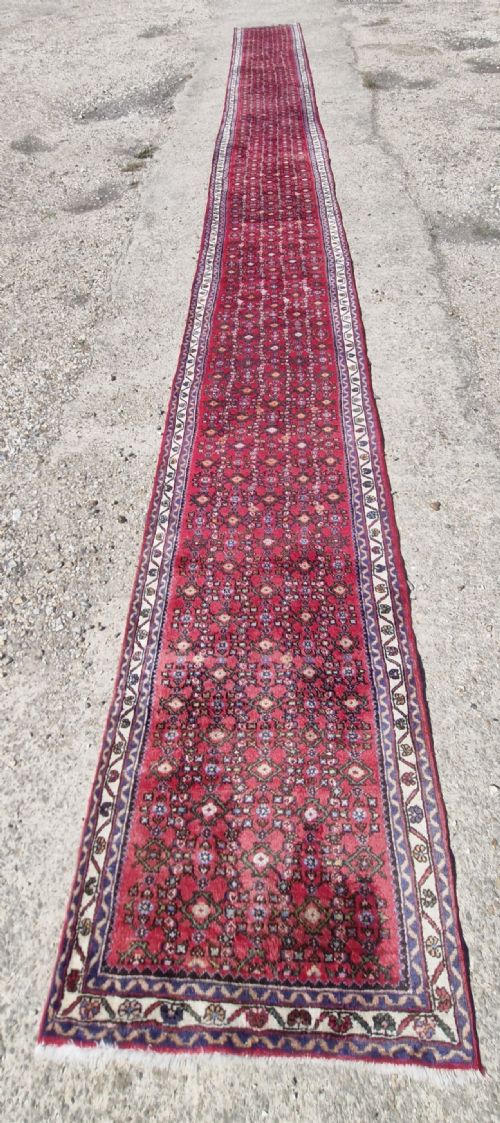
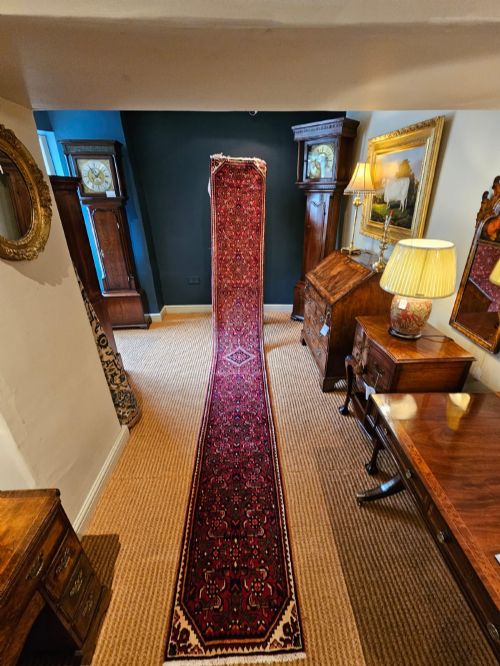

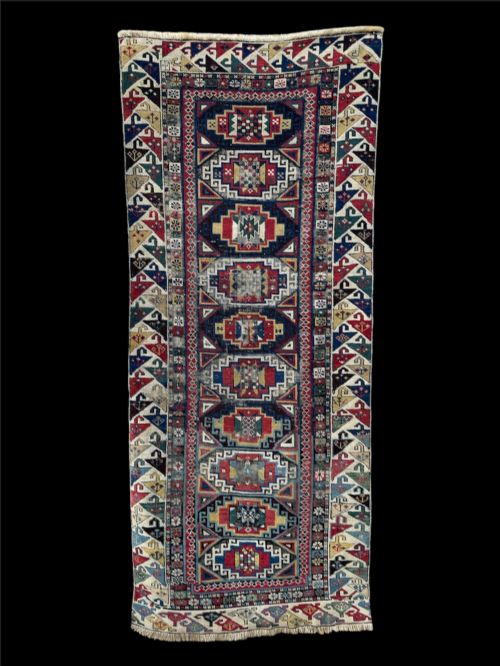
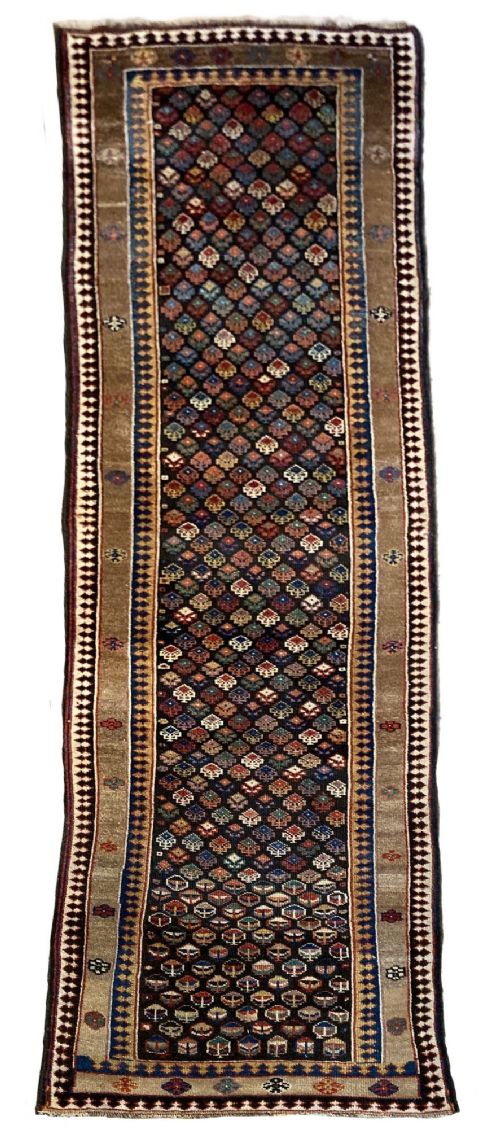


Long Persian Hall Runner
A long persian hall runner brings linear pattern and texture to narrow spaces, formed of traditional weaves that suit high-traffic floors.
Long Persian Hall Runner
A long persian hall runner is a narrow, elongated textile designed for corridors, landings and extended domestic spaces. These floor coverings bridge rooms while adding warmth and pattern to plain timber or stone floors.
The selection ranges from nineteenth-century pieces to mid-century examples originating from distinct regional weaving traditions. Buyers encounter village and tribal formats alongside town pieces, spanning diverse lengths from compact spans to exceptional thirty-foot dimensions.
Village and tribal workshops produced many of the pieces seen here, with Kurdish, Heriz and Hamadan designs appearing frequently. These rugs often display geometric medallions, boteh motifs or repeating field patterns adapted specifically for narrow proportions.
How they were made
Weavers constructed these runners using wool pile knotted onto sturdy foundations of cotton or wool warp andweft. Camel hair also appears in specific foundational or pile elements, adding natural undyed tone and durability.
Natural dye stuffs provided the rich reds, blues and earth tones that characterise these textiles. Hand-knotting techniques varied by region, resulting in differing pile densities and structural weights across tribal and village workshops.
Long Persian Hall Runner Retail Price Guide 2026
Typical asking prices for long persian hall runner among the pieces listed under this phrase on Sellingantiques today, from the lower quarter to the upper quarter. They describe what is for sale here now, not the wider market.
Listings feature nineteenth-century and twentieth-century examples, spanning periods from eighteen-fifty to nineteen-sixty in wool, cotton and camel hair.
What varies in quality
Knot density and structural integrity distinguish finer examples from coarser village work, influencing how sharply the motifs resolve. Handspun wool quality and the depth of the dye saturation contribute to the visual richness of the surface.
Proportion and scale dictate the visual success of a runner in a narrow interior space. Pieces retaining balanced borders and crisp geometry across extended lengths demonstrate greater discipline from the weaver.
The Long Persian Hall Runner Glossary
- Runner
- A long, narrow carpet format specifically proportioned for hallways, stairs and corridors. These pieces measure significantly longer than their width.
- Warp
- The vertical foundation threads stretched lengthwise on the loom before knotting begins. The fringe of the rug typically consists of these exposed threads.
- Weft
- The horizontal threads passed across the warp strands between rows of knots to bind the structure. They maintain the tension and width of the textile.
- Pile
- The upright cut or looped wool surface of the rug that forms the tactile nap. Density of this surface affects both comfort and wear resistance.
- Boteh
- A stylised almond or paisley motif representing a floral shoot or cypress tree. This ancient Persian design element appears frequently within tribal and village borders.
Long Persian Hall Runner: Frequently Asked Questions
Where should I place a long runner?
These narrow textiles suit hallways, corridors and long landings where floors need both protection and visual warmth. Their extended proportions draw the eye down spatial axes.
They also function effectively in wide kitchens or alongside large beds where standard rectangular rugs do not fit the layout.
How do I care for wool runners?
Regular gentle vacuuming without a rotating brush roll keeps dust from settling deep into the wool pile. Professional cleaning maintains the integrity of natural fibres and dyes.
Using an appropriate underlay prevents slipping and cushions the foundation threads against hard flooring surfaces.
Are these runners durable?
Traditional village weaves utilise dense wool pile and sturdy foundations built to withstand decades of foot traffic. Natural lanolin in the wool helps repel daily dirt and moisture.
Proper placement with a quality rug pad reduces friction against the floorboards and extends the functional lifespan of the textile.
How do regional styles differ?
Heriz runners typically display bold geometric medallions and strong structural borders woven with robust village wool. Kurdish and Hamadan pieces often feature repeating Herati patterns or all-over tribal motifs.
Town pieces like Sarouk present finer floral sprays and curved drawing executed on cotton foundations.