
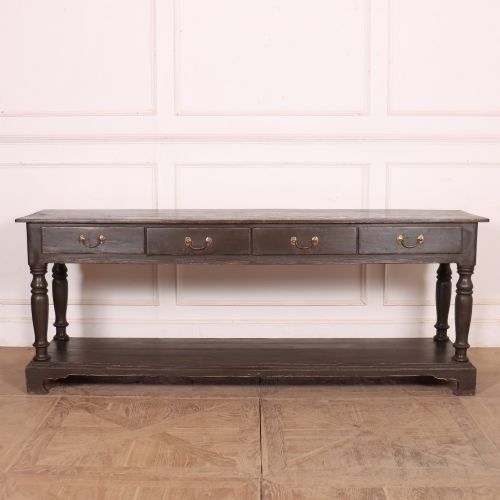


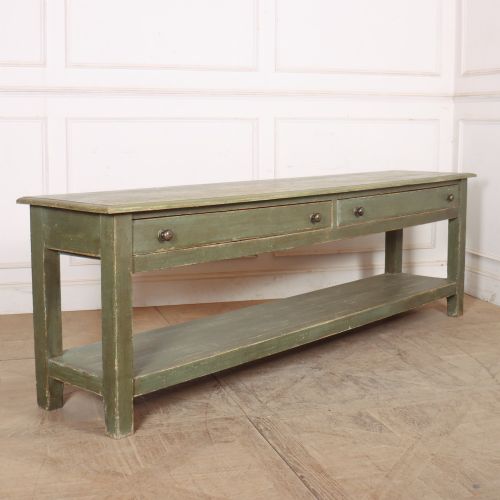


Long Painted Sideboard
A long painted sideboard brings scale and surface to a room, offering generous storage paired with a decorative painted finish.
Long Painted Sideboard
A long painted sideboard encompasses a broad family of substantial storage and serving furniture found across the nineteenth century. These pieces include English country house dresser bases, potboard serving tables, French drapers tables, and Swedish enfilades.
Most examples encountered here date from the nineteenth century, spanning Victorian works and specific decades such as the eighteen-eighties and eighteen-nineties. Forms range from bank of drawers units to open pot-shelf servers.
Stylistically, the selection draws heavily on English country, rustic farmhouse, French provincial, and Gustavian traditions. A buyer is most likely to meet substantial timber frameworks finished in aged paint.
How they were made
Construction relies primarily on sturdy structural timbers such as pine and oak, combined to create heavy-duty frames capable of daily domestic or commercial use. Surfaces are finished with layers of paint, sometimes exposing the underlying timber through natural wear.
Hardware details incorporate brass and iron for drawer pulls, handles, and structural braces. Joinery methods reflect traditional workshop practices of the nineteenth century, prioritising durability in large serving tables and drapers counters.
Many of these sturdy surfaces spent their youth measuring fabric rolls or holding heavy pots before retiring to polite drawing rooms.
What varies in quality
Quality rests in the integrity of the original proportions and the character of the painted surface. Pieces retaining their early or original paint layers show a depth and patina that later cosmetic decoration cannot replicate.
The sophistication of the joinery and the selection of timbers distinguish standard utilitarian workshop pieces from finer country house commissions and continental enfilades.
The Long Painted Sideboard Glossary
- Potboard
- An open lower shelf beneath a serving table or dresser base designed for storing heavy pots and dishes. This practical feature defines many English country pieces.
- Enfilade
- A long sideboard or cabinet traditionally placed along a wall in formal European interiors. Swedish examples often display distinctive Gustavian painted finishes.
- Drapers Table
- A long, narrow counter or console originally utilised in fabric shops for measuring and displaying textiles. They frequently feature numerous small drawers.
- Dresser Base
- The lower section of a kitchen or dining dresser, comprising cupboards and drawers beneath a broad top surface. These form the core of nineteenth-century storage furniture.
- Gustavian
- The Swedish interpretation of French neoclassical style, characterised by restrained carving and pale, luminous paint finishes.
Long Painted Sideboard: Frequently Asked Questions
What rooms suit a long painted sideboard?
These substantial pieces anchor large dining rooms, spacious hallways, and open-plan kitchens where generous surface area and storage are required. Their length demands careful placement against principal walls.
They also function effectively in living spaces as low media consoles or display surfaces, provided the room proportions can accommodate their significant footprint.
How do I care for painted timber surfaces?
Maintain the painted finish by dusting regularly with a soft, dry cloth and avoiding harsh chemical cleaning agents that can degrade historic paint layers. Keep pieces away from direct heat sources and strong sunlight to prevent timber movement and paint flaking.
Wax or mild polish may be used sparingly on unpainted wooden tops, while the painted sections generally require only gentle cleaning to preserve their existing patina.
Are these sideboards practical for daily storage?
Nineteenth-century storage furniture offers deep drawers and spacious cupboards well suited to contemporary tableware, linens, and household items. The internal configurations reflect their original utilitarian purposes.
While some drapers tables feature banks of shallow drawers, larger dresser bases provide cavernous cabinet space behind heavy wooden doors.
How do I distinguish English styles from continental ones?
English country house and potboard pieces typically emphasise robust pine and oak construction with utilitarian forms designed for heavy domestic service. They often display darker, earthier paint tones.
Continental pieces, including French provincial and Swedish Gustavian examples, frequently showcase lighter palettes, refined mouldings, and console configurations tailored for reception rooms.