

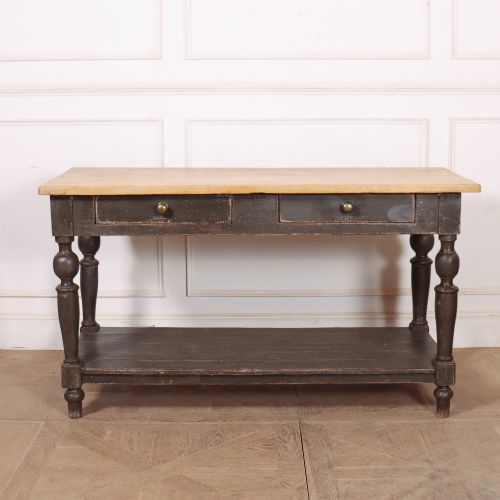


Drapers Counter
A drapers counter brings utilitarian heft and generous proportions into a modern interior, offering a surface built to handle trade.
Drapers Counter
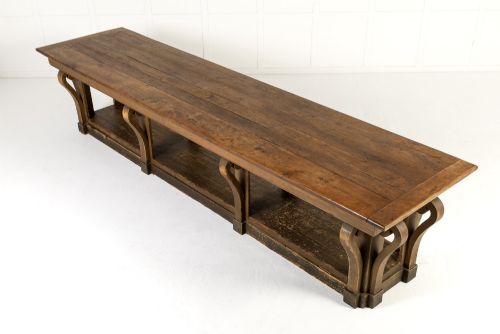
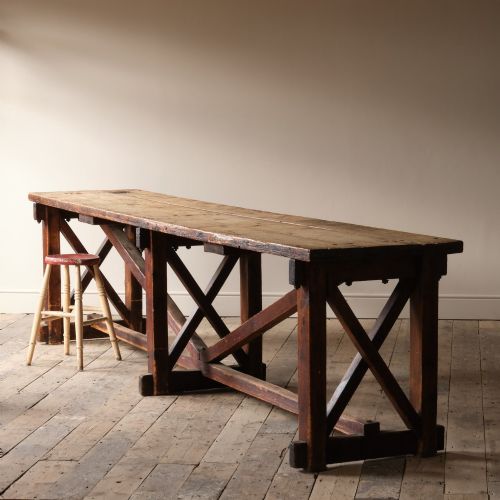
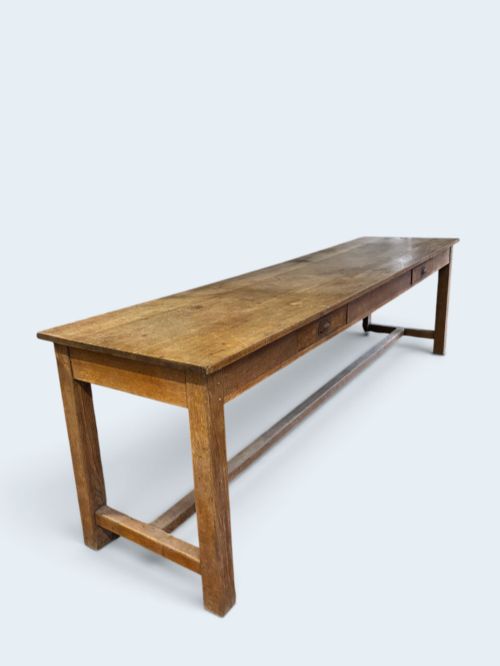
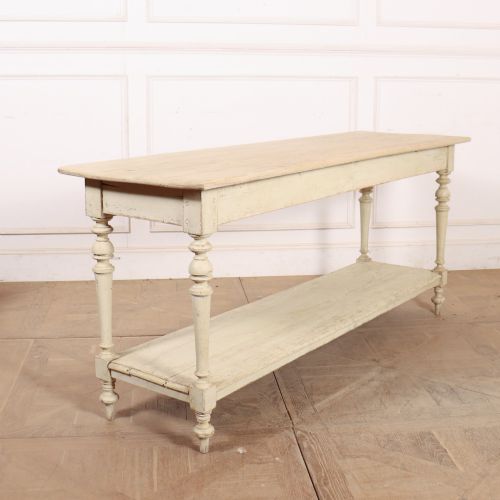
A drapers counter is a substantial piece of commercial furniture designed originally for measuring and displaying fabrics in a shop. Buyers hunting for these pieces encounter forms ranging from long serving tables and console tables to banks of drawers and shop fitting cabinets.
The versions most commonly met on this page span the nineteenth century into the early twentieth century, taking shape as French country, provincial, industrial, or rustic farmhouse designs. These practical items transition easily into domestic spaces as kitchen islands, console tables, or large workspaces.
The selection here encompasses robust oak, pine, walnut, and mahogany structures, sometimes paired with brass and cast iron elements. Whether finished in original paint, bleached oak, or polished mahogany, each piece carries the honest wear of commercial use.
Materials and construction
Construction relies heavily on durable timbers like oak, pine, and mahogany, selected for their ability to withstand heavy daily handling in a retail environment. Joinery is straightforward and sturdy, built to support long timber tops without sagging under pressure.
Many examples incorporate banks of shallow drawers or display racks beneath the main surface, utilising brass pulls and iron fittings for operational longevity. Painted finishes, bleached wood treatments, and raw timber surfaces reflect the practical maintenance required by nineteenth and early twentieth century commerce.
Drapers Counter Retail Price Guide 2026
Typical asking prices for drapers counter among the pieces listed under this phrase on Sellingantiques today, from the lower quarter to the upper quarter. They describe what is for sale here now, not the wider market.
Several counters arrive with enough length to host a small indoor cricket match, provided the rules allow for obstacles.
Assessing quality and proportion
Quality rests in the integrity of the timber and the retention of original surface treatments, whether that is aged paint, bleached oak, or deep mahogany. Pieces that retain their original hardware, such as brass pulls and cast iron supports, hold greater architectural coherence.
Proportion and scale dictate utility, with exceptionally long timbers or monumental four-metre tables representing more ambitious commercial commissions. The distinction between a standard utility piece and a finer retail fitting lies in the crispness of the cabinetry and the depth of the patination built up through decades of trade.
The Drapers Counter Glossary
- Haberdashery cabinet
- A specialised multi-drawer storage unit designed for small sewing items, ribbons, and fasteners. These cabinets often feature glazed sections or numerous shallow compartments.
- Bleached oak
- Timber that has been treated to lighten its natural tone, a finish frequently found on French commercial furniture of the nineteenth century. This process highlights the grain while softening the overall colour.
- Console table
- A long, narrow table traditionally placed against a wall, sharing architectural traits with the narrower examples of shop counters found in domestic settings.
- Shop fitting
- Furniture built specifically for the interior layout of a retail establishment rather than a domestic home. These items prioritize heavy-duty construction and functional display space above delicate ornamentation.
Drapers Counter: Frequently Asked Questions
What is a drapers counter used for today?
These large tables function exceptionally well as kitchen islands, serving stations, or generous console tables in hallways and living spaces. Their long surfaces and sturdy frames accommodate daily domestic demands just as easily as they once held rolls of fabric.
Deep drawers and lower shelving provide ample storage for kitchenware, linens, or books, bringing practical organisation to large rooms.
How do I care for a wooden shop counter?
Maintain the timber by dusting regularly with a dry cloth and avoiding excessive moisture on unsealed surfaces. Periodic applications of natural wax help preserve the grain and protect the historic finish.
Keep these heavy pieces away from direct heat sources to prevent the wide timber tops from warping or splitting over time.
Are these counters made of solid wood?
The pieces listed utilise heavy hardwoods and softwoods such as oak, pine, mahogany, and walnut throughout their construction. This solid timber framing accounts for their significant weight and lasting durability.
Original commercial pieces were built to endure heavy retail use, meaning they lack the lightweight veneers common in modern furniture.
How do I date an antique counter?
Dating relies on observing the construction methods, timber types, and hardware associated with specific periods like the Victorian era or the early twentieth century. Hand-cut joints, original brass pulls, and distinct paint layering often indicate nineteenth-century origins.
Stylistic cues such as industrial cast iron components or Edwardian cabinet designs help narrow the timeline further.