




Long Padded Bench
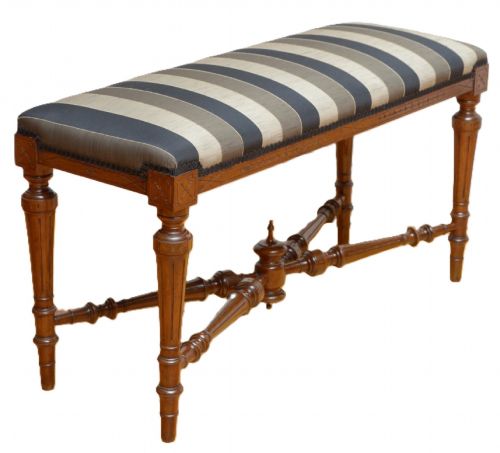
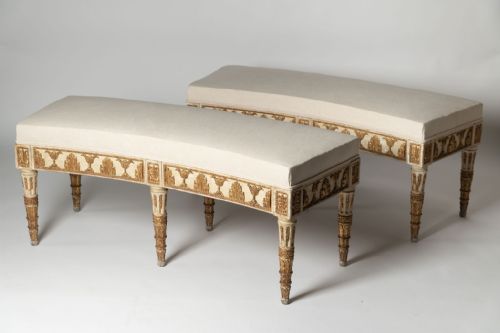
A long padded bench provides generous seating with upholstered comfort, spanning periods from the Victorian era through the Edwardian years.
Long Padded Bench
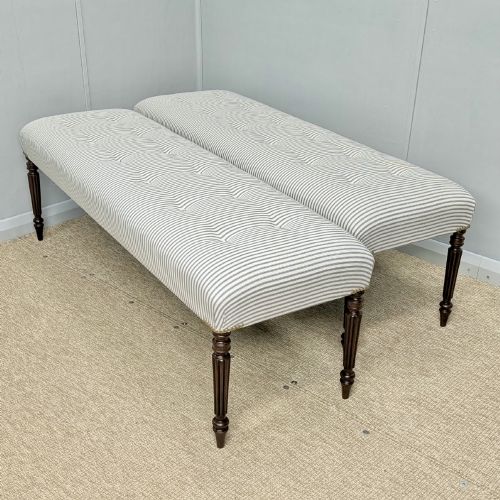
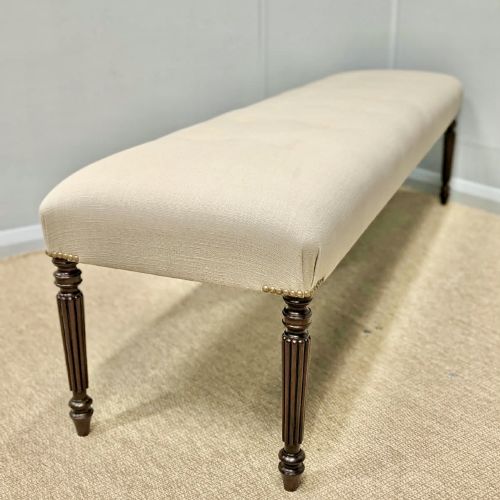
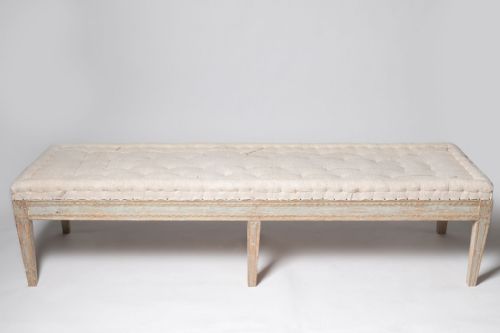
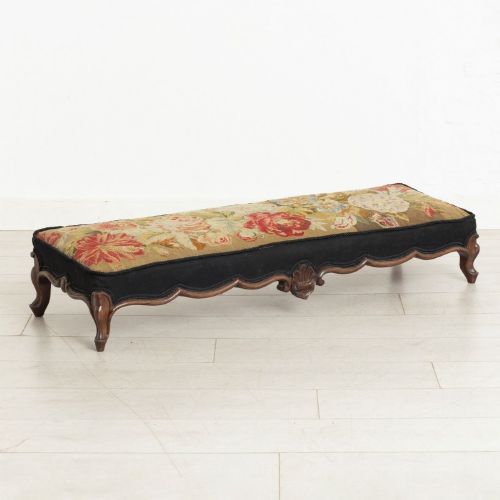
A long padded bench encompasses various forms designed for prolonged seating and resting feet, including window seats, fender stools, piano duet stools, and extended footstools. These pieces serve practical functions in hallways, bedrooms, and living spaces while offering comfortable upholstered surfaces.
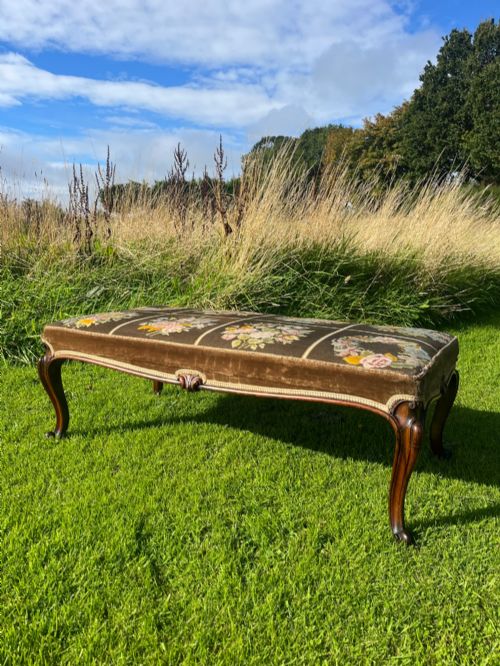
The selections on this page draw predominantly from the nineteenth century and the early twentieth century, featuring Victorian, Edwardian, and French designs. Buyers encounter robust walnut and mahogany frames paired with diverse textiles ranging from leather and linen to velvet.
Object types frequently alternate between low footstools, piano stools, hall benches, and window seats. Many retain their original upholstery fabric, whilst others have been recovered in neutral linens or patterned velvets.
What varies in quality
The calibre of timber preparation and the precision of hand-carved ornamentation dictate the standard of the wooden frame. Solid walnut and mahogany frames with refined cabriole or fluted legs stand apart from simpler painted structures.
The standard of upholstery work and the integrity of the underlying padding determine comfort and longevity. Pieces retaining quality period textiles or specialist printed velvets present distinct character compared to straightforward modern re-coverings.
Long Padded Bench Retail Price Guide 2026
Typical asking prices for long padded bench among the pieces listed under this phrase on Sellingantiques today, from the lower quarter to the upper quarter. They describe what is for sale here now, not the wider market.
Hinged piano duet seats occasionally conceal decades-old pencil markings left by musicians keeping time inside the storage compartment.
The Long Padded Bench Glossary
- Cabriole leg
- A furniture leg that curves outward and then tapers inward, mimicking an animal's limb. This form appears frequently on Victorian walnut frames.
- Fender stool
- A long, low stool designed to sit in front of a fireplace hearth. These pieces allow individuals to warm their feet comfortably.
- Duet stool
- An extended seat designed to accommodate two people simultaneously, commonly utilised at a piano or dressing table. Many include hinged lids for storing sheet music.
- Window seat
- A long bench sized specifically to fit within the recess of a bay or traditional window. They often feature upholstered tops supported by timber frames.
- Ebonised
- Wood finished with a dark stain or paint to imitate the appearance of ebony. This technique gained popularity during the Victorian period for accentuating form.
Long Padded Bench: Frequently Asked Questions
Where do I place a long padded bench?
These benches suit positioning at the foot of a bed, beneath a window recess, or along a spacious hallway wall. Their elongated proportions also allow them to function effectively as low coffee tables or extra seating in living rooms.
Shorter variants fit well as fender stools before a fireplace, whilst dressing stools serve bedrooms. The choice depends upon the specific length and height of the timber frame.
How do I care for antique upholstery?
Maintenance depends upon whether the fabric is a historic textile, leather, wool, or modern velvet. Regular gentle vacuuming with a soft brush attachment removes surface dust without stressing the fibres.
Leather requires specific conditioning balms to prevent drying, whilst delicate historical textiles benefit from professional cleaning. Direct sunlight should be avoided to prevent fading the fabric colours.
Are these benches sturdy enough for daily seating?
Solid hardwood frames constructed from walnut, mahogany, or oak provide robust support for everyday use. Joints and legs built during the nineteenth and early twentieth centuries generally withstand regular weight when placed on level floors.
Internal padding and webbing can soften over decades of use, meaning some pieces function better as decorative window seats or footrests rather than heavy daily chairs.
How do I distinguish Victorian from Edwardian pieces?
Victorian pieces often display heavier proportions, dark walnut or mahogany frames, and ornate carving associated with revival styles like Rococo or Gothic. Upholstery on these items can feature heavy buttoning or original woven textiles.
Edwardian items tend to present lighter forms, occasionally reflecting simpler lines or extended lengths designed for early twentieth-century interiors. Dating relies upon observing timber choices, leg profiles, and construction methods.