
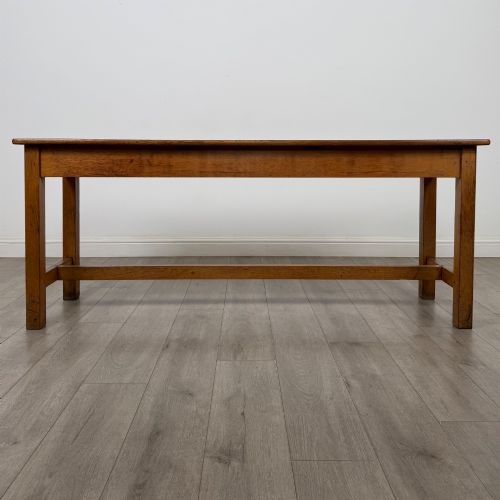
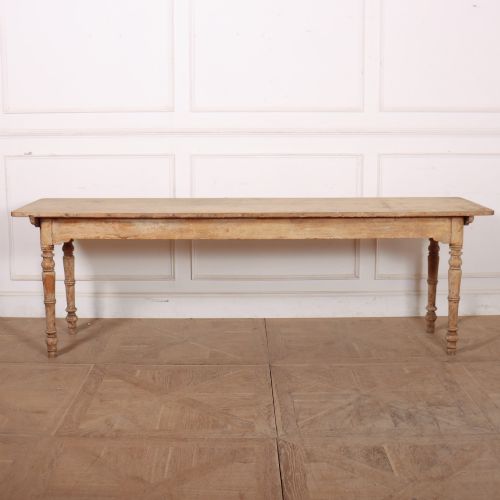
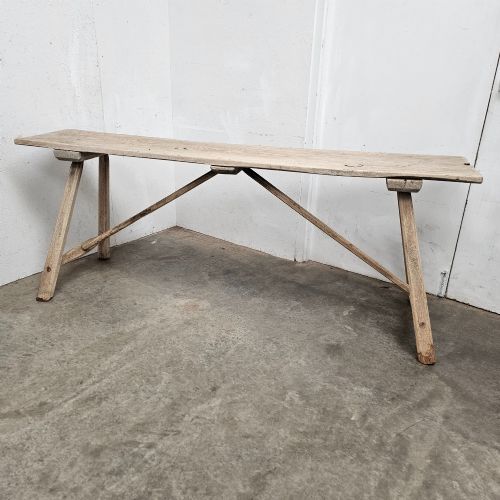

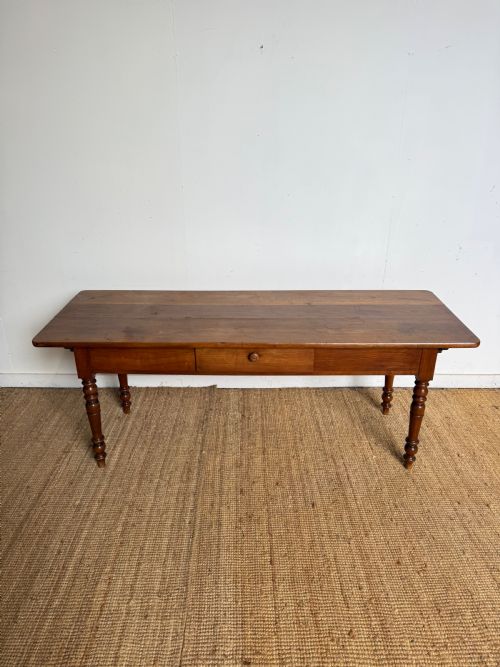


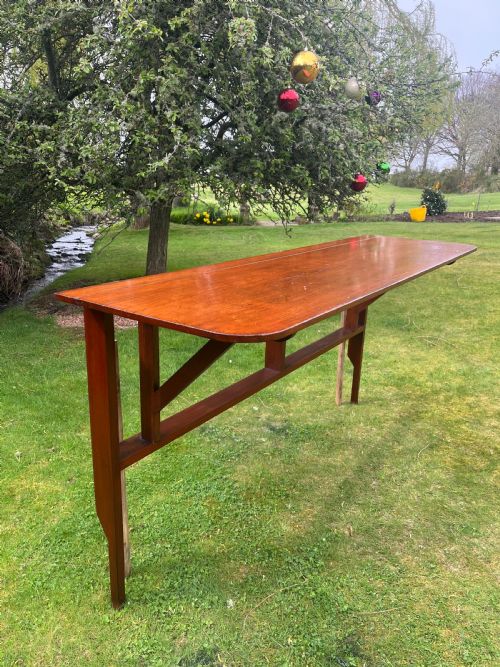


Long Hallway Console Table
A long hallway console table anchors a narrow space with proportion and surface, offering the right depth for tight passage and display.
Long Hallway Console Table
A long hallway console table bridges the gap between narrow architectural passages and practical surface area, appearing in forms such as side tables, dresser bases, serving tables, and altar tables. These pieces span periods from the Georgian era through the nineteenth century and into the early twentieth century, carrying the stylistic weight of French country, rustic farmhouse, English country house, and Gothic revival designs.
The selection centres heavily on nineteenth-century examples, particularly French painted pine and oak formats, alongside utilitarian forms like laundry tables, potboard servers, and butlers' consoles. Makers and builders of these periods shaped timber specifically for placement against walls and in extended corridors where depth must remain minimal.
Materials and Construction
Makers relied primarily on sturdy timbers including pine, oak, mahogany, elm, beech, and cherrywood, often finishing surfaces with traditional paint layers, red lacquer, or scrubbed natural treatments. Construction methods prioritised structural endurance in domestic and service environments, employing solid boards for long tabletops and robust underframes.
Detailing ranges from simple pegged joints to carved Chinoiserie ornamentation, Gothic underframes, and functional additions such as multiple drawers or potboards. Surfaces bear the physical evidence of past utility, from scrubbed pine grains to aged painted finishes applied over primary woods.
Listings span pine, oak, mahogany, elm, and beech, alongside painted and lacquered surfaces.
Judging Quality and Proportion
Quality rests in the harmony of an extended linear format, where length matches the intended corridor without compromising the structural integrity of the legs and underframe. Superior examples maintain balanced proportions across extra-long spans, avoiding sag in the central timber and keeping joints tight.
The integrity of original surfaces distinguishes one piece from another, whether dealing with untouched painted patinas on pine or richly grained oak and mahogany. The treatment of secondary woods and the finesse of carved elements, such as Gothic underframes or Chinoiserie motifs, dictate the finer tier of these tables.
The Long Hallway Console Table Glossary
- Console table
- A table designed to be fixed against a wall, traditionally supported by consoles or legs, suited for narrow corridors and halls.
- Potboard
- An open lower shelf fitted beneath a server or dresser base, historically used for storing pots and heavy kitchen utensils.
- Dresser base
- A low utilitarian storage cabinet or table featuring drawers and surface space, adapted over time for hallway use.
- Altar table
- An elevated surface originating from ceremonial use, characterised by slender proportions and often featuring carved woodwork or lacquered finishes.
- Scrubbed pine
- Pine timber subjected to repeated washing and scouring, removing soft grain to leave a pale, textured, and resilient surface.
Long Hallway Console Table: Frequently Asked Questions
Will a console table fit my narrow hall?
Measure the clearance between your wall and any opposing doors or furniture before selecting a piece. Many antique formats are intentionally narrow to accommodate tight corridors without blocking foot traffic.
Look at the depth dimension specifically, as nineteenth-century side and console tables vary considerably in width from front to back.
What is the difference between a console and a serving table?
Console tables are engineered primarily for decorative placement and light surface display against a wall. Serving tables traditionally belonged to dining rooms or country houses, built to hold heavy platters during meals.
In modern usage, both terms often overlap because their elongated rectangular proportions suit hallways equally well.
How do I care for antique painted wood?
Dust the surface regularly with a dry, soft cloth to prevent particulate buildup on fragile paint or lacquer. Avoid harsh chemical cleaners and modern polishes that can degrade nineteenth-century finishes.
Keep the timber away from direct heat sources and dramatic humidity shifts to prevent the wood from warping.
Can I use a kitchen dresser base in a hallway?
Dresser bases work exceptionally well in extended hallways if the depth allows for safe passage. Their drawers provide hidden storage for keys, post, and everyday items.
Ensure the height matches your visual expectations for a hallway entrance rather than a working kitchen space.