
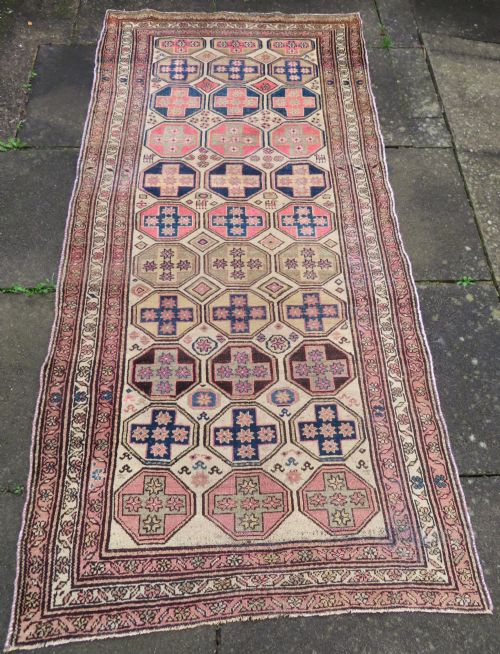
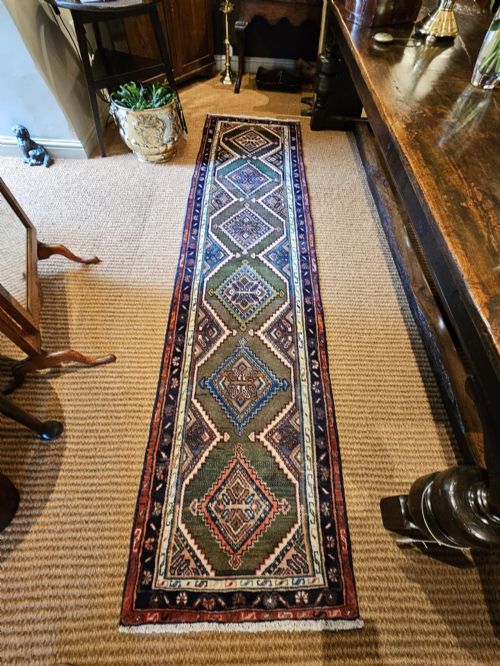
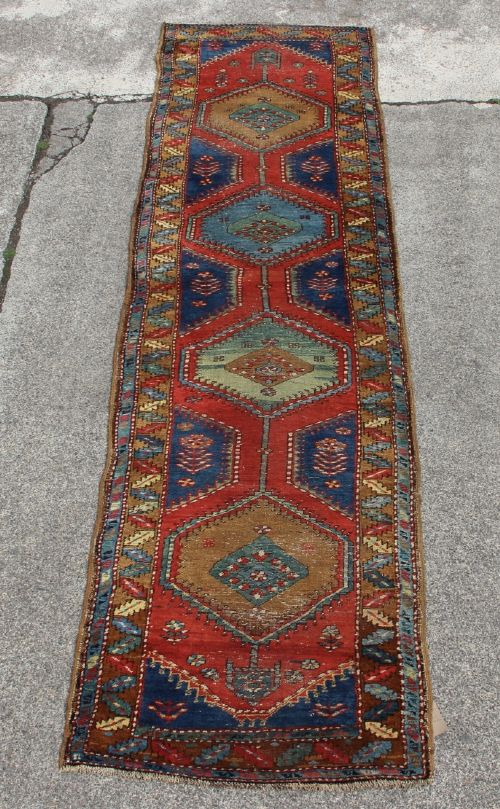
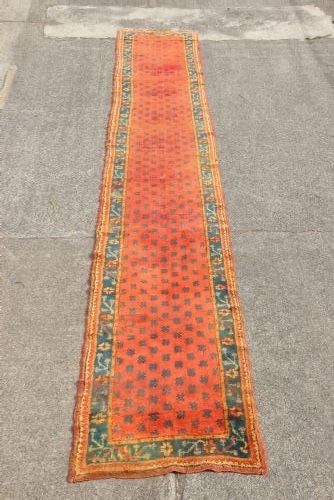

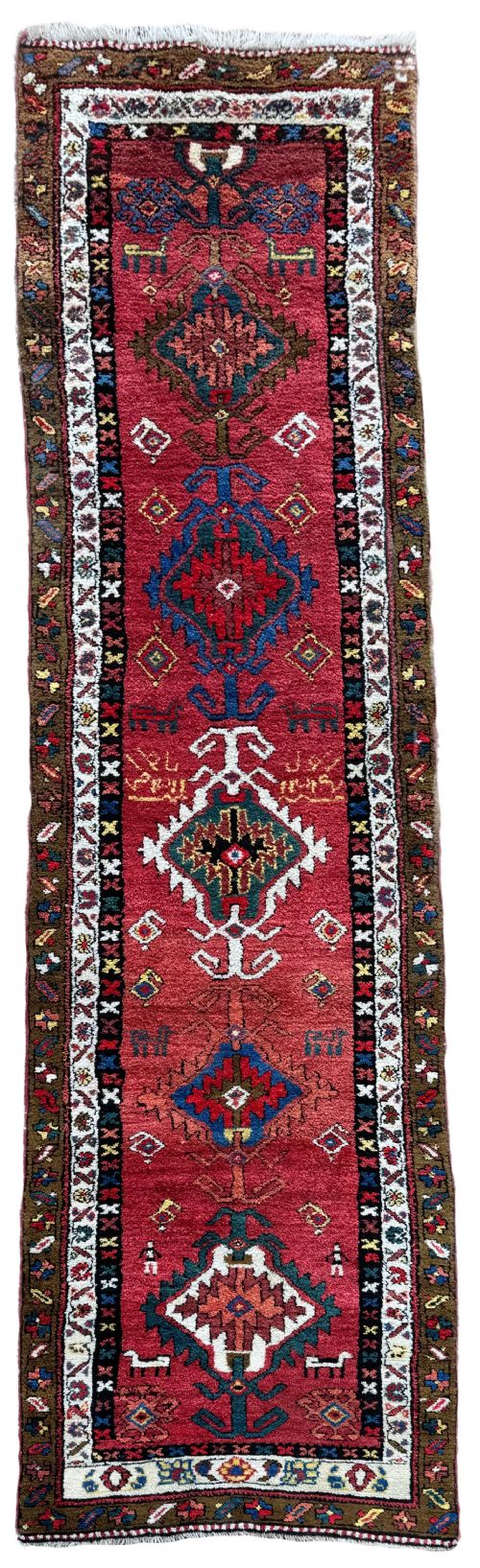
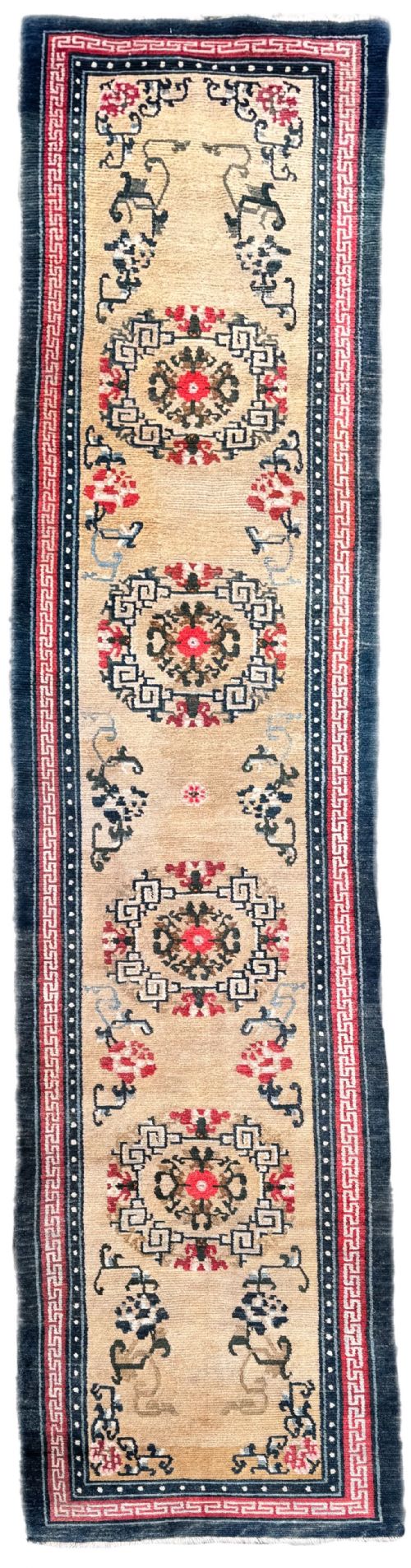
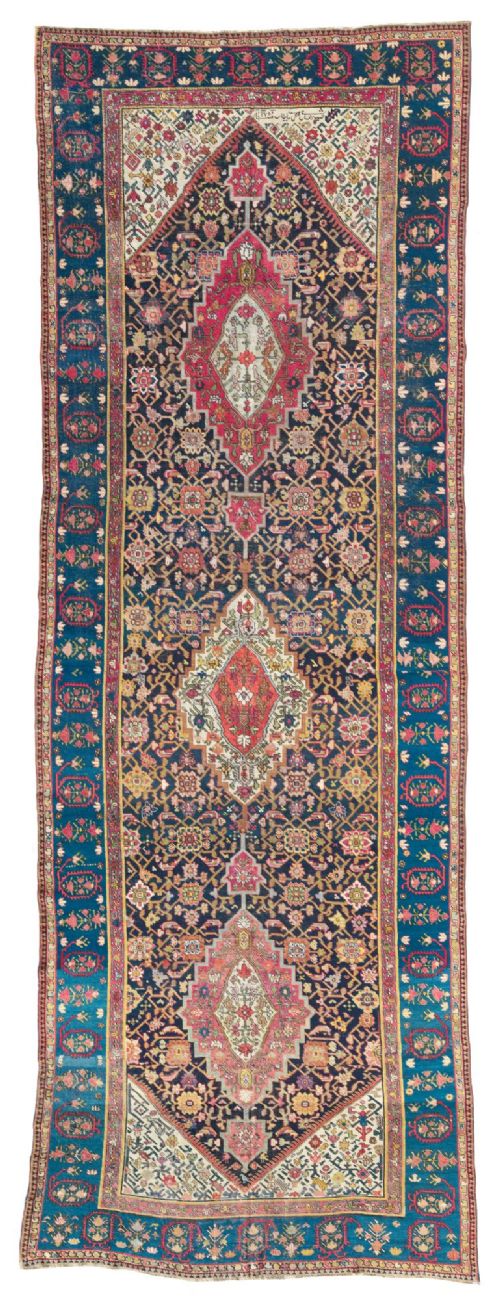

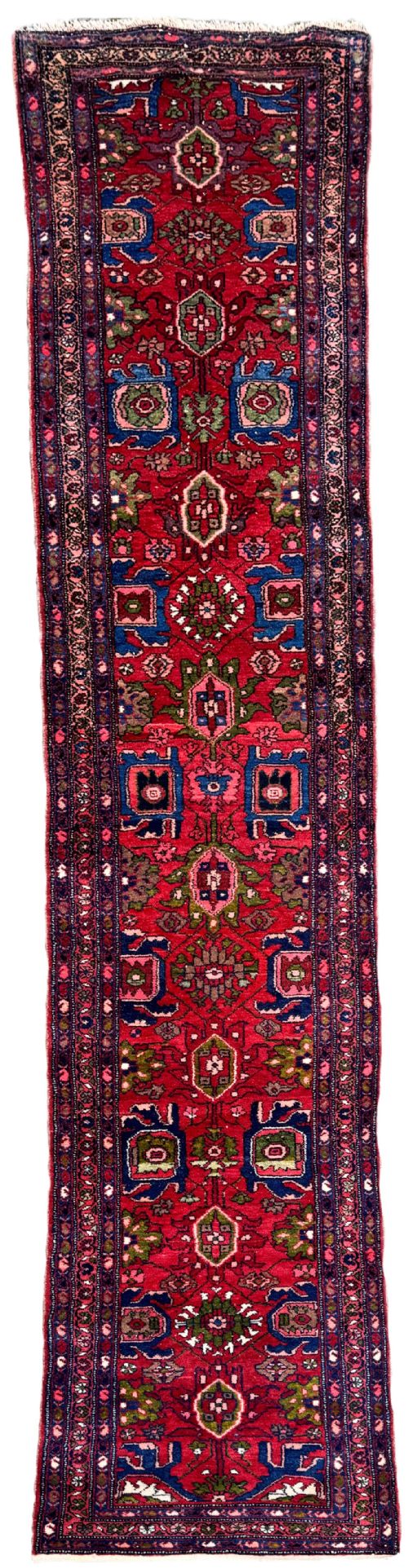
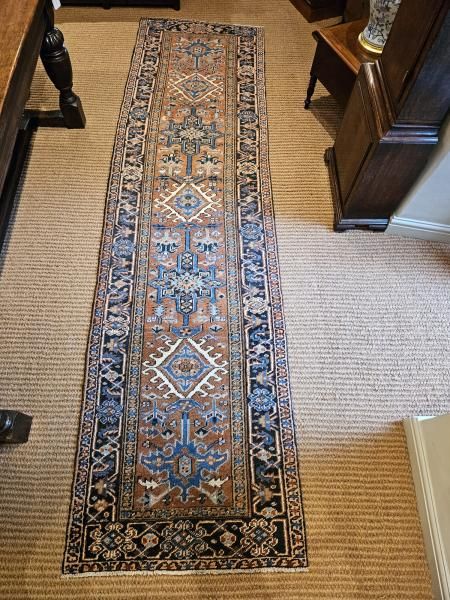
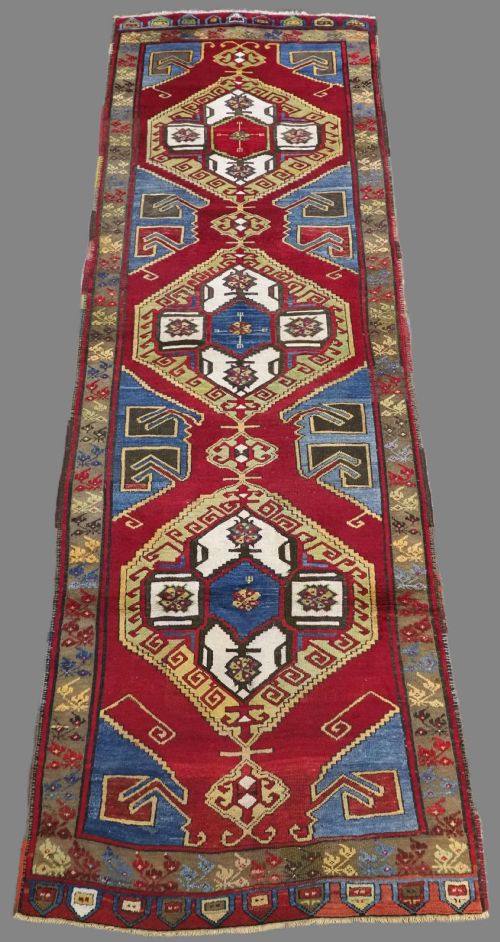
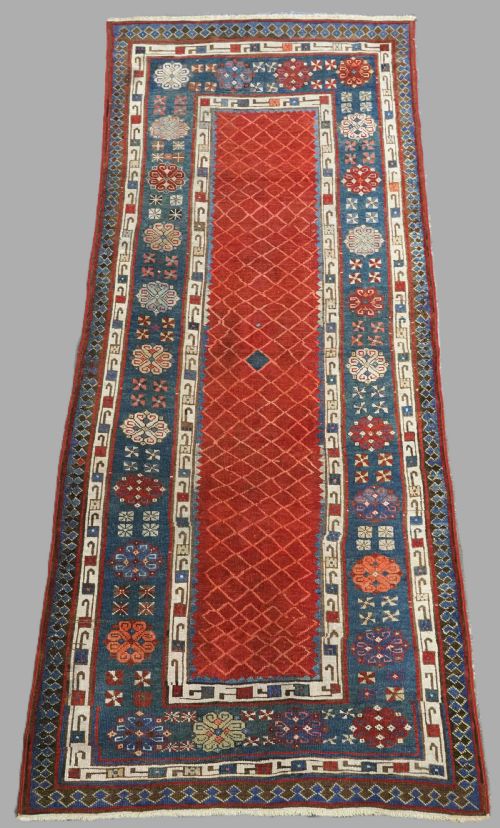
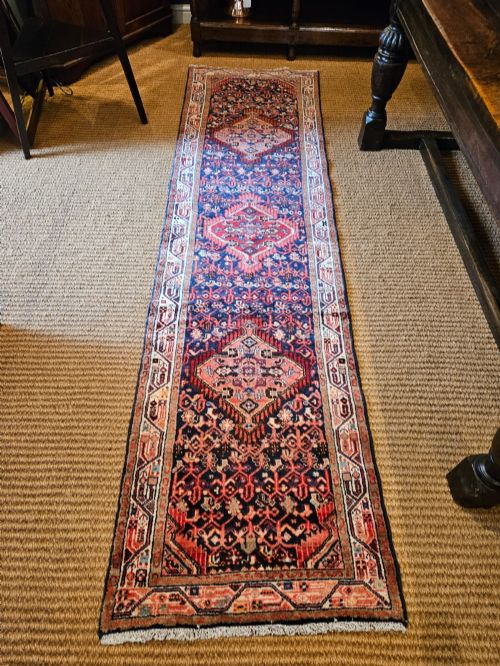
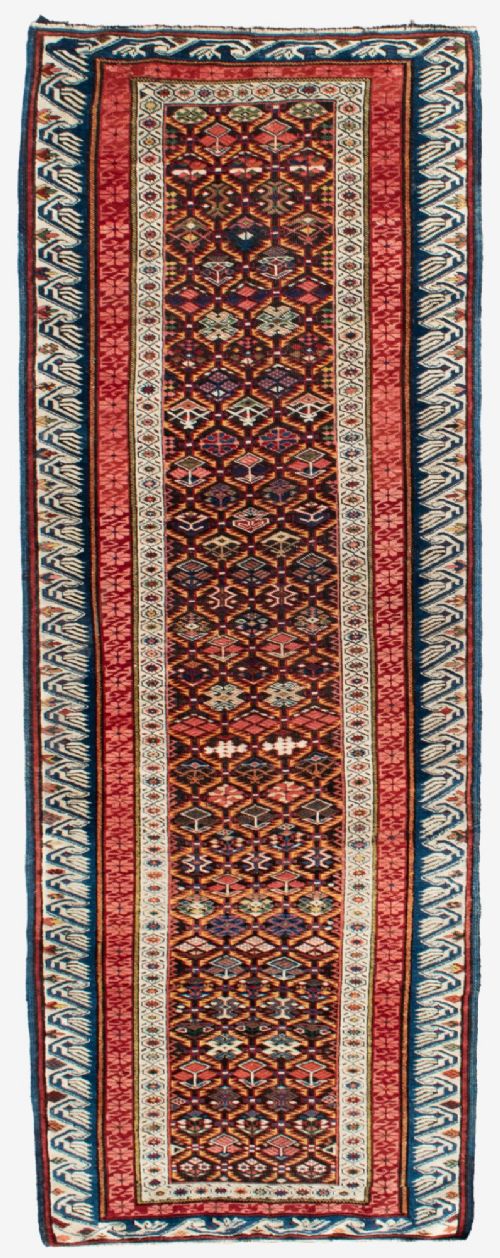

Long Carpet Runner
A long carpet runner brings narrow spaces to life, providing warmth and pattern underfoot in hallways and galleries.
Long Carpet Runner
A long carpet runner is a floor covering defined by an elongated rectangular format designed specifically for corridors, staircases and narrow reception rooms. When searching this phrase, a buyer encounters pieces originating from Persian, Caucasian, Turkish, Kurdish and broader Asian weaving traditions.
The pieces on this page span the nineteenth and twentieth centuries, encompassing styles from Persian tribal to Anatolian and Caucasian geometries. Surviving examples often display considerable length in relation to their width, suiting the functional demands of period hallways.
Originating from village workshops, tribal encampments and town manufactories, these textiles arrive in formats varying from compact lengths to expansive gallery carpets. The surviving stock reflects diverse regional palettes, incorporating natural dyes and traditional motifs unique to their weaving origins.
Materials and construction
Construction relies primarily on wool, cotton and hand-spun wool, utilised for both foundation warps and plush surface piles. Weavers knotted these fibres by hand onto sturdy vertical looms, securing the structures with durable selvedges.
Dye methods combine natural colourants derived from plants and minerals, yielding stable tones that age gracefully across decades of exposure. The interplay of wool quality and dense knotting accounts for the physical resilience observed in surviving runners.
Some surviving runners stretch past thirty feet in length, originally commissioned to warm exceptionally grand estate hallways.
Assessing quality in runners
Quality rests upon the fineness of the knotting and the structural integrity of the wool foundation. Tighter knots permit sharper geometric definition and greater durability under heavy foot traffic.
The depth and harmony of the palette distinguish finer examples, particularly where natural dyes retain their vibrancy. Original pile depth and intact ends further determine the preservation state of an antique runner.
The Long Carpet Runner Glossary
- Runner
- A long, narrow carpet designed for corridors, hallways, and stairs. Its proportions dictate a narrow width matched to a substantial length.
- Kelleh
- A large, room-sized runner format traditionally produced in Persian weaving centres. These pieces offer broader proportions than standard corridor runners.
- Gul
- An octagonal medallion motif frequently found in Turkmen and tribal weaving traditions. Each design often signifies a specific clan or regional origin.
- Mina Khani
- An all-over repeating pattern of stylised flowers linked by delicate lattices. This floral design appears frequently in classical Persian and Kurdish carpets.
- Warp
- The vertical foundation threads stretched across the loom before knotting begins. The pile is knotted directly onto these tensioned strands.
Long Carpet Runner: Frequently Asked Questions
Where should I place a long carpet runner?
These pieces suit long hallways, narrow landings and high-traffic corridors where traditional floorboards require protection and warmth. Their elongated proportions also function effectively alongside large dining tables or galley spaces.
Measuring the exact clearance for doors and skirting boards ensures the textile lies flat without obstruction. Placing an appropriate underlay beneath the runner prevents slip and cushions the weave against hard stone or timber floors.
How do I care for an antique wool runner?
Regular gentle vacuuming without a rotating brush roll removes trapped grit from the wool pile. Professional cleaning by specialists in antique textiles preserves the lanolin in the wool fibres.
Rotating the runner periodically balances wear patterns from foot traffic and sunlight exposure. Keeping the textile away from damp environments protects the cotton and wool foundations from moisture damage.
What does a distressed finish mean on a runner?
A distressed finish indicates areas of low pile, thinning wool or soft fading accumulated through decades of use. This natural patina reveals the underlying foundation threads in places without compromising structural utility.
Many collectors value this aged surface for the relaxed character it brings to domestic interiors. Such wear demonstrates genuine antiquity rather than modern artificial distressing.