



London Fusee Dial Clock
When you examine a london fusee dial clock, you hold a precision timekeeper designed for public spaces, offices and grand halls.
London Fusee Dial Clock
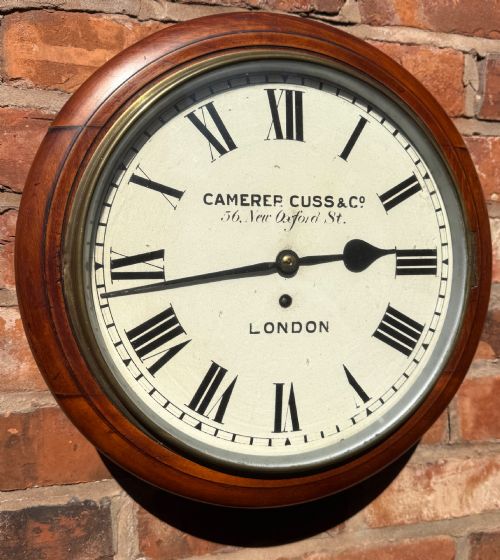
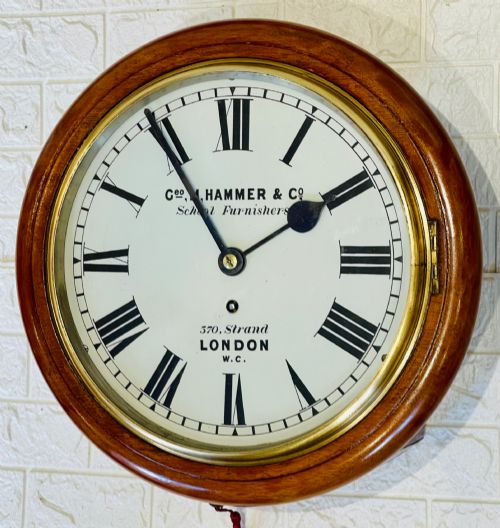
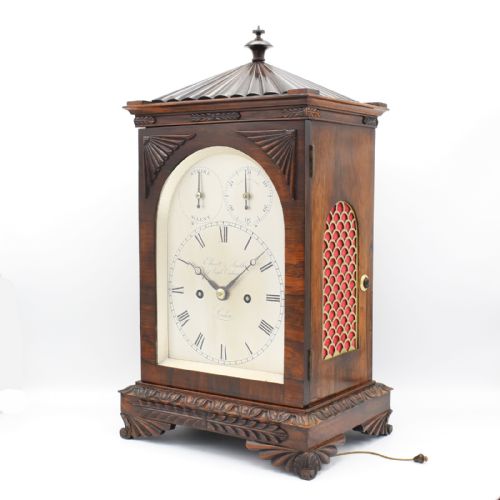
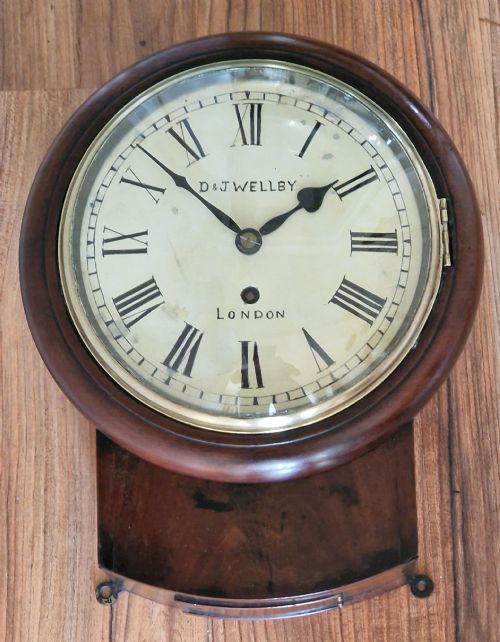
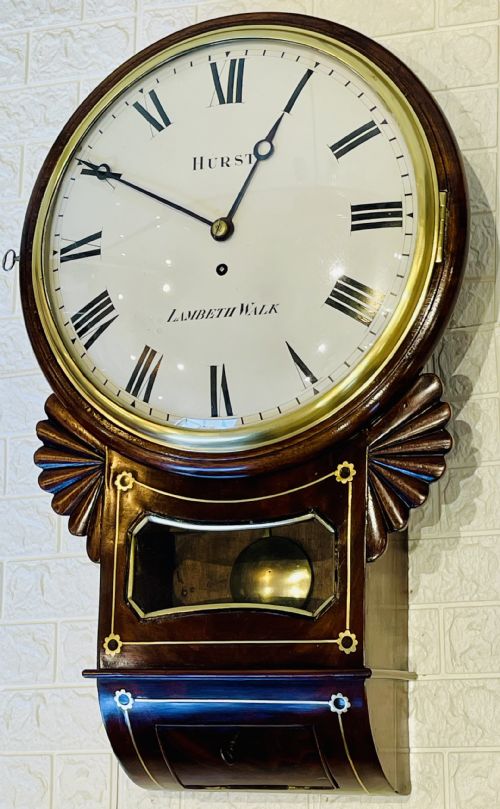
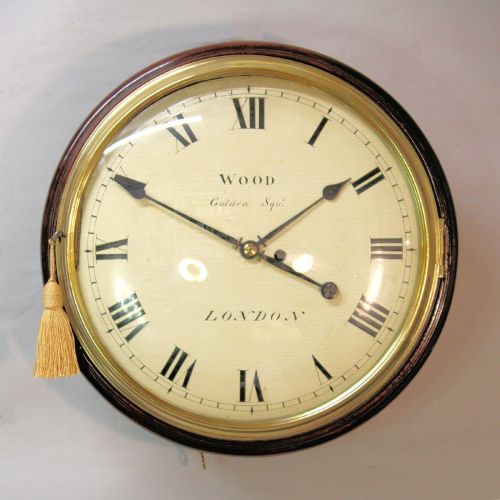
A london fusee dial clock is a wall-mounted timepiece featuring a circular face, typically housed in a robust timber case with a prominent bezel. These instruments were produced across the eighteenth, nineteenth and early twentieth centuries by metropolitan horologists for commercial, railway and domestic use.
The most common variety encountered on this page is the mahogany wall clock or drop dial variant, often displaying a simple white painted or silvered metal face behind glass. Examples range from compact eight-inch dials designed for modest rooms to large thirty-inch station clocks built for clear visibility from a distance.
How They Were Made
Cases are predominantly constructed from solid mahogany or ebonised wood, frequently featuring brass bezels and heavy cast iron or steel internal components. Timber frames are built with deep side box sections and bottom access doors, allowing easy winding and regulation of the movement without removing the entire case from the wall.
The defining mechanical feature is the fusee, a cone-shaped pulley connected to the mainspring by a fine chain or gut line that equalises the declining power of the spring as it unwinds. This mechanism ensures an even driving force to the escapement throughout the eight-day duration, securing high accuracy across the life of the movement.
London Fusee Dial Clock Retail Price Guide 2026
Typical asking prices for london fusee dial clock among the pieces listed under this phrase on Sellingantiques today, from the lower quarter to the upper quarter. They describe what is for sale here now, not the wider market.
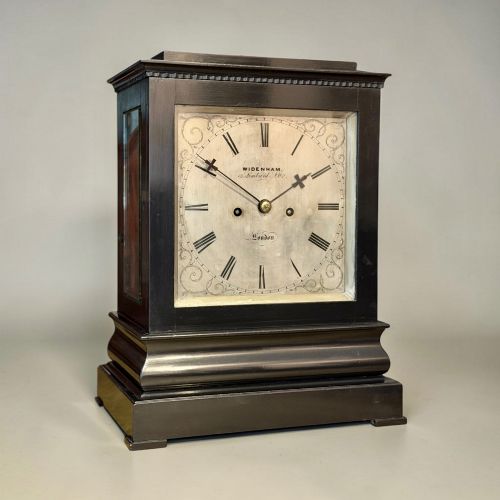
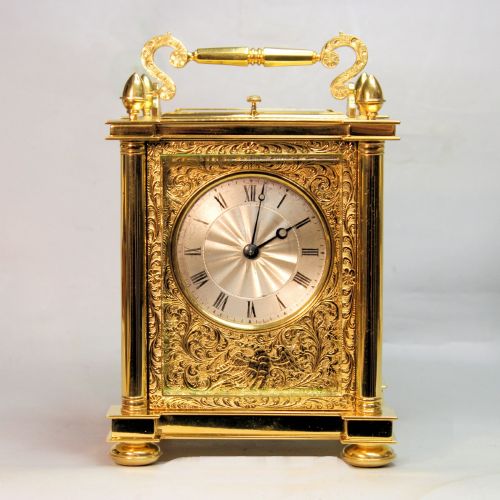
Listings span the eighteenth to the twentieth centuries, featuring mahogany, ebonised wood and brass across wall, bracket and library clock forms.
What Varies In Quality
Quality in a london fusee dial clock rests on the crispness of the movement execution, the integrity of the timber case construction and the original state of the dial. Master horologists signed their work on silvered brass dials or clean painted iron faces with well-defined minute tracks and hand-cut steel hands.
Secondary examples often show replaced side arms, stripped screw threads, or later painted dials that obscure the original maker signature. Superior pieces maintain matching serial numbers across the movement plates and case, alongside unpolished brasswork and well-figured mahogany grain.
Widenham of London·Cousens & Whiteside·Camerer Cuss & Co·Ellicott & Smith·D&J Wellby·John Walker·Dent·William Payne·Phillips Brothers·Payne & Co·Kelvin White & Hutton·Somersall London·John Wilson·Kleyser of London·R Roberts of London·James Moore·Francis Perigal·William Hardy·Chater & Son·Haley & Milner·J W Benson·James Duncan·Pewsey of London·Birch of London·Burlington
The London Fusee Dial Clock Glossary
- Fusee
- A conical pulley used in mechanical clocks to maintain an even pull on the gear train as the mainspring loses tension. This ingenious device compensates for the varying torque of the uncoiling spring.
- Drop dial
- A wall clock design where the circular dial sits above an extended wooden box case that protects the pendulum. This drop shape accommodates a longer pendulum swing for improved timekeeping.
- Bezel
- The brass or wooden ring that holds the protective glass pane in front of the clock face. It is typically hinged on one side with a small latch or lock on the other.
- Silvered metal
- A brass dial plate treated with a silver solution to create a bright, frosted finish for the engraved numerals. This technique provides high contrast against dark steel hands.
- Anchor escapement
- The mechanism that controls the release of gear train energy to the pendulum, creating the characteristic ticking sound. It locks and unlocks the escape wheel at each swing.
London Fusee Dial Clock: Frequently Asked Questions
Why do some dials say railway companies?
Railway companies commissioned reliable timekeepers from London makers to regulate train departures and maintain synchronized schedules across the network. These dials often feature specific company lettering or initials painted directly onto the iron face.
Station masters relied on these robust eight-day movements to withstand the vibrations of bustling railway offices and constant platform operations. Their high legibility made them essential equipment for public transit safety.
How can I tell the age of the clock?
Examine the construction of the mahogany case, the shape of the bezel, and the typography used for the maker signature on the dial face. Early nineteenth-century examples often feature wooden convex dials or brass inlay, while Victorian pieces lean toward robust cast brass bezels.
Signatures paired with specific street addresses or maker partnerships help narrow down the production decade through historical trade records. Movement styles also transition from early gut-line setups to fine steel chains over the course of the nineteenth century.
Where should I hang a heavy dial clock?
Select a sturdy interior wall with direct access to solid brickwork or timber studs rather than hanging the weight from plaster alone. The heavy mahogany case and iron movement require secure wall fixings to prevent swaying during daily operation.
Keep the clock away from direct sunlight, damp rooms, and active heat sources that can warp the timber case or dry out internal lubricants. Proper wall mounting ensures the pendulum swings evenly without catching on the back of the case.