



Locking Bar Cabinet
A locking bar cabinet is a secure nineteenth-century chest fitted with a hinged stile to hold the drawers shut, built for keeping spirits and papers private.
Locking Bar Cabinet
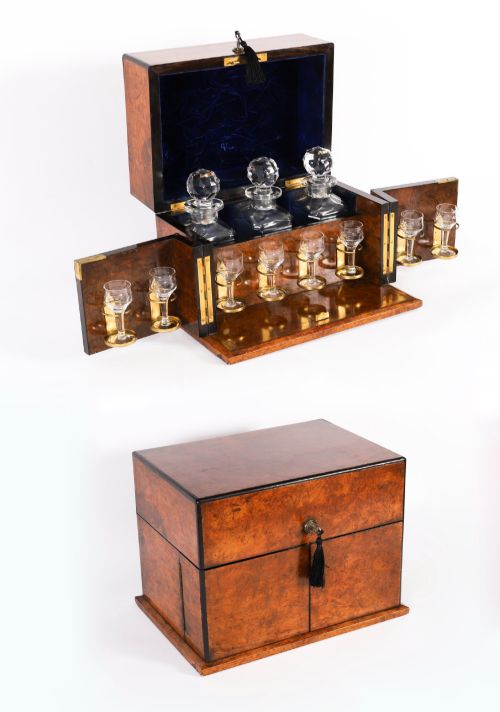
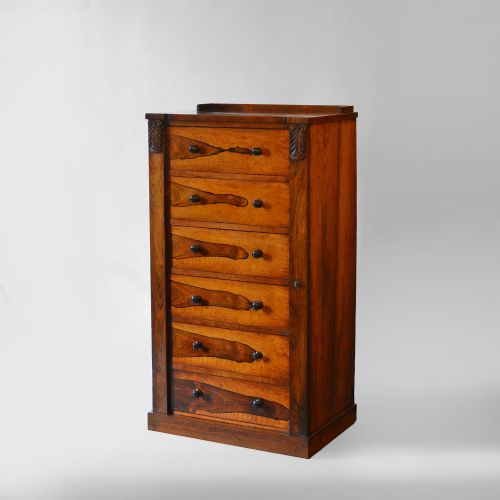
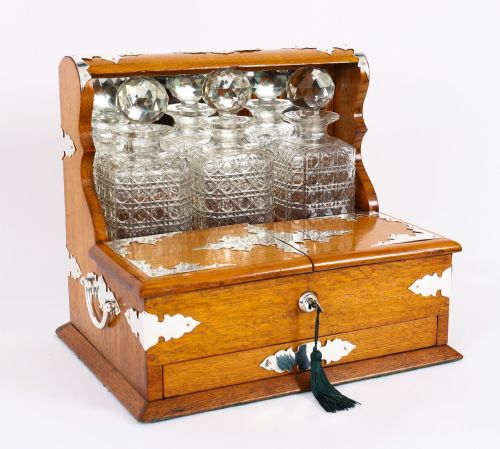
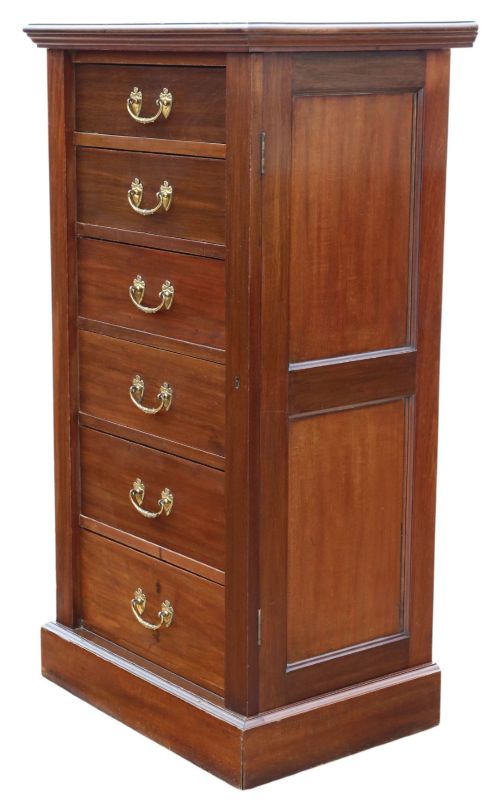
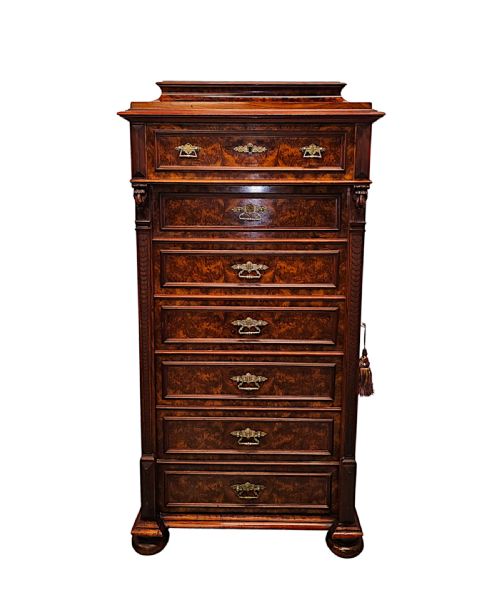
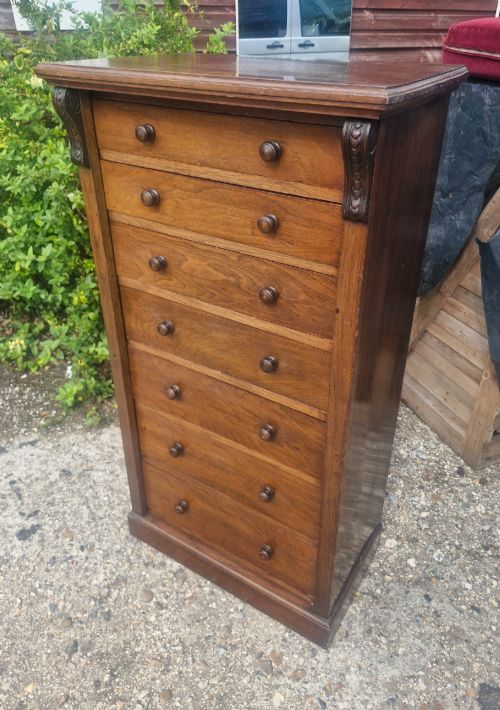
A locking bar cabinet typically takes the form of a tall Wellington chest or a tantalus dry bar, designed to secure valuables behind a single swinging locking bar. These pieces emerge predominantly from the Victorian era, spanning the mid to late nineteenth century up to nineteen hundred.
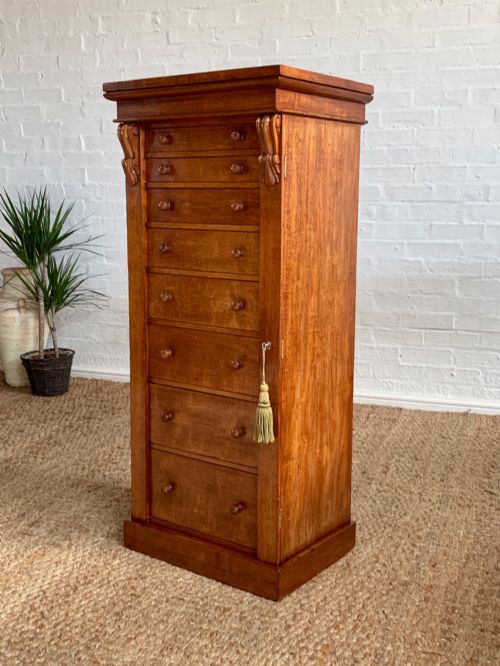
The version most commonly met on this page is the tall mahogany chest of drawers, often featuring six or seven graduated drawers secured by a side locking bar that fastens with a key. Alongside these tall chests, buyers encounter tantalus dry bars housing cut crystal decanters, games compendiums, and humidors.
Makers of the period also utilised burr walnut, rosewood, blonde oak, pollard oak, and pitch pine to construct these robust items. They function equally well as collectors cabinets or secure side cabinets in a modern study.
How they were made
Cabinet makers utilised dense timber frames of mahogany, burr walnut, and rosewood, often pairing figured veneers with solid secondary woods. The characteristic locking bar is hinged to one side of the chest frame, swinging over the drawer edges to lock in place with a brass key.
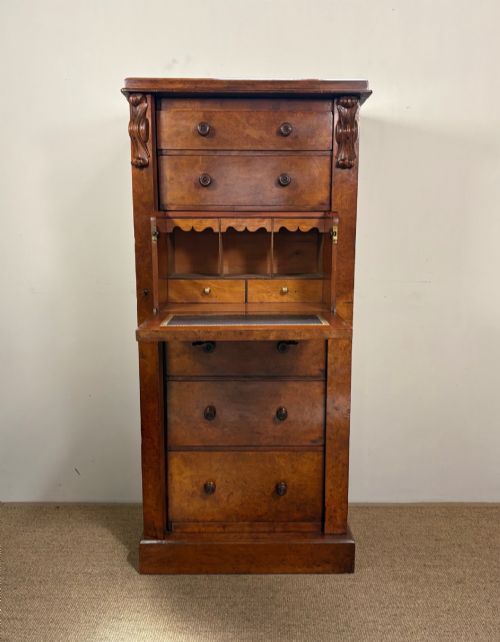
Interiors frequently incorporate velvet or leather linings within secret compartments, secretaire drops, and compartmentalised tantalus frames. Cut crystal decanters and silver plate fittings complete the barware versions, accompanied by original turned wooden knobs.
Locking Bar Cabinet Retail Price Guide 2026
Typical asking prices for locking bar cabinet among the pieces listed under this phrase on Sellingantiques today, from the lower quarter to the upper quarter. They describe what is for sale here now, not the wider market.
Listings feature nineteenth-century pieces spanning the Victorian and Edwardian eras, constructed from mahogany, burr walnut, rosewood, oak, and pine.
What varies in quality
Quality rests upon the choice of timber figure, such as richly grained burr walnut or figured mahogany, and the crispness of the original turned knobs. Finer examples display meticulous grain matching across the drawer fronts and well-fitted interior compartments.
The mechanical integrity of the locking bar and its accompanying brass lock dictates functional excellence. Superior pieces retain their original keys and smooth-running drawer construction without timber warping.
The Locking Bar Cabinet Glossary
- Wellington chest
- A tall, narrow chest of drawers secured by a hinged locking bar on one side that fastens with a key. This form originated in the nineteenth century to store documents securely.
- Tantalus
- A locking drink cabinet holding decanters visible yet inaccessible until the locking mechanism is released. It typically houses cut crystal bottles alongside games compendiums.
- Secretaire
- A cabinet or chest incorporating a pull-down writing desk drawer with internal pigeonholes and small drawers. These often feature secret compartments.
- Pollard oak
- Timber taken from pollarded oak trees showing clustered knots and rich grain patterns. Cabinet makers utilised this decorative wood for high-status nineteenth-century pieces.
- Compendium
- A multi-purpose box or cabinet containing equipment for various games, writing, or smoking. They frequently accompany dry bar fittings in Victorian cabinets.
Locking Bar Cabinet: Frequently Asked Questions
What is a locking bar cabinet?
A locking bar cabinet is a nineteenth-century storage piece, usually a tall chest or tantalus bar, featuring a vertical locking stile.
This hinged bar swings across the drawer fronts and secures with a key to protect contents.
How do you operate the locking bar?
The vertical bar hinges on one side of the cabinet frame and swings over the edges of the closed drawers.
Turning the key in the integral lock secures the bar in place, preventing any drawer from opening.
What woods were used for these cabinets?
Makers constructed these pieces from dense hardwoods and decorative veneers including mahogany, burr walnut, and rosewood.
Other examples utilise blonde oak, pitch pine, pollard oak, and maple.
Were these used for drinks or papers?
They served multiple domestic purposes, functioning as secure document chests, collectors cabinets, and Secretaire desks.
Many nineteenth-century variants also served as dry bars containing cut crystal decanters and humidors.