
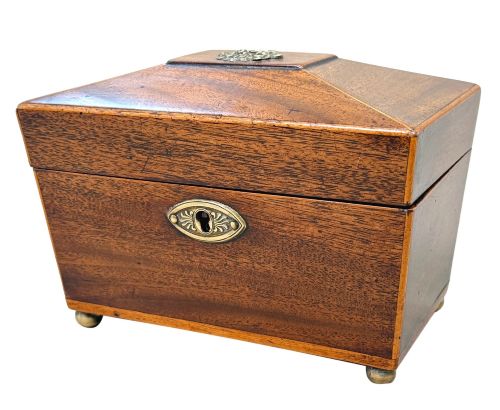


Locked Tea Box
A locked tea box protects precious leaves behind a secure lid, offering both a neat container for daily use and a handsome piece for the table.
Locked Tea Box
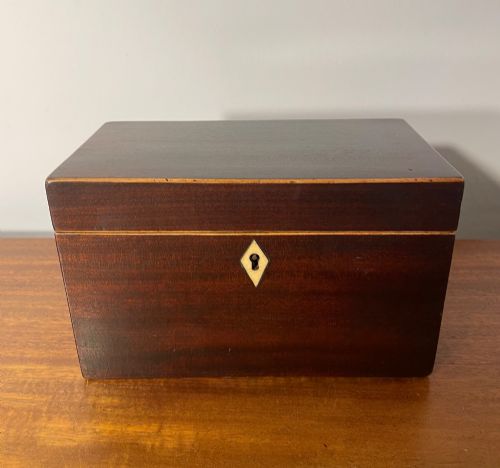
A locked tea box is a secure receptacle designed to safeguard expensive dry leaves from dampness and pilfering in domestic parlours of past centuries. When you search for a locked tea box, you encounter wooden chests and caddies constructed during the Georgian, Regency, and Victorian eras, often fitted with working locks and keys.
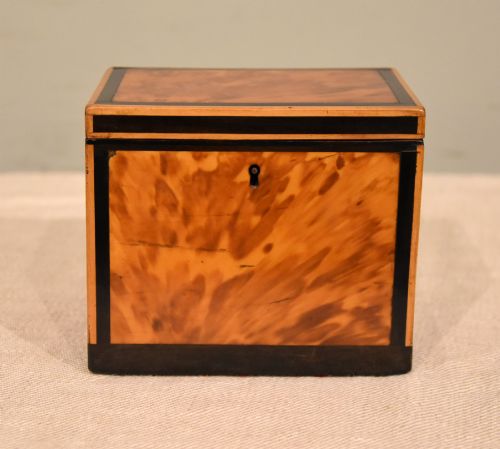
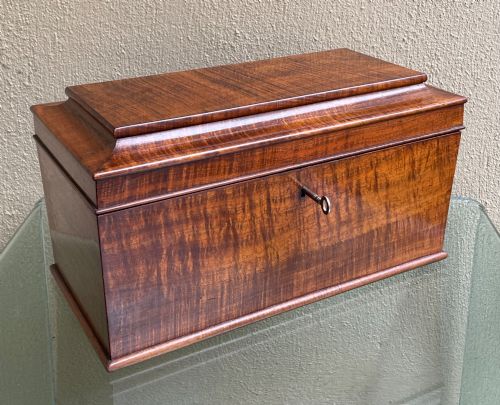
The versions most commonly met on this page span the eighteenth and nineteenth centuries, taking rectangular, dome, and sarcophagus forms. They utilise timbers such as mahogany and walnut, occasionally embellished with tortoiseshell or bone, reflecting the changing tastes of British households over generations.
Materials and construction
Cabinet makers built these boxes using solid and veneered hardwoods, notably mahogany, walnut, and partridge-wood, often framing them with delicate boxwood stringing. The exteriors relied on precise carpentry to house internal compartments, sometimes incorporating secret drawers beneath the tea canisters.
Surface decoration involved marquetry inlay and polished tortoiseshell panels set against ebony, combined with brass key escutcheons and hinges. These metalwork fittings secured the lids and provided structural points for the locking mechanism.
Assessing quality and character
Quality rests in the crispness of the timber grain, the precision of the boxwood stringing, and the integration of decorative materials like tortoiseshell. Finer examples display harmonious proportions and intact internal partitions rather than later replacement parts.
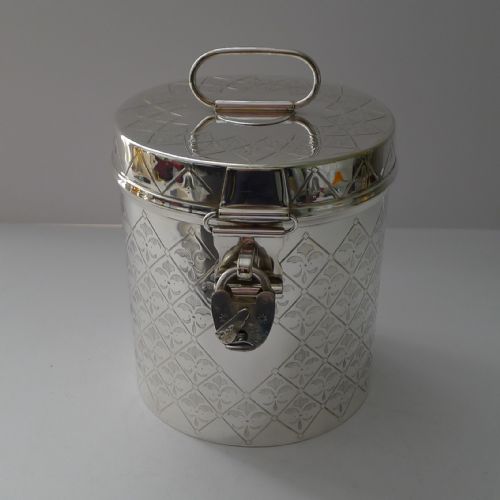
Mappin and Webb
The Locked Tea Box Glossary
- Tea caddy
- A container designed for storing tea leaves. The word derives from catty, a Chinese unit of weight.
- Sarcophagus shaped
- A box style featuring a stepped, sloping lid reminiscent of ancient stone coffins. This form appeared frequently during the Regency and Georgian periods.
- Marquetry
- The art of applying pieces of veneer to a structure to form decorative patterns. Craftsmen utilised various coloured woods to achieve pictorial designs.
- Escutcheon
- A flat plate of brass surrounding a keyhole. It protects the surrounding wood from wear caused by the key.
- Partridge-wood
- A dense tropical timber exhibiting a mottled grain resembling partridge feathers. Cabinet makers prized it for contrasting banding and decorative highlights.
Locked Tea Box: Frequently Asked Questions
What is a locked tea box?
A locked tea box is a lidded wooden container made to store and secure valuable tea leaves in historical households. They feature fitted interiors and working locks to keep household staff or guests from accessing the contents.
Most examples date from the Georgian through to the Victorian period, reflecting shifting interior styles and cabinet-making techniques. They survived as decorative tabletop items once tea became more affordable and less heavily guarded.
How were they used in the past?
These boxes held precious black and green teas that were kept under lock and key by the master or mistress of the house. Servants were typically not entrusted with the key, ensuring the expensive leaves lasted between meals.
Inside, the containers often featured divided compartments for different varieties of tea, along with a mixing bowl. The homeowner would dispense the leaves personally in the parlour.
How do I date a tea box?
Dating relies on observing the timber species, overall shape, construction methods, and hardware style. Georgian boxes often display plain mahogany or tortoiseshell, while Regency examples lean towards sarcophagus profiles.
Victorian pieces frequently introduce heavier marquetry inlay and rosewood veneers. Looking at the interior hinges and lock plates also helps determine the period of manufacture.
Are keys usually included?
Many surviving boxes retain their original or period-appropriate keys, though some do not. A working lock adds to the completeness of the piece as a functional antique.
When a key is present, it operates the brass lock set into the front escutcheon. Collectors appreciate matching keys, but lack of one does not diminish the decorative appeal of the timber.
How do I care for a wooden tea box?
Keep the timber away from direct sunlight and sudden temperature changes to prevent the wood or veneer from warping and cracking. Dust gently with a dry, soft cloth and avoid modern aerosol polishes.
If the box has tortoiseshell or ivory elements, maintain a stable room humidity. Occasional application of a suitable wax helps preserve the polished finish of the mahogany or walnut.