

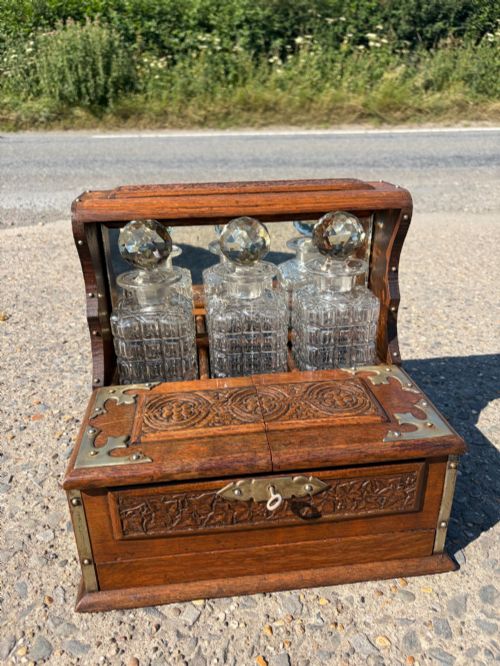


Locked Decanter Set
A locked decanter set protects fine spirits within a secure wooden frame fitted with a working lock and key.
Locked Decanter Set
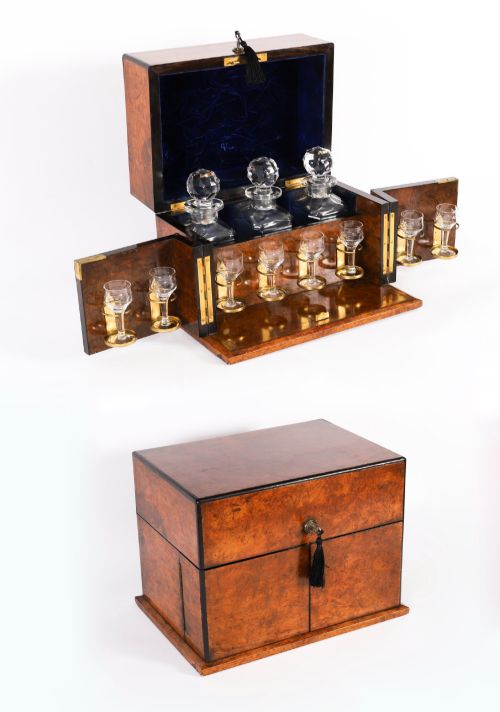
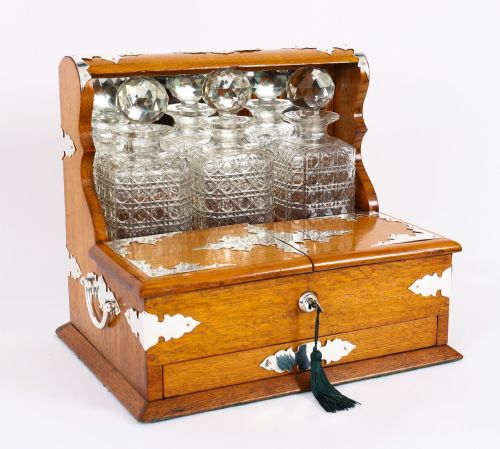
A locked decanter set, often known as a tantalus, is a barware container designed to keep drinks secure from unauthorised access whilst displaying cut crystal decanters. The form most commonly encountered here is the Victorian oak or coromandel cabinet fitted with brass mounts and holding two or three crystal bottles.
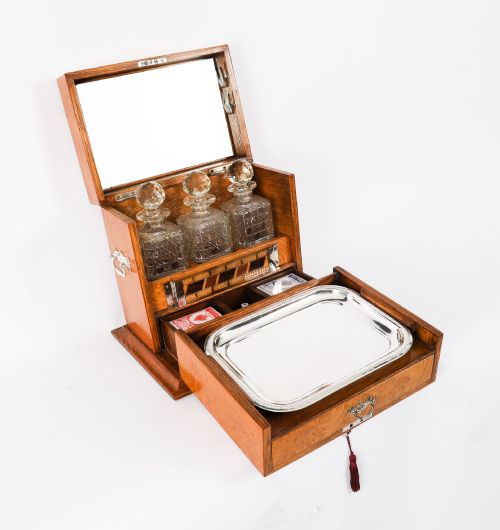
These pieces range from single bottle cased items to complex games compendiums featuring integrated compartments for cards and counters alongside the drinks. Dating spans from the mid nineteenth century through the Edwardian era and into the 1930s, with Late Victorian examples appearing frequently.
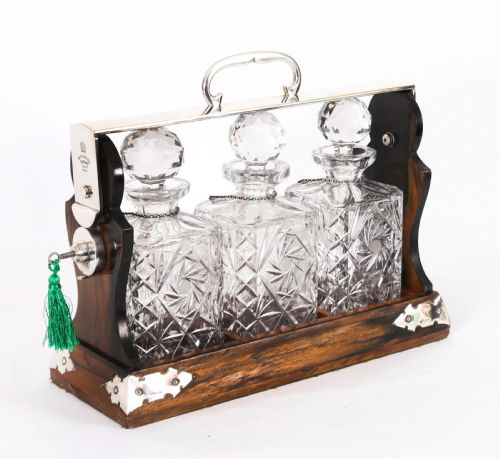
The defining mechanical mechanism requires the handle to be unlocked before any decanter can be lifted from its resting place, effectively denying access to the contents while leaving them visible through the timber frame.
How they were made
Construction relies upon dense hardwoods such as oak, burr walnut, and coromandel wood, often selected for their prominent grain patterns and durability in domestic settings. Cabinetmakers joined these timbers to form robust frames capable of housing heavy glass bottles.
Metalwork forms an integral part of the structure, utilising cast brass mounts, hinges, and locking bars alongside silver plated fittings. Decanters are typically fashioned from heavy cut glass or cut crystal, shaped to fit precisely within the locking retaining brackets.
Locked Decanter Set Retail Price Guide 2026
Typical asking prices for locked decanter set among the pieces listed under this phrase on Sellingantiques today, from the lower quarter to the upper quarter. They describe what is for sale here now, not the wider market.
Listings feature oak, coromandel wood, and burr walnut cabinetry spanning the Victorian period through the 1930s.
What varies in quality
The calibre of a locked decanter set rests upon the choice of cabinet timber and the complexity of its secondary functions, such as incorporated games drawers or multifaceted compartments. Finer examples utilise exotic veneers like coromandel or burr walnut paired with substantial brass hardware.
The refinement of the glass cut within the decanters and the precision of the locking mechanism also distinguish standard production from exceptional workshop output. Makers employing heavier gauge silver plate and superior joinery produce pieces that command greater appreciation among collectors.
Betjemann’s·Hukin and Heath
The Locked Decanter Set Glossary
- Tantalus
- A locking drink cabinet named after the mythological figure Tantalus, designed to display decanters while preventing guests or servants from pouring unmonitored measures. The locking bar holds the stoppers firmly in place until a key is turned.
- Coromandel wood
- A heavy, durable timber imported from Asia, characterised by dark brown colouring with dramatic black stripes. Cabinetmakers valued it for luxury Victorian items.
- Games compendium
- A multi-use box containing equipment for various indoor pastimes, frequently integrated into the base or sides of a decanter set. These units combine social hospitality with entertainment.
- Silver plate
- A layer of silver fused to a base metal, commonly utilised for the handles, locking bars, and mounts of late nineteenth century barware. It provided the lustre of solid silver at a lower cost.
- Burr walnut
- Timber taken from the growth excrescence of a walnut tree, yielding swirling, highly decorative grain patterns. It was sliced into thin veneers for high-end cabinet work.
Locked Decanter Set: Frequently Asked Questions
How does a tantalus lock work?
A metal bar passes across the tops of the glass stoppers, preventing them from being lifted out of the decanters. Turning a key in the integrated lock releases this bar, allowing the retaining bracket to swing or slide aside.
When the bar is lowered and locked back into position, the decanters remain securely trapped within the wooden base regardless of whether the cabinet doors are closed.
What is the difference between a tantalus and a decanter set?
A standard decanter set consists of bottles and sometimes matching glasses arranged on a tray or inside an open stand. A tantalus specifically incorporates a mechanical locking apparatus that physically restrains the bottles.
While all tantalus arrangements function as decanter sets, not every set possesses the security mechanism that defines the tantalus form.
How should I clean a vintage decanter?
Glass decanters often accumulate sediment over decades of use, which requires gentle cleaning rather than harsh abrasives. Warm water paired with specialised cleaning beads helps clear interior residue without scratching the crystal.
Metal mounts and locking hardware should be wiped down carefully with a dry cloth to preserve the finish without exposing the wood or plating to excessive moisture.
Can I replace a missing key?
Many antique locks utilise older lever mechanisms that can often be matched or fitted by a specialist locksmith. Sourcing a replacement requires patience to find an antique key with the correct barrel and bit dimensions.
Alternatively, a professional can create a working key, though preserving the original mechanism without alteration remains the preferred approach for conservation.