





Lockable Mahogany Caddy
A lockable mahogany caddy holds dry tea leaves securely under lock and key, offering refined storage for a valuable household commodity.
Lockable Mahogany Caddy
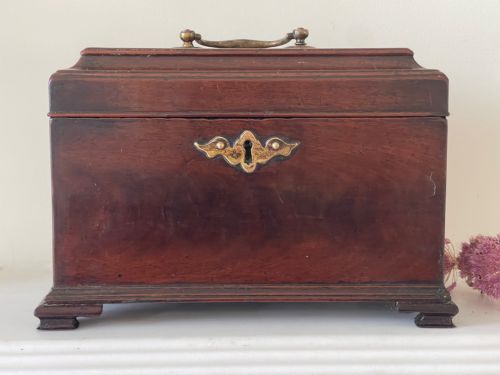
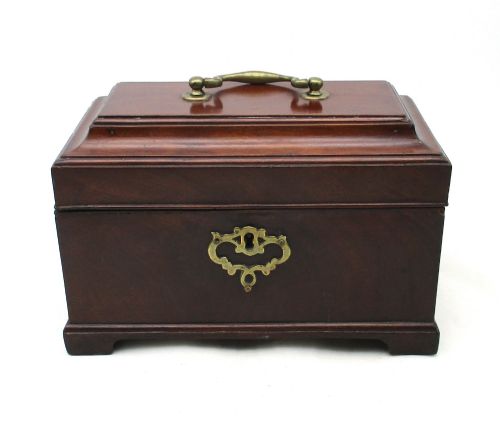
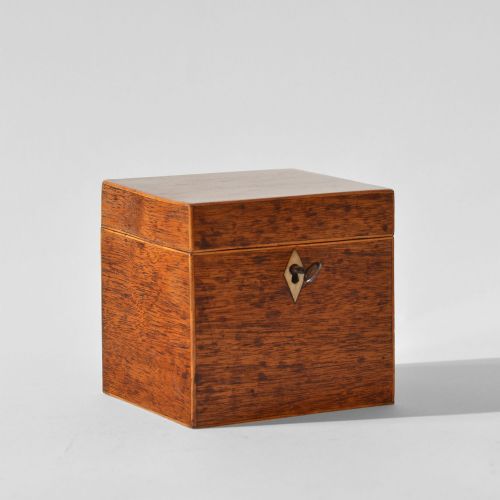
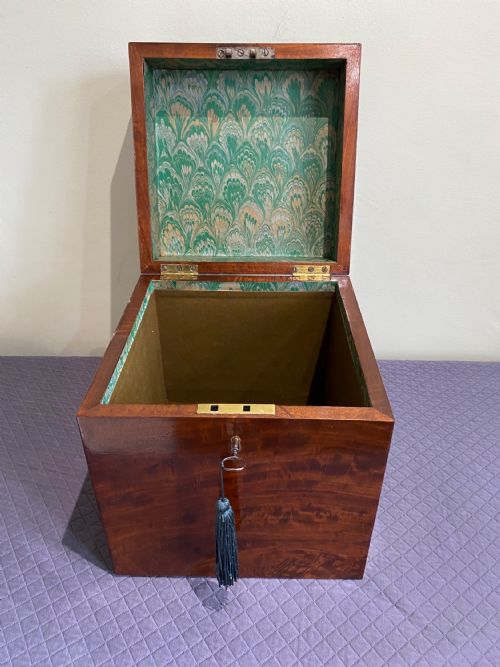
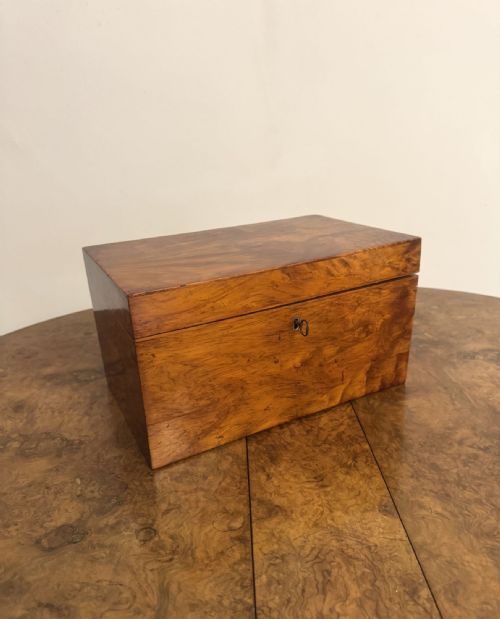
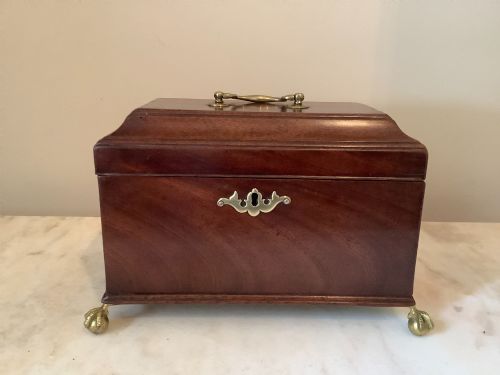
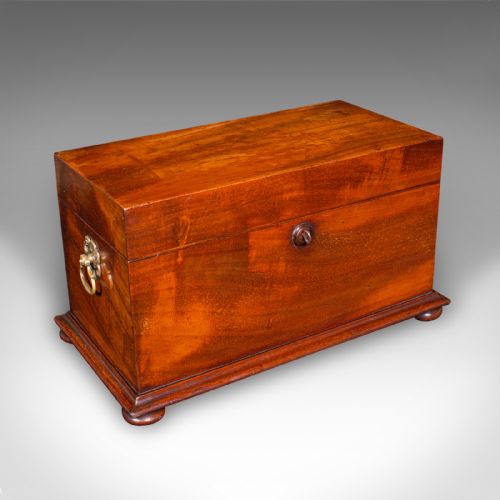
When you search for a lockable mahogany caddy, you encounter boxes designed to store loose tea leaves during the Georgian, Regency, and Victorian periods. These pieces range from simple rectangular boxes to architectural sarcophagus forms and octagonal shapes.
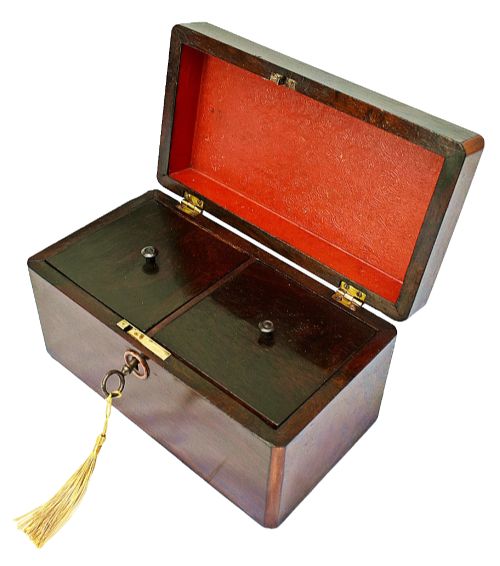
Many internal layouts survive with dual compartments, mixing glasses, or loose leaf canisters designed to keep different tea varieties separate and secure.
What varies in quality
The standard of a piece rests on the precision of its cabinet work, visible in the tightness of the mitre joints and the careful selection of figured mahogany veneer.
Superior examples display sophisticated internal arrangements, such as matched canisters or working locks with surviving keys, rather than simpler undivided compartments.
Lockable Mahogany Caddy Retail Price Guide 2026
Typical asking prices for lockable mahogany caddy among the pieces listed under this phrase on Sellingantiques today, from the lower quarter to the upper quarter. They describe what is for sale here now, not the wider market.
Secret drawers tucked beneath internal canisters offered a hidden spot to stash the precious tea key away from prying household fingers.
The Lockable Mahogany Caddy Glossary
- Caddy
- A small box or chest designed for storing tea leaves. The word derives from cattee, an early weight measurement for tea.
- Escutcheon
- A protective plate surrounding the keyhole of a lock. These fittings are commonly made of brass on tea boxes.
- Sarcophagus form
- A container shape featuring a domed or sloping lid reminiscent of an ancient stone coffin. This style became popular during the Regency and Victorian eras.
- Stringing
- A narrow line of contrasting inlay wood used to outline panels and borders. Cabinet makers utilised boxwood or ebony for this decorative work.
Lockable Mahogany Caddy: Frequently Asked Questions
What is a lockable mahogany caddy used for?
These boxes served to store dry tea leaves safely away from household servants and damp air. Tea was an expensive commodity in the 18th and 19th centuries, making secure storage necessary.
Inside, the boxes typically featured separate compartments or lidded canisters to hold different grades of black and green tea.
How do I date a mahogany tea caddy?
Dating relies on observing the overall form, construction methods, and decorative motifs such as inlays or veneers. Georgian pieces often exhibit simpler rectangular outlines, while Regency and Victorian examples lean towards sarcophagus shapes or painted surfaces.
Hardware styles, including brass feet and escutcheons, also provide reliable clues to the manufacturing period.
What are mixing glasses inside tea caddies?
Certain tea boxes contain a glass bowl fitted securely into the centre compartment. This vessel was used for blending different teas or for washing leaves before brewing.
These glass inserts were removable and are sometimes missing in pieces that survived decades of domestic use.