




Livestock Landscape Artwork
Livestock landscape artwork brings the rustic charm of pasture and farmyard into interior spaces through historic pastoral scenes.
Livestock Landscape Artwork
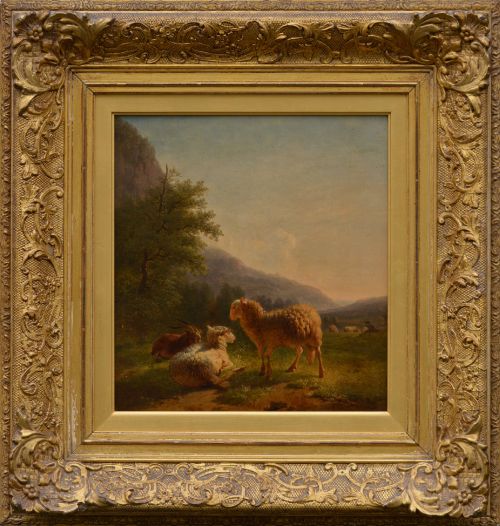
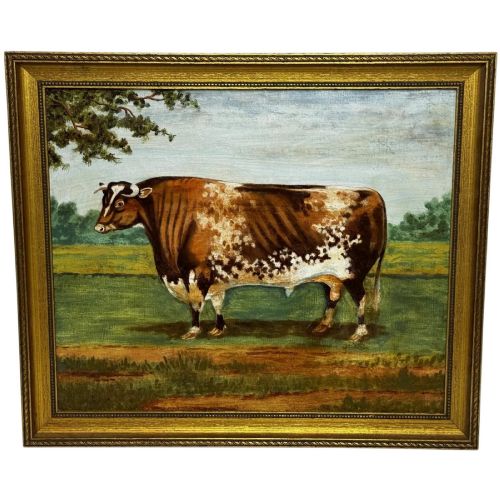
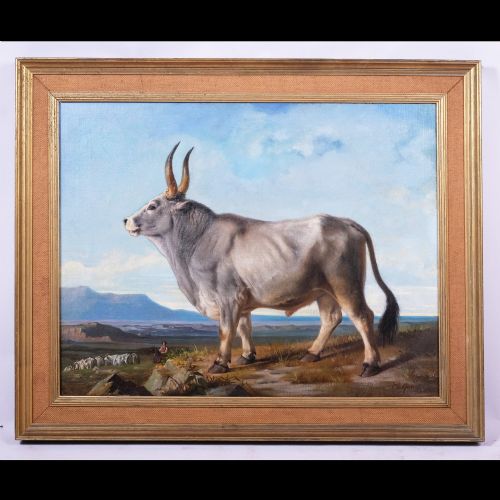
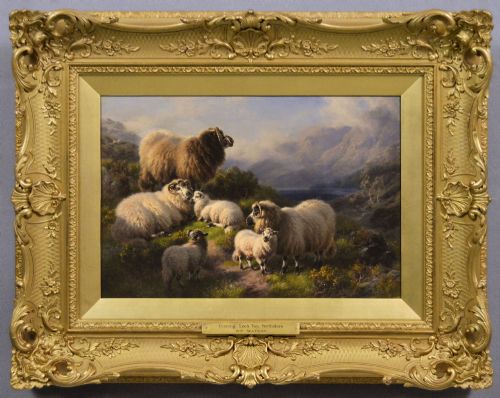
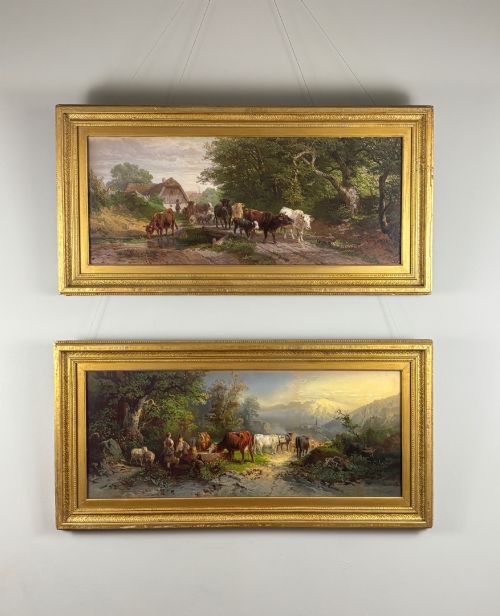
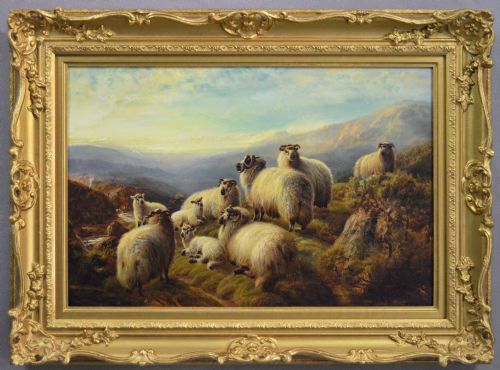
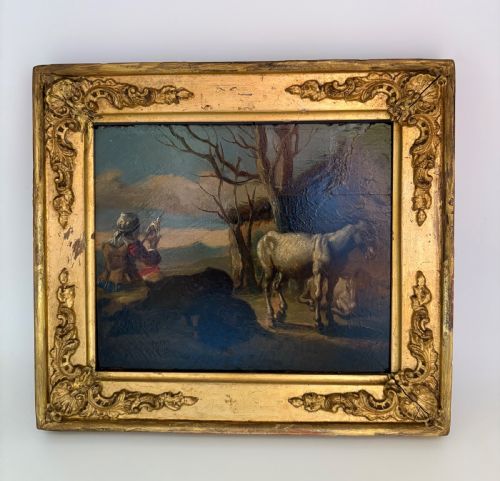
Livestock landscape artwork captures rural scenes dominated by cattle, sheep, and horses set within expansive natural vistas. These pieces frequently date from the nineteenth century, reflecting a period of intense artistic interest in pastoral life and animal portraiture.
Buyers will encounter oil paintings on canvas or panel alongside watercolours, often housed in original giltwood or gesso frames. The subjects range from Highland cattle in Scottish mists to prizewinning shorthorn bulls and quiet flock gatherings.
The style spans Victorian realism and romanticism, capturing both the specific anatomical detail of prized animals and the atmospheric conditions of the British and European countryside.
Materials and methods of creation
Artists primarily employed oil paint on stretched canvas or wooden oak panels, building up layers to render the texture of wool, hide, and foliage. Many works also utilise watercolour on paper, sometimes combined with mixed-media techniques to achieve finer illustrative detail.
The framing process involved carved wood finished with gesso and gilt, serving to protect and accentuate the painted surface. Gilding techniques provided a reflective border that complemented the natural light captured within the landscape.
Cows and sheep have commanded the artist's attention for centuries, proving that livestock truly make agreeable models.
Distinctions in quality and execution
Quality rests upon the artist's ability to render the correct anatomical proportions and distinct character of the animals alongside a balanced composition. Master painters manage light and shadow to create convincing depth in both the livestock and the surrounding terrain.
The integrity of the original support, whether canvas or panel, and the retention of period-appropriate framing influence the overall standing of an individual piece.
Eugène Verboeckhoven·Thomas Sidney Cooper·William Watson Jnr·Franz van Severdonck·Charles Jones
The Livestock Landscape Artwork Glossary
- Oil on Canvas
- A painting medium where pigments suspended in drying oils are applied to a woven fabric support. This technique allowed artists to achieve rich colour depth and smooth blending.
- Gesso
- A plaster-like mixture applied to wood or canvas as a base for painting or gilding. It provides a smooth surface for ornate frame mouldings.
- Giltwood
- Wood carved and coated with thin gold leaf or gilt powder. It is commonly found on nineteenth-century picture frames.
- Pastoral
- A genre of art depicting rural life, shepherds, and livestock in an idealized natural setting. These scenes evoke a sense of agricultural tranquility.
- Realism
- An artistic movement focusing on everyday subjects and accurate, unidealized representation. In animal painting, this meant precise attention to the physical traits of livestock.
Livestock Landscape Artwork: Frequently Asked Questions
What subjects appear in these artworks?
The compositions typically feature domestic animals such as cattle, sheep, and horses situated within rural, agricultural, or mountainous terrain.
Figures of shepherds, farmers, or drovers also appear alongside the livestock to establish scale and narrative context.
How should I hang these framed pieces?
These works require sturdy wall fixings due to the weight of traditional wood and gesso frames. Position them away from direct sunlight to protect the pigments and paper or canvas supports from fading.
Maintain stable indoor humidity levels to preserve the structural integrity of both the artwork and the antique framing.
Are these paintings signed by the artists?
Many examples feature signatures or monograms applied by the painter, often placed discreetly in a lower corner. Attribution is also determined through stylistic analysis, historical records, and documentation associated with the piece.
Works lacking a signature are frequently attributed to specific schools or followers of prominent animal painters based on technique and subject matter.