
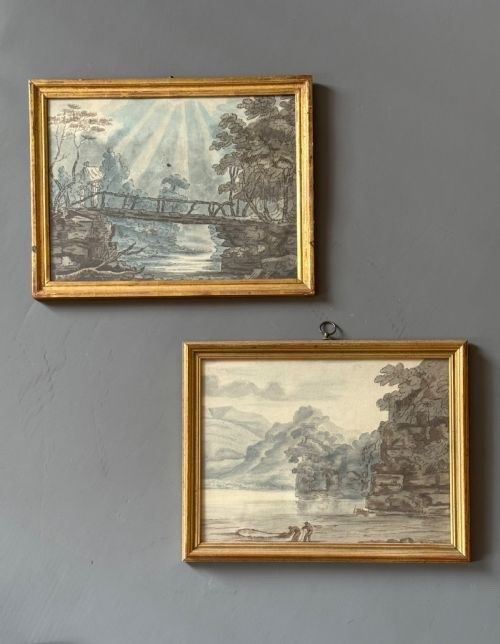
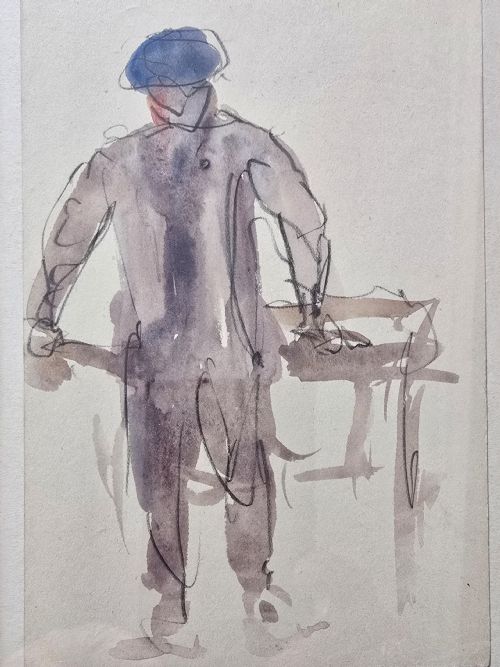


Grey Wash Watercolour
A grey wash watercolour uses tonal monochrome pigments on paper to capture light and form without relying on bright colour.
Grey Wash Watercolour
A grey wash watercolour piece relies on monochrome tones of ink and pigment on paper to build form, shadow and atmosphere. When you search for grey wash watercolour, you encounter original artwork spanning the eighteenth, nineteenth and twentieth centuries.
The selections available here range from early Georgian landscapes and pastoral scenes to Victorian genre works and mid-century portraits. You will frequently find these works framed in wood behind glass, preserving the delicate paper supports.
Makers and artists represented across these periods include known figures like Thomas Rowlandson and Edward Dayes, alongside regional artists. Styles vary from British and Irish school traditions to mid-century Chinese art and Dutch-German equestrian drawings.
Materials and technique
These works rely on paper supports treated with ink, pen and watercolour pigment diluted to create transparent washes of grey and monochrome tone. Artists applied these fluid layers to define architectural details, landscapes and figures with precise control over light and shadow.
Many examples combine pen and ink line work with the softer gradation of a grey wash to establish depth before applying highlights. The organic nature of the paper and pigment means each piece reflects the specific handling of the draughtsman.
Assessing quality and execution
Quality in these works rests upon the surety of the initial pen line and the controlled transparency of the wash. Superior examples demonstrate a confident economy of stroke where the tonal gradations describe atmosphere without heavy reworking.
The preservation of the paper support and the clarity of the monochrome pigment also determine the standing of a piece. Stronger works retain their original tonal contrast, whereas lesser examples suffer from fading or discolouration of the paper.
Stanley Orchart·Thomas Rowlandson·Amos Green·Tom Clough·William J Hodgson
The Grey Wash Watercolour Glossary
- Wash
- A diluted layer of watercolour pigment or ink applied evenly across paper to create transparent areas of tone. This technique forms the foundation of monochrome landscape and architectural drawing.
- Monochrome
- A work executed in a single colour or varying shades of a single hue, such as grey. This palette focuses the viewer on line, shadow and form.
- Draughtsman
- An artist skilled in drawing and line work, particularly one who uses pen, ink and wash. Many traditional watercolourists trained extensively in this foundational skill.
- Support
- The physical material, usually paper, upon which the watercolour and ink are applied. The weight and texture of this material influence how the pigment settles.
Grey Wash Watercolour: Frequently Asked Questions
What is a grey wash watercolour?
A grey wash watercolour is a work on paper that uses diluted black or grey ink and pigment to create tonal monochrome images. These pieces rely on graduated washes rather than a full palette of colours to establish light and shadow.
Artists across the eighteenth and nineteenth centuries utilised this technique for rapid sketching as well as finished topographical and landscape compositions.
How should I frame and display these?
These works on paper require framing behind glass with acid-free mounts to protect the delicate surface from dust and handling. Keeping them away from direct sunlight prevents the grey pigments and paper supports from fading over time.
Displaying them in rooms with stable humidity levels ensures the paper and wooden frames remain in sound condition for years to come.
How do I identify the period of a piece?
Dating these artworks involves examining the paper stock, the style of clothing or architecture depicted, and any visible signatures or inscriptions. Eighteenth-century examples often feature laid paper and pastoral subjects, while Victorian pieces show different framing and aesthetic conventions.
Comparing the handling of the pen and wash to documented works by known artists helps narrow down the date of creation.
Are these works original art?
The selections listed here are original artwork, meaning each piece is a unique hand-drawn and painted creation rather than a reproduction or print. Artists applied ink and watercolour directly to the paper support by hand.
This direct execution means every brushstroke and pen line carries the distinct touch of the maker from the recorded period.