
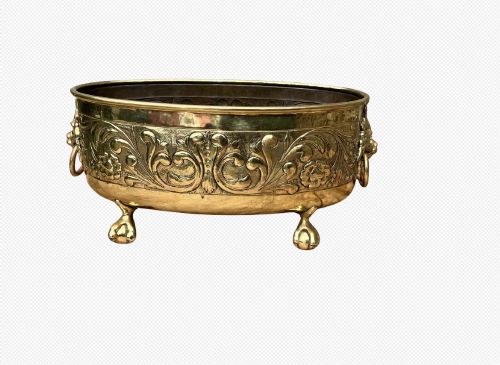


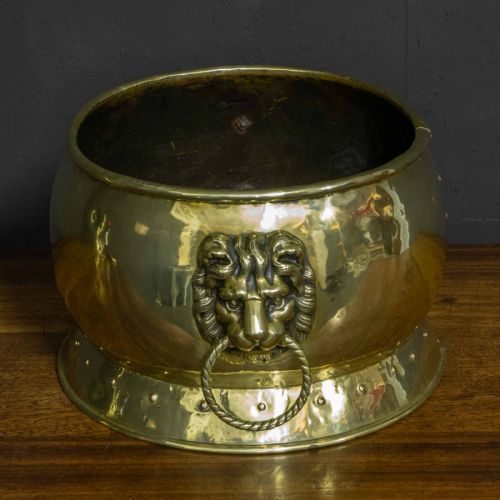
Lion Head Brass Pot
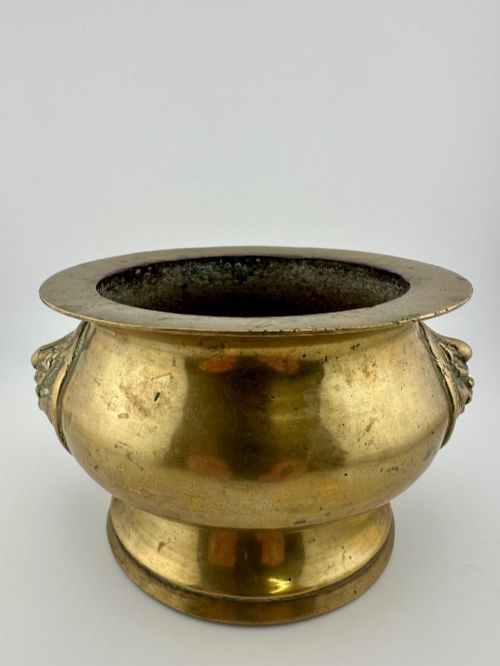
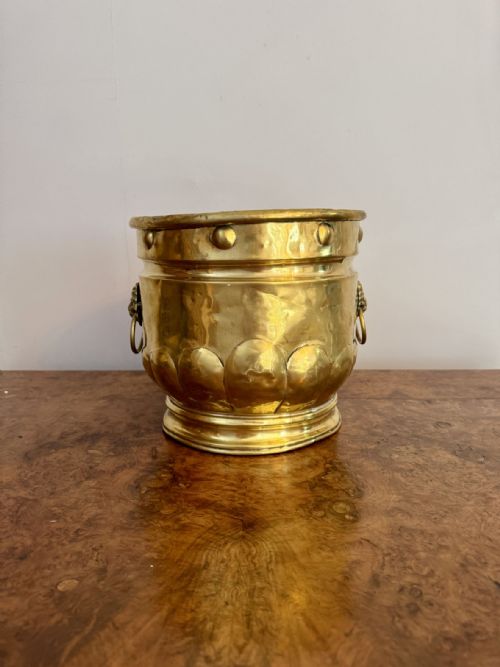
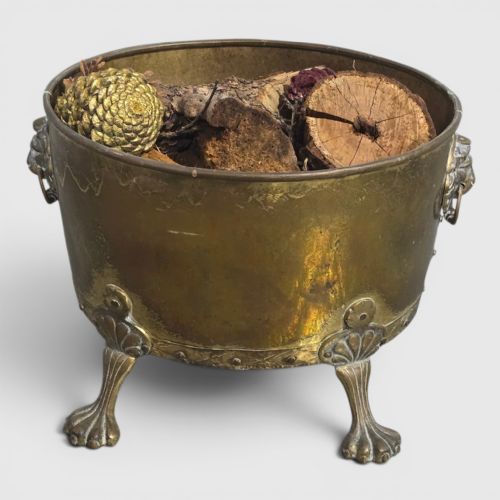
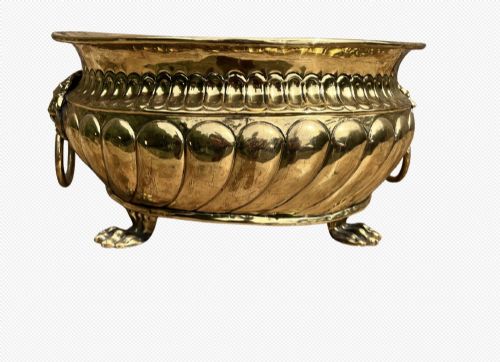
A lion head brass pot brings robust metalwork and classical animal mounts into a room, serving as a jardiniere or log bin.
Lion Head Brass Pot
A lion head brass pot functions primarily as a jardiniere, planter, log bin, or incense burner, drawing on forms from the eighteenth century to the early twentieth century. These vessels appear in styles ranging from Victorian and Dutch traditional to French baroque and Gothic revival.
Buyers encounter planters and jardinieres most frequently on this page, often featuring distinct cast lion mask handles or animal heads. Originating from workshops in Britain, France, Belgium, and China, these metal vessels reflect diverse regional design traditions spanning multiple decades.
Materials and Construction
These pieces rely on cast and beaten metal, utilising brass, bronze, copper, iron, and ormolu. Workshops employed metalworking traditions such as repoussé to hammer decorative relief patterns directly into the body of the copper or brass vessels.
Handles and mounts were cast separately, often taking the form of lion masks, and securely attached to the main body. The combination of heavy sheet metal and detailed casting gave these planters the structural integrity needed to hold plants or fuel.
A surprising number of these dignified nineteenth-century lions spent their early years quietly holding logs by a Victorian fireplace.
Assessing Quality and Execution
The choice of material also distinguishes the range, with heavier gauge brass, bronze, and gilt ormolu representing the more substantial end of production. Thinner copper and iron constructions offer a lighter alternative while maintaining the same utilitarian purpose.
The Lion Head Brass Pot Glossary
- Jardiniere
- An ornamental pot or stand designed to hold plants or flowers. These vessels sit on tables or floors and appear in various metals.
- Repoussé
- A metalworking technique where an artisan hammers a design into relief from the reverse side. This creates raised ornamentation on the surface of copper or brass.
- Ormolu
- Gilt bronze applied to furniture, decorative objects, and mounts. The finish provides a rich gold appearance on metal surfaces.
- Mask handles
- Decorative grips shaped like human or animal faces, including lions. They are typically cast separately and affixed to the sides of vessels.
Lion Head Brass Pot: Frequently Asked Questions
What were lion head brass pots used for?
These vessels served practical domestic roles as plant holders, log bins for firesides, or burners for incense. Their robust construction allowed them to handle heavy loads of earth, wood, or fuel.
Over time, they transitioned from functional household equipment to decorative interior accents. Their distinctive animal mounts added a classical touch to Victorian and continental rooms.
How do I date a brass jardiniere?
Dating relies on observing the manufacturing techniques, material choices, and stylistic cues present in the metalwork. Pieces from the eighteenth and nineteenth centuries often exhibit hand-beaten repoussé work and heavy cast brass handles.
Later examples from the early twentieth century show more standardised production methods. Comparing the decorative style, such as Gothic revival or Dutch traditional motifs, helps narrow the production era.
Are these pots suitable for live plants?
Many of these vessels function effectively as jardinieres designed to hold potted plants. The metal construction handles moisture well, though liners are often used to protect the interior.
Checking the interior condition helps determine whether direct planting is appropriate or if a secondary pot is necessary. Their sturdy bases provide stable support for substantial foliage.
How do I care for antique brass?
Maintenance involves gentle dusting and occasional cleaning with appropriate metal care products to preserve the surface. Harsh abrasives should be avoided to protect any delicate repoussé details or applied patinas.
Allowing brass to retain a natural aged patina is common among collectors who value historical depth. Regular handling and dry storage keep the metal stable over time.