

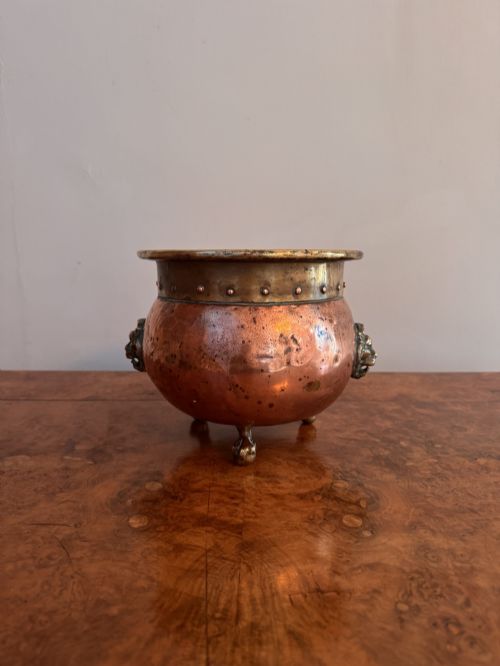
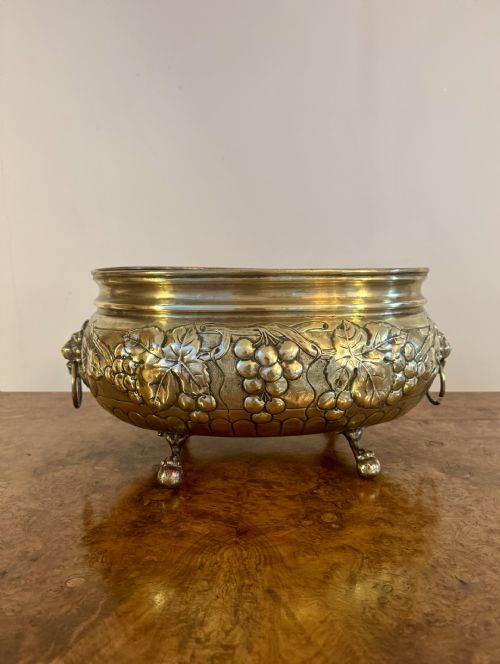
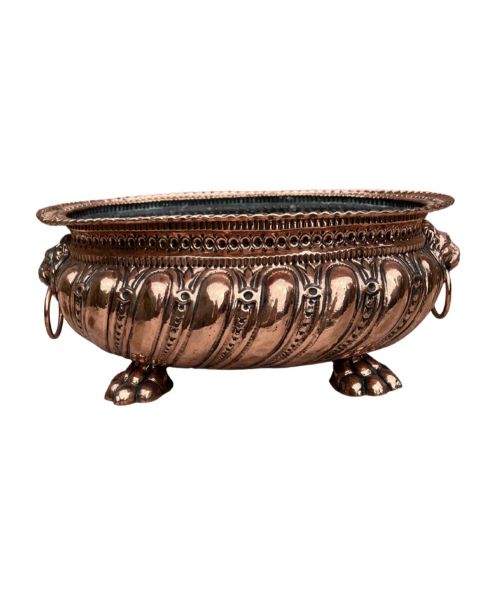
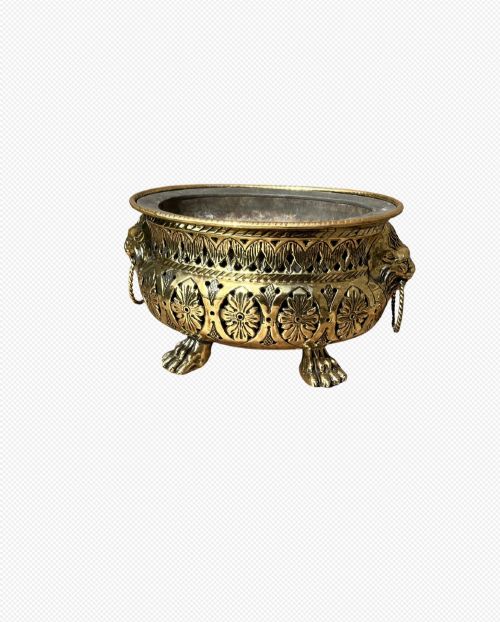
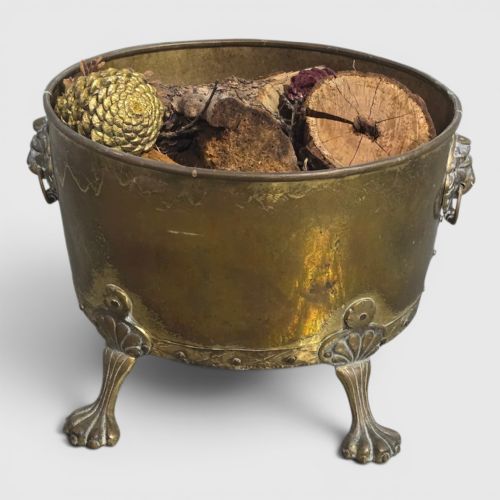
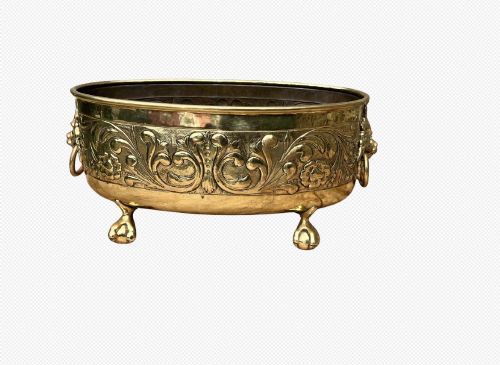
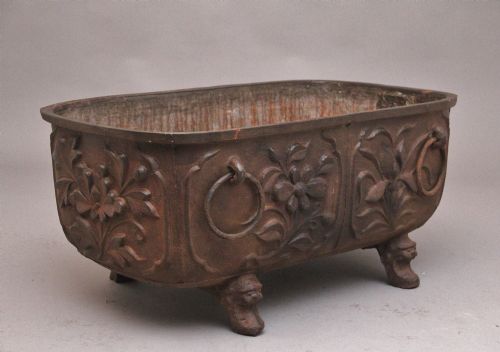

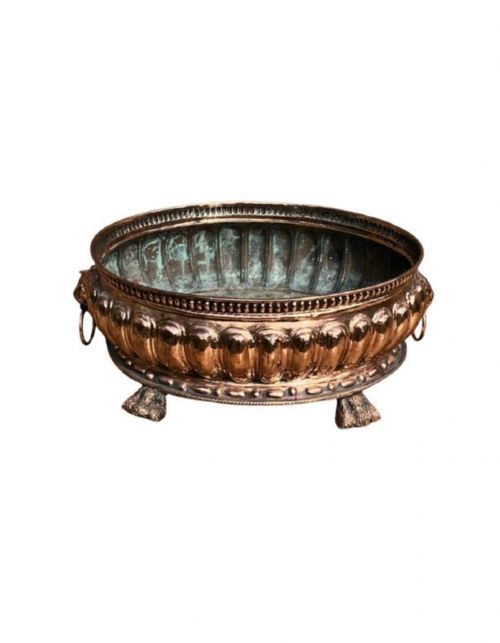


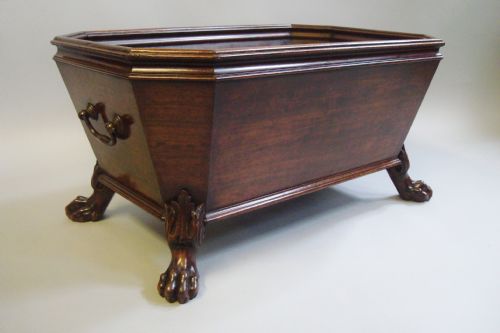


Lion Footed Planter
A lion footed planter brings robust character and classical weight to a fireside or room, grounded by cast supports.
Lion Footed Planter
When you search for a lion footed planter, you are looking at substantial vessels designed for plants, logs, or wine, frequently supported by animal paw or mask mounts. The examples you encounter on this page span several centuries, taking the form of jardiniere pieces, log bins, cauldrons, and wine coolers.
These vessels arrive in various stylistic traditions, including Victorian, Dutch Traditional, French Empire, and Gothic Revival. Metal forms dominate the selection, bringing heavy utility into domestic spaces through distinct regional craft.
How they were made
Makers utilised heavy sheet metals such as brass and copper, shaping them through hammering, repoussé, and piercing techniques. Some pieces incorporate cast iron or padouk wood, providing structural contrast to the metal bodies.
Surface ornamentation ranges from embossed patterns to copper bands and script details, with handles and feet cast separately and joined to the main body.
Lion Footed Planter Retail Price Guide 2026
Typical asking prices for lion footed planter among the pieces listed under this phrase on Sellingantiques today, from the lower quarter to the upper quarter. They describe what is for sale here now, not the wider market.
Listings feature items spanning the eighteenth, nineteenth, and early twentieth centuries, constructed in brass, copper, cast iron, and padouk.
What varies in quality
The standard of a piece depends on the crispness of the repoussé work and the weight of the metal utilised in the body. Thicker gauge brass and copper maintain their structural integrity better under the heavy loads of logs or damp soil.
The connection of the feet and handles dictates the finish, where solid casting and secure attachment distinguish finer items from simpler utilitarian versions.
The Lion Footed Planter Glossary
- Jardiniere
- An ornamental pot or stand for holding plants or flowers. These vessels often sit on tables or directly on the floor.
- Repoussé
- A metalworking technique where the metal is hammered from the reverse side to form a raised design in relief. This creates tactile surface patterns on brass and copper bodies.
- Dinanderie
- Medieval and later Franco-Belgian brass and copper ware. The term covers various beaten and cast domestic metal objects.
- Log bin
- A large container used to store firewood near a hearth. They frequently share materials and footed designs with planters.
Lion Footed Planter: Frequently Asked Questions
What is a lion footed planter?
A lion footed planter is a heavy vessel, typically formed from brass or copper, featuring distinct animal paw supports.
These pieces serve multiple domestic purposes, acting as containers for greenery, firewood, or wine.
How were these planters used?
Historically, these vessels held plants inside grand rooms, kept logs beside the hearth, or chilled wine.
Their robust metal construction allowed them to handle heavy, damp contents without sustaining damage.
How do I clean brass planters?
Maintenance requires gentle dusting and occasional cleaning with appropriate metal care products to preserve the surface.
Harsh abrasives can damage embossed repoussé details and remove historical patination.
Can I put plants directly inside?
Many historical vessels lack drainage holes, meaning direct planting can trap moisture against the interior metal.
Using a separate inner pot protects the base from corrosion while keeping the plant secure.