

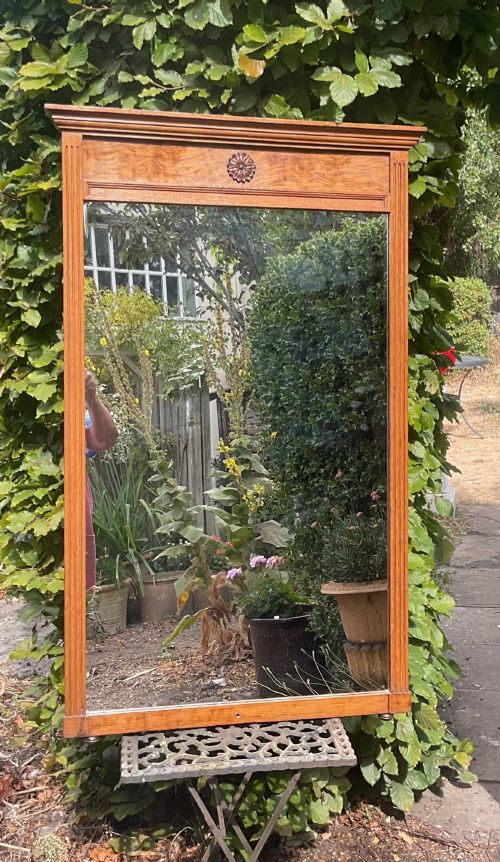
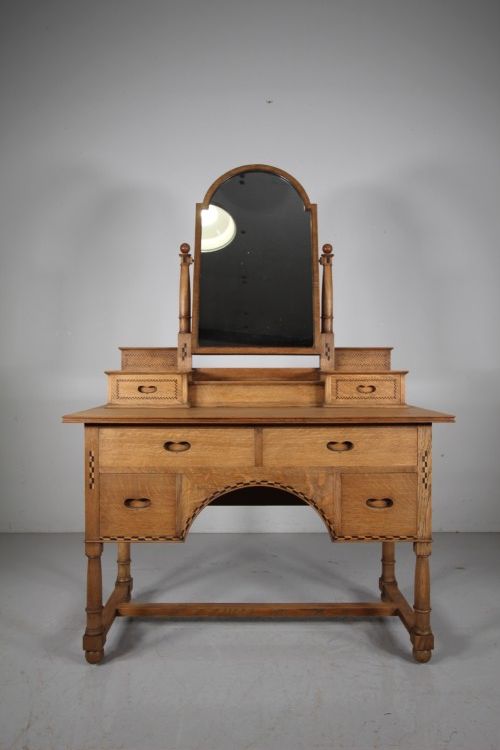
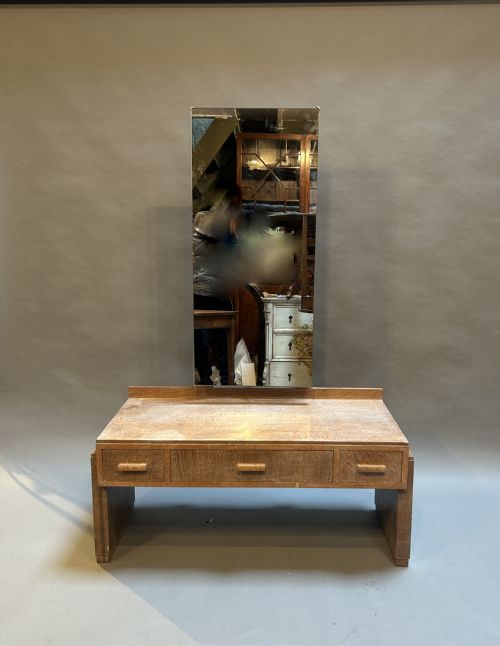


Light Oak Vanity
These pieces of light oak vanity hardware and furniture bring clean grain and practical utility to a bedroom, offering timeless surface space and storage.
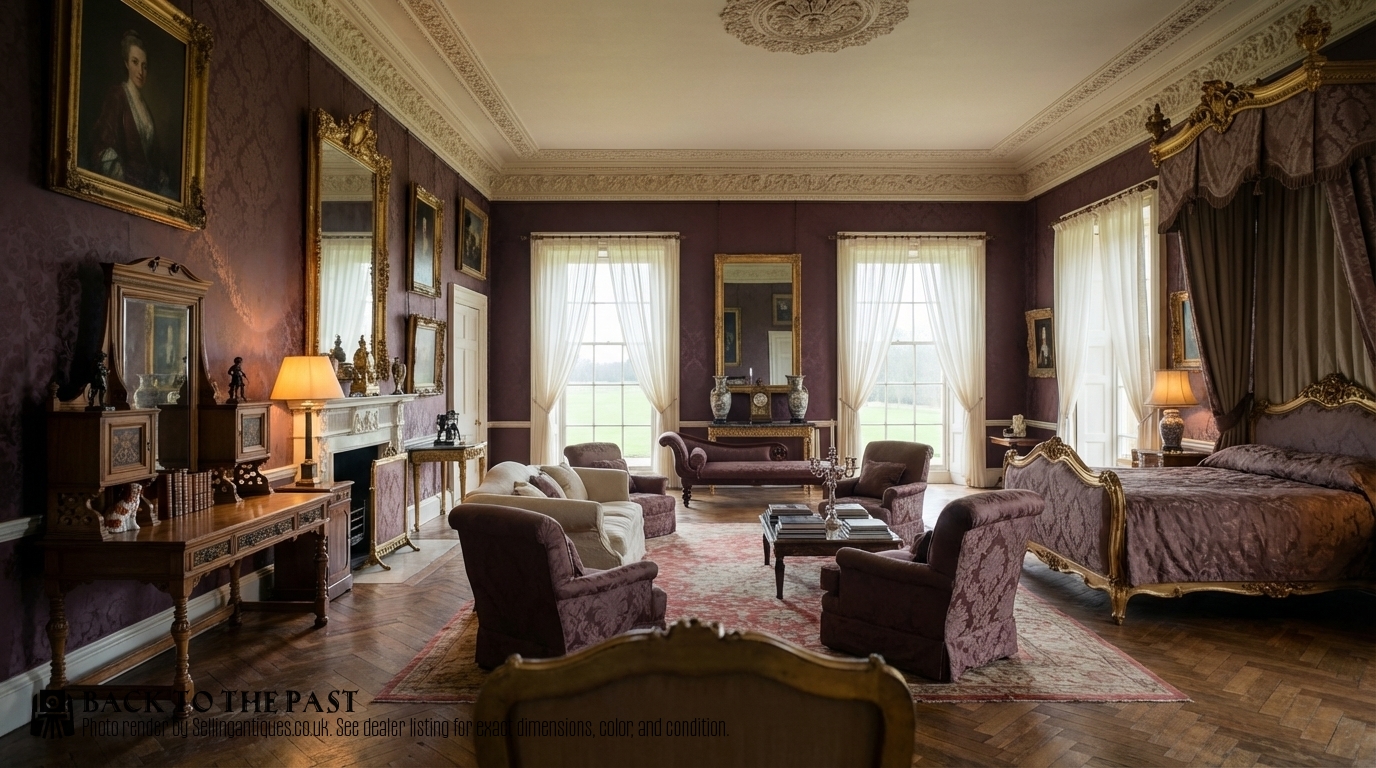
Light Oak Vanity
The selection on this page centres heavily on dressing chests, dressing tables, and mirrors dating from the nineteenth and early twentieth centuries. You are most likely to meet pieces embodying Arts and Crafts, Edwardian, and Art Deco design aesthetics.
Forms extend from large dressing stands with fitted drawers to compact travelling cases and wall mirrors. Each item reflects the domestic routines and interior tastes of its respective period.
How they were made
Makers utilised solid oak alongside oak veneers, frequently pairing the timber with brass handles, clear glass, and mirrored plates. Some examples incorporate contrasting wood inlay and marquetry to create decorative borders and surface patterns.
Structural integrity relied on traditional joinery methods suited to the demands of daily bedroom use. Surfaces were often finished to highlight the natural grain of the oak while protecting the wood from moisture and wear.
Listings in this category span the nineteenth and twentieth centuries, featuring materials such as marble, brass, fabric, and glass alongside oak.
What varies in quality
The standard of a piece is determined by the selection of the timber, the precision of the joinery, and the integrity of any integrated hardware such as brass fixings and mirrors. Superior examples display thoughtful grain matching and robust construction that withstands decades of use.
Originality of components, including mirror plates and drawer pulls, dictates much of the distinction between standard production items and workshop pieces bearing maker labels.
Heals·Arnott and Co Dublin
The Light Oak Vanity Glossary
- Marquetry
- The art and craft of applying pieces of veneer to a structure to form decorative patterns. This technique adds surface detail to drawer fronts and tabletops.
- Dressing Chest
- A low chest of drawers equipped with an attached or pivoting mirror on top. These items served a central role in nineteenth and twentieth century bedrooms.
- Arts and Crafts
- A design movement prioritising traditional craftsmanship, simple forms, and visible construction methods. Pieces from this tradition often feature unpretentious oak construction and hand-hammered hardware.
- Edwardian
- A period spanning the reign of King Edward VII, characterised by lighter furniture forms often influenced by earlier eighteenth-century revivals.
- Oak
- A durable hardwood known for its prominent grain pattern and strength. It forms the primary structural material for the items found in this category.
Light Oak Vanity: Frequently Asked Questions
What is a light oak vanity?
A light oak vanity typically refers to dressing tables, chests, or stands made from pale oak timber designed for grooming. These items often incorporate mirrors and small storage drawers.
They emerged as essential bedroom furniture during the Victorian and Edwardian eras, evolving through various design movements like Art Deco and Arts and Crafts.
Are these pieces suitable for modern bedrooms?
These items integrate well into contemporary spaces due to the neutral tone of light oak and their practical storage capabilities. They function effectively as dressing tables or functional accent desks.
Their restrained decoration allows them to sit comfortably alongside modern interior design schemes without overwhelming a room.
What maintenance do oak vanity surfaces need?
Maintaining oak surfaces involves dusting regularly with a soft, dry cloth and avoiding placement in direct sunlight or near excessive heat sources. This prevents the timber from drying out or warping.
Occasional application of appropriate wax polish helps preserve the finish and nourish the wood grain over time.