
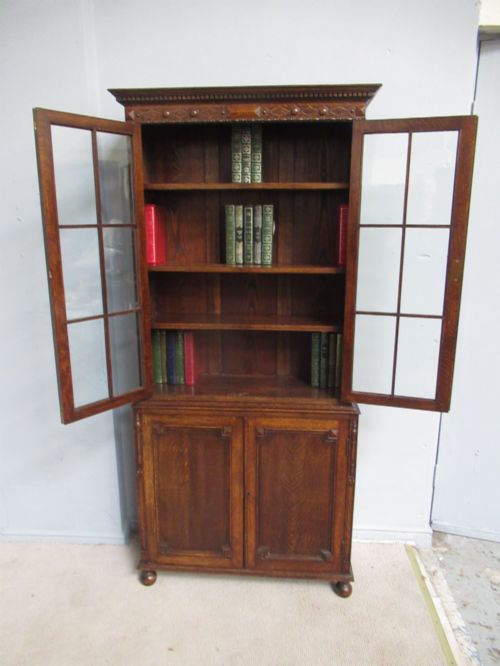
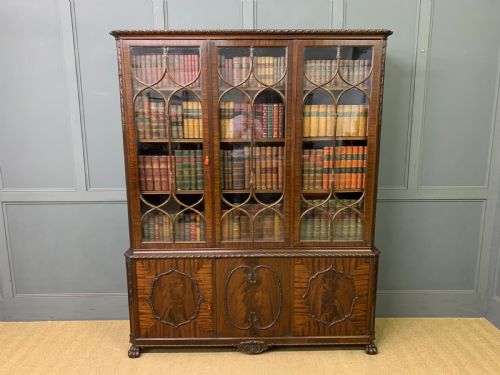
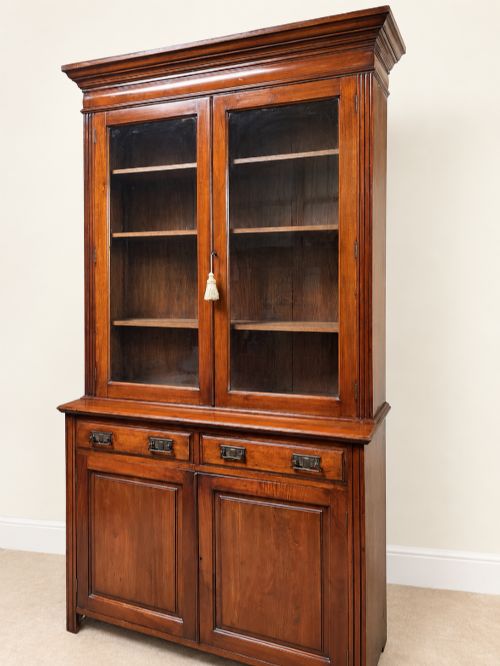
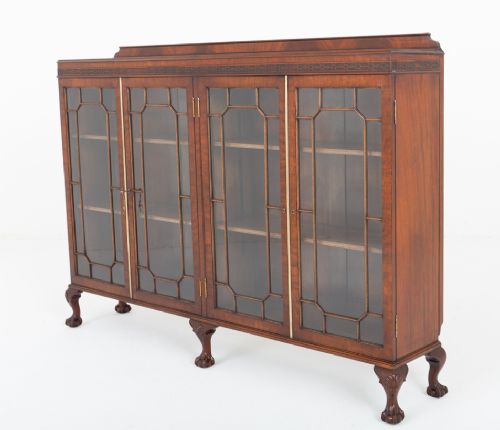
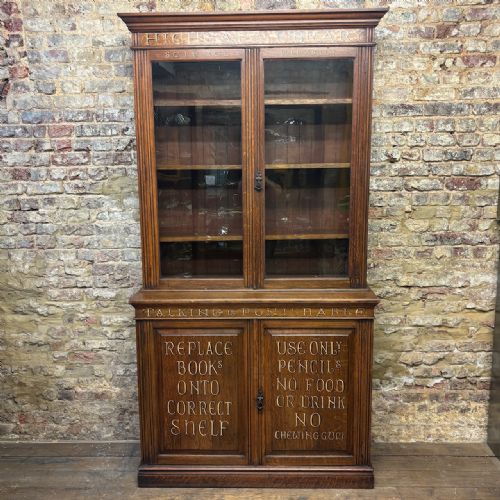
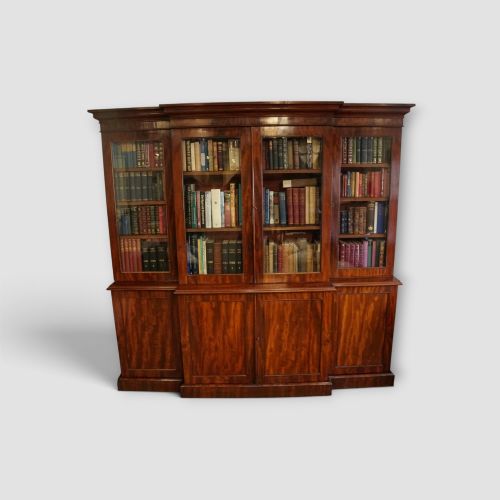
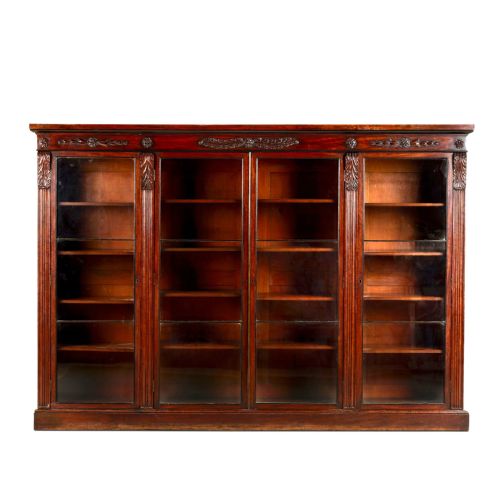
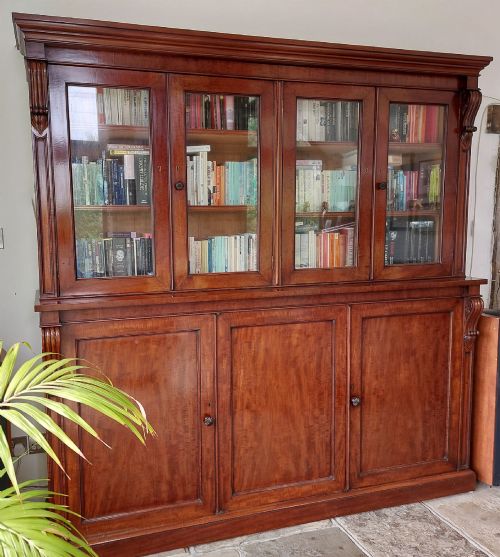
Library Bookcase with Doors
These library bookcase with doors pieces combine timber cabinetry with glazed or panelled protection, keeping working volumes safe while giving a room architectural presence.
Library Bookcase with Doors
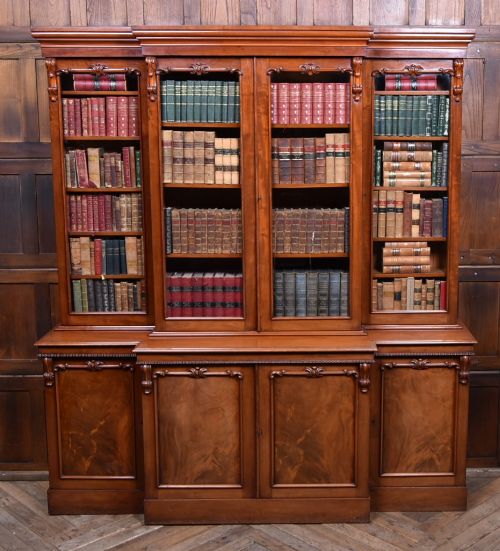
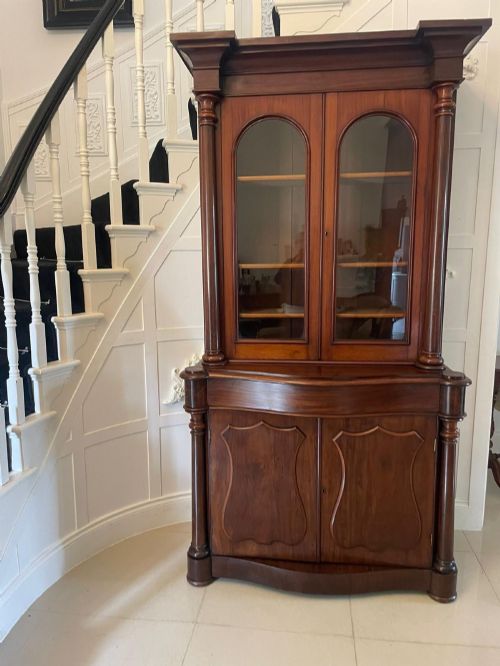
A library bookcase with doors serves as the principal storage unit for private collections, combining upper display sections with lower enclosed cupboards. The pieces gathered here span the nineteenth century through the Edwardian period and into the nineteen-twenties, reflecting changing domestic tastes in shelving large volumes.
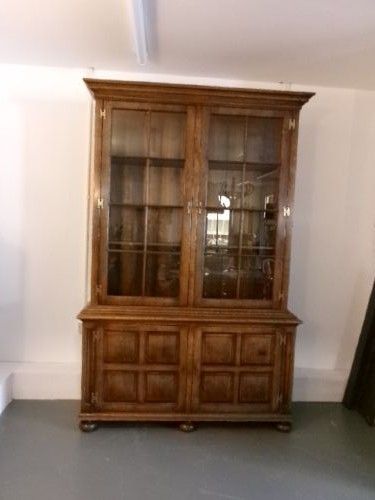
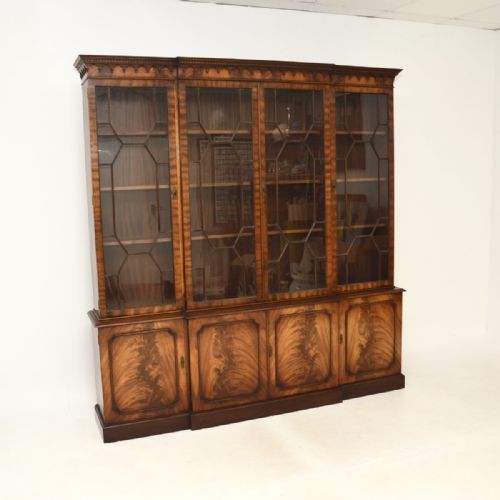
Most examples rely on solid timbers fitted with glazed panels, arranged in configurations from two-door uprights to expansive four-door breakfront formats. Oak and mahogany dominate the selection, appearing alongside walnut and satinwood across Victorian, Regency, and Edwardian eras.
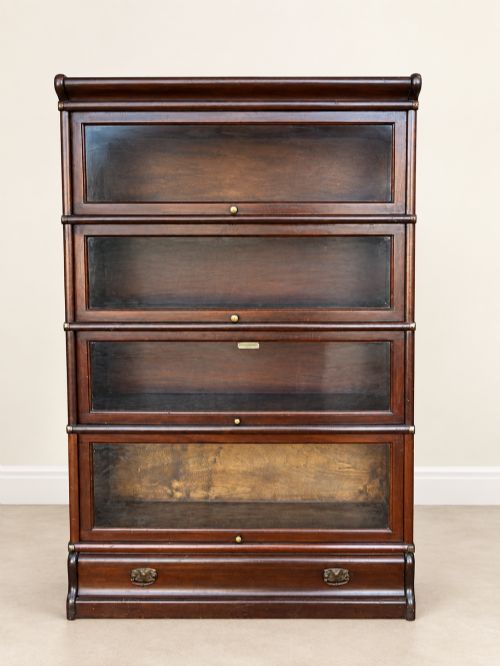
Makers adapted these cabinets for institutional and domestic use, producing stacking systems alongside architectural breakfronts with adjustable shelving. Buyers encounter everything from compact school library editions to grand flame mahogany centrepieces fitted with writing slopes.
Materials and construction methods
Cabinetmakers utilised dense hardwoods including mahogany, oak, and walnut, frequently selecting figured veneers and flame grains for principal surfaces. Brass hardware secures the doors and supports interior fittings, while lead provides structural division for specialised glass panels.
Glazing techniques allow contents to remain visible yet protected from dust and light, often mounted within wooden lattice frames or geometric tracery. Adjustable shelving systems utilise wooden peg supports inside the carcass, allowing owners to alter compartment heights for varying folio sizes.
Listings feature mahogany, oak, walnut, and satinwood, spanning Victorian, Regency, Edwardian, and Mid-Century Modern design periods.
Markers of distinction and build
Quality rests upon the selection of timber veneers, where symmetrical flame mahogany or figured burr walnut denotes superior workshop output. The crispness of carved cornices, architectural mouldings, and inlay work separates standard utility storage from bespoke library furniture.
Interior engineering dictates utility, demonstrated by smoothly operating adjustable shelves, tightly fitted doors, and robust brass mechanisms. Original glass panes, intact painted decoration, and signed cabinetmaker stamps elevate an example beyond standard commercial production.
Globe Wernicke·Minty·James Winter & Sons·Robert Strahan
The Library Bookcase with Doors Glossary
- Breakfront
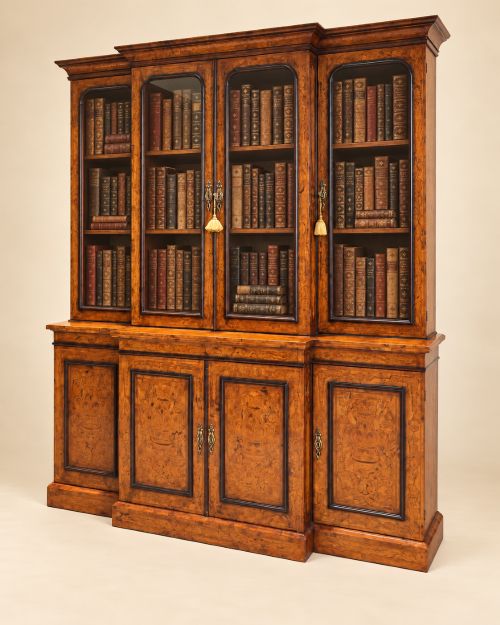
- A cabinet design where the central section projects forward from the flanking wings. This configuration creates visual depth and accommodates wider lower cupboards.
- Glazed
- Fitted with glass panes to enclose shelves while displaying the contents within. It protects books from atmospheric dust.
- Cornice
- The decorative moulded projection running along the top of the bookcase. It finishes the architectural composition of the piece.
- Waterfall
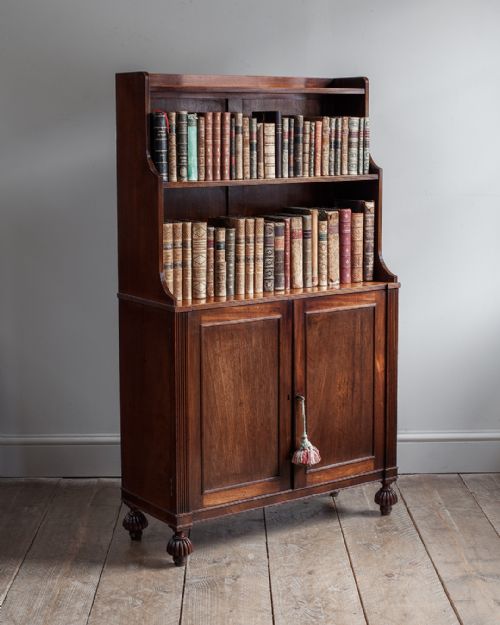
- A graduated shelving style where each lower tier extends further forward than the one above. The stepped profile suits smaller collections.
- Adjustable
- Built with internal tracks or peg holes that permit shelves to be repositioned. This accommodates volumes of differing heights.
Library Bookcase with Doors: Frequently Asked Questions
How do I adjust the shelves?
Most period library bookcases use wooden peg supports fitted into vertical rows of holes inside the cabinet walls. Simply lift the shelf clear of its pins and relocate them to the desired height.
Heavier Victorian units may use brass rack strips set into the interior sides. These require tilting the shelf brackets slightly to disengage them before sliding them up or down.
Are the doors usually glazed?
The upper sections of these library bookcases commonly feature glazed doors to protect volumes from dust while keeping titles visible. Timber panelled doors typically appear on the lower cupboard sections to conceal bulkier storage.
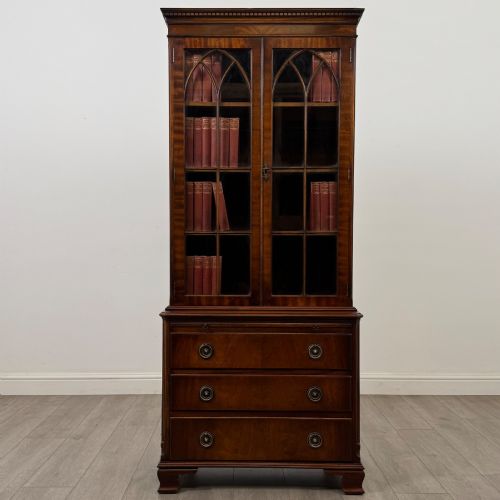
Some examples utilise leaded glass or wooden astragals to divide the panes into smaller geometric patterns. This reflects the prevailing stylistic influences of the Regency and Gothic Revival periods.
How do I clean the timber?
Maintain finished mahogany, oak, and walnut surfaces by dusting regularly with a dry, soft cloth. Avoid modern silicone sprays that can build up and degrade the historic polish over time.
Feed dry timber periodically using a traditional beeswax paste applied sparingly and buffed to a soft sheen. This preserves the natural grain without softening the underlying patina.