
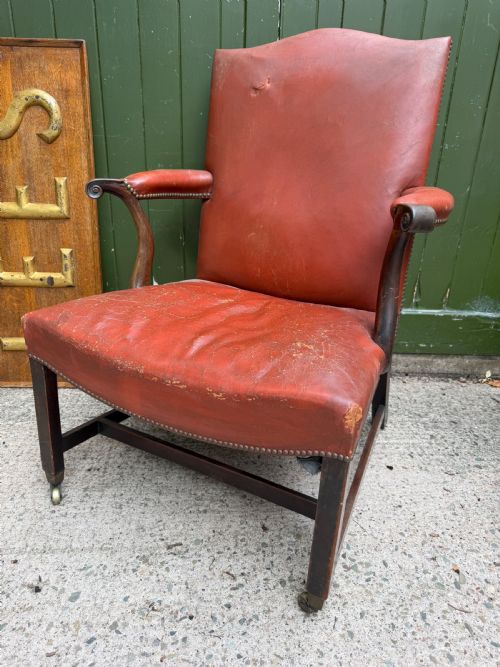
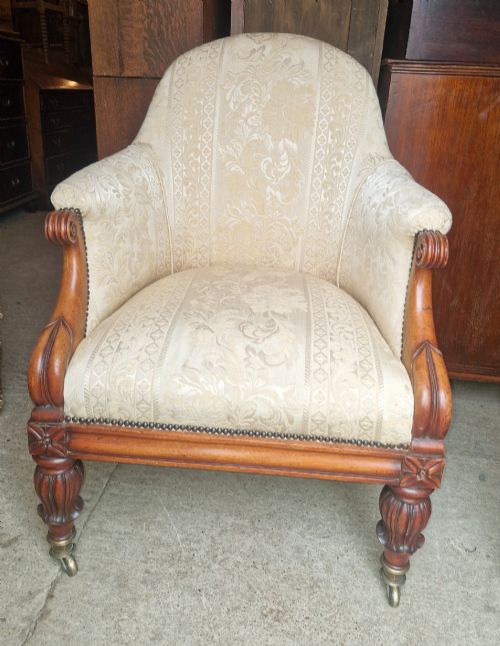
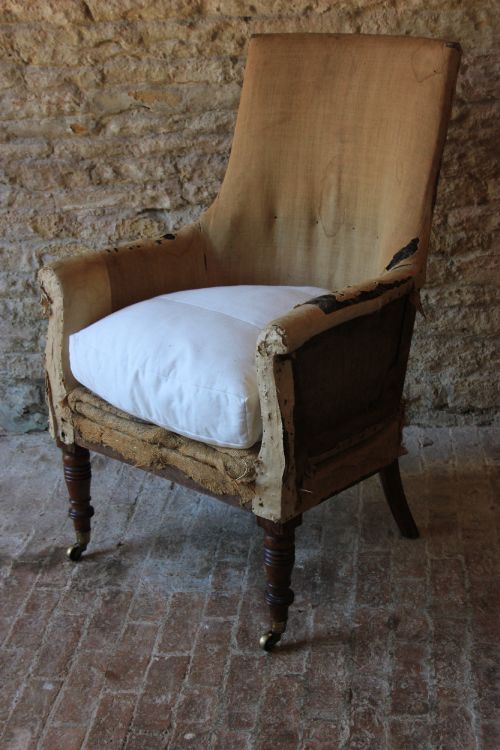
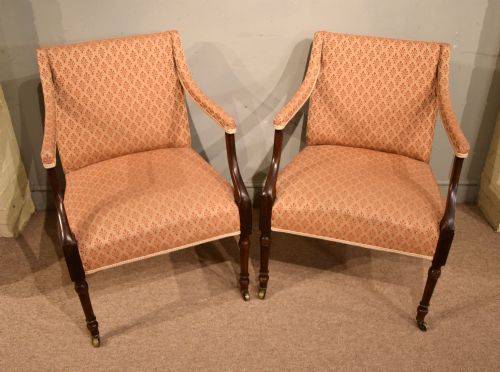
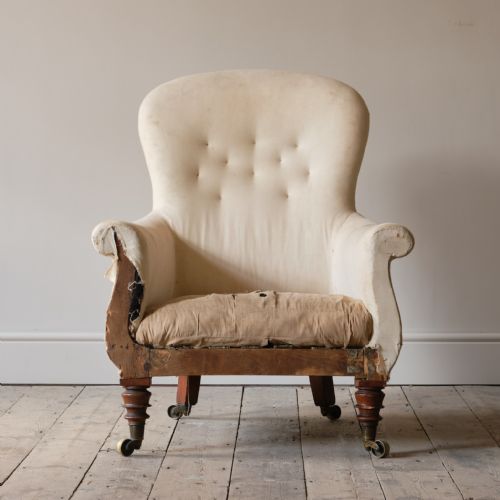
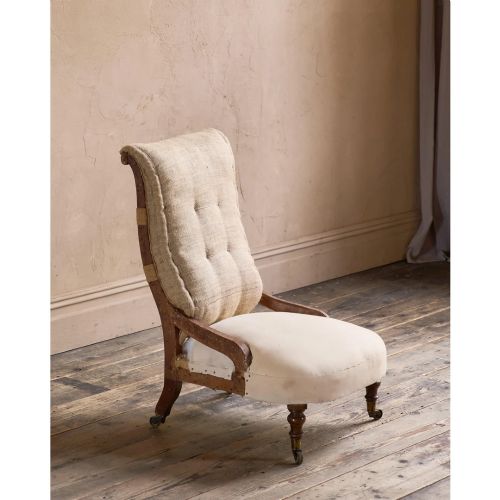
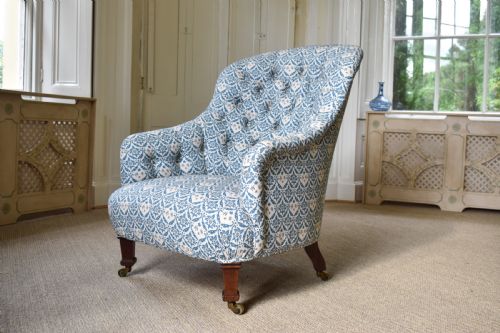

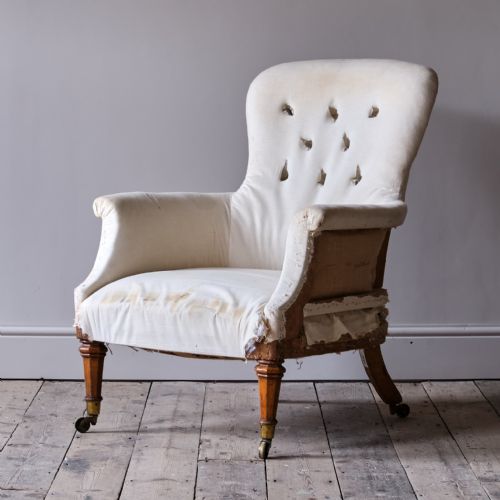

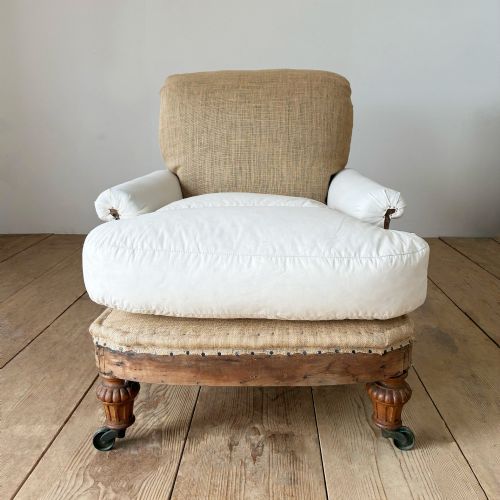
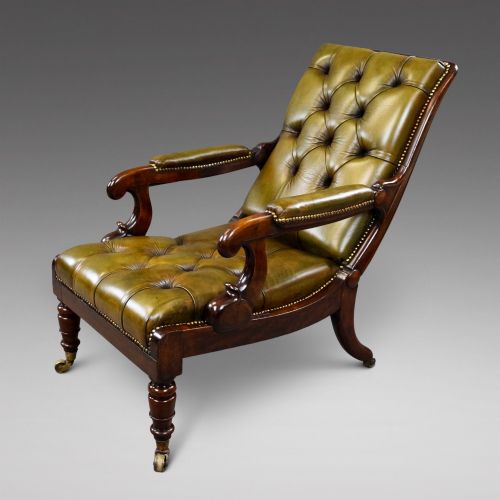
Library Armchair Brass Castors
Library armchair brass castors bring traditional seating into focus, combining robust timber frames with smooth mobility for daily study or fireside comfort.

Library Armchair Brass Castors
A library armchair brass castors search brings together substantial seating designed for reading rooms, studies and country houses. These chairs prioritise heavy frames and supportive upholstery to ensure long periods of sitting.
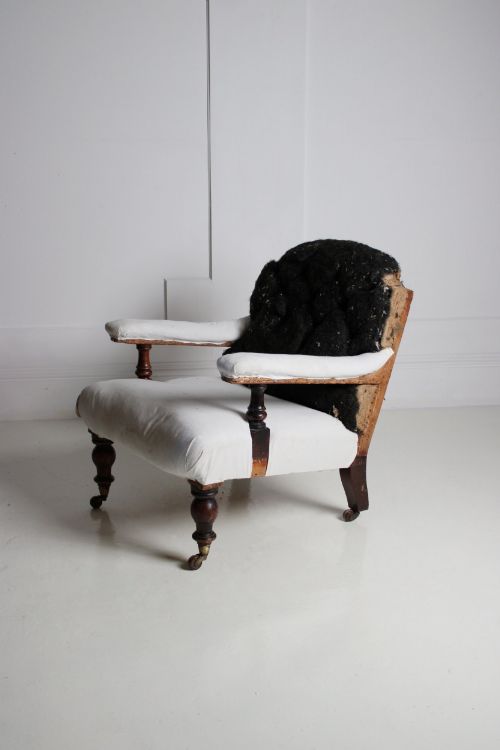
The pieces on this page span the Georgian, Regency, William IV, Victorian and Edwardian periods. Mahogany and rosewood form the structural core of the timber frames, while leather, calico, velvet and cane provide the surfaces.
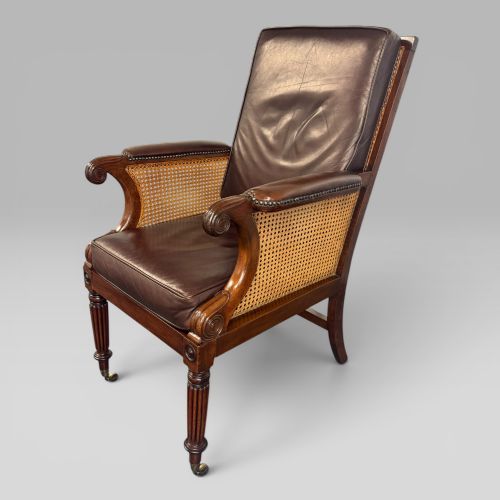
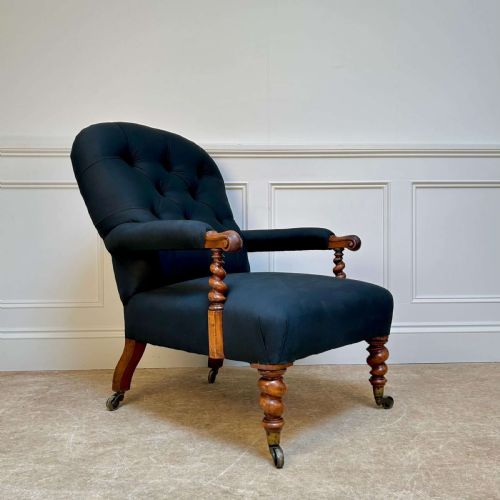
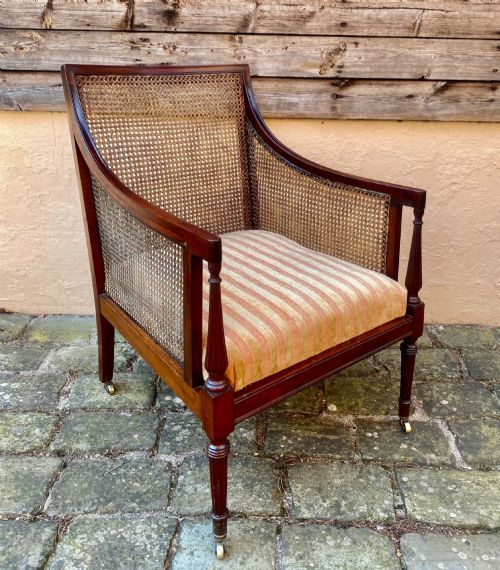
Regency and Victorian examples dominate the selection, offering everything from deep buttoned leather club chairs to light cane bergères. Buyers will frequently encounter mahogany frames supported on turned legs finished with metal fittings.
Judging Quality and Execution
Quality rests primarily in the timber selection and the crispness of the frame carving, from reeded arms to turned supports. Superior pieces display refined proportions and balanced scale rather than excessive bulk.
The integrity of the original show frame and the precision of the joinery distinguish workshop standards. Finer examples retain maker details or show sophisticated framing such as X-frame structures and specialised bergère cane work.
The listings span from the Georgian era through to the Edwardian period, with the Regency era notably well represented by mahogany frames.
Howard and Sons·Hindley and Sons·Gillows·William Birch
The Library Armchair Brass Castors Glossary
- Bergère
- An enclosed armchair with woven cane panels on the back and sides. This French-inspired form became popular in English libraries during the Regency period.
- Castor
- A small wheel fitted to the foot of a chair on a swivel or fixed mount. Brass versions allowed heavy timber armchairs to move smoothly across floorboards.
- Gainsborough chair
- A wide, open-framed armchair with padded arms and a stuffed back, originating in the mid-eighteenth century. These seats offered comfort for writers and readers.
- Reeded
- A decorative moulding formed of parallel convex strips carved directly into the timber. This technique frequently appears on the legs and arm supports of Regency chairs.
- X-frame
- A structural chair design featuring crossed stretchers or legs forming an X shape. This configuration provides high load-bearing strength.
Library Armchair Brass Castors: Frequently Asked Questions
What defines a library armchair?
Library armchairs are robust, upholstered seating pieces designed historically for reading rooms and private studies. They feature supportive backs, padded arms and sturdy timber frames built for long hours of use.
Many examples include brass castors on the feet to allow the chair to be repositioned easily across heavy carpets or parquet flooring without lifting the heavy frame.
How do I identify a Regency library chair?
Regency library chairs typically display classical influences through reeded legs, scroll arms and dark mahogany or rosewood timbers. The proportions tend to be balanced and architectural.
Look for refined details such as lyre-shaped arm supports or finely turned wooden legs terminating in brass cap castors.
Were these chairs used only in libraries?
While the term specifies libraries, these versatile armchairs sat in country house drawing rooms, studies, parlours and bedrooms. Their comfortable upholstery made them suitable for any primary living space.
Companion pieces often served at large partner desks or beside fireplaces for reading newspapers and manuscripts.
How should I care for leather upholstery?
Leather upholstery benefits from regular dusting with a soft, dry cloth to prevent grit accumulation in the creases and buttons. Conditioning products help maintain the flexibility of antique leather.
Keep these chairs away from direct sunlight and strong heat sources to prevent the hide and internal horsehair stuffing from drying out.