


Liberty Oak Sideboard
A liberty oak sideboard brings the honest construction and functional elegance of the Arts and Crafts movement directly into a dining room.
Liberty Oak Sideboard
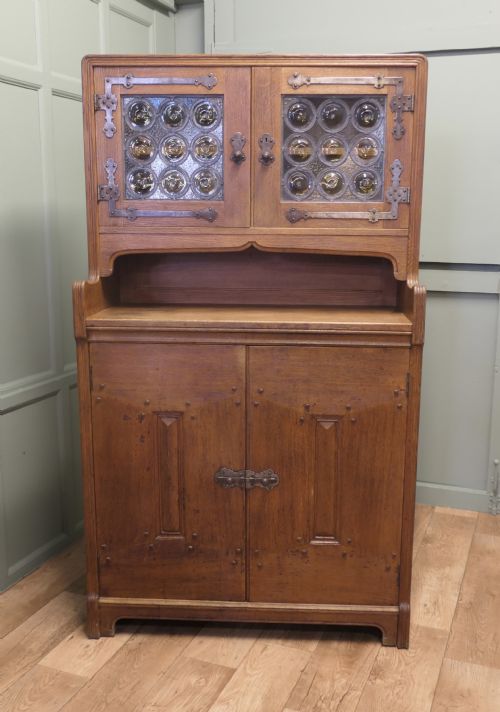
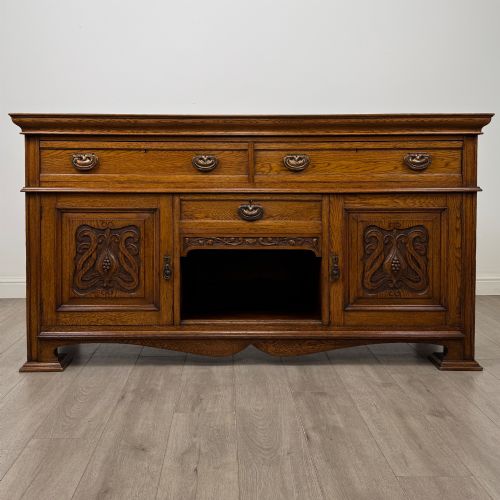
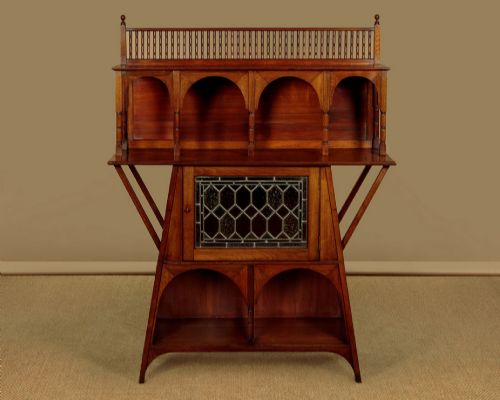
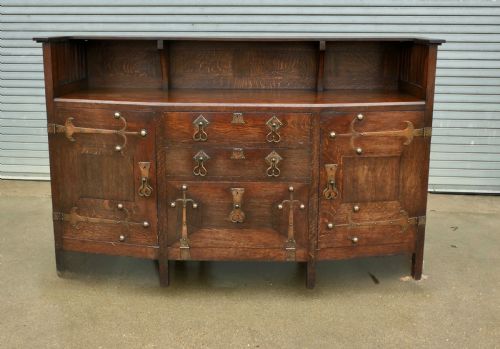
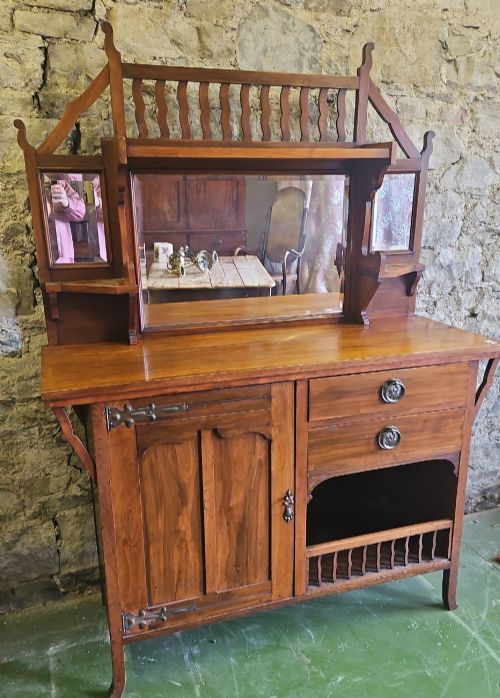
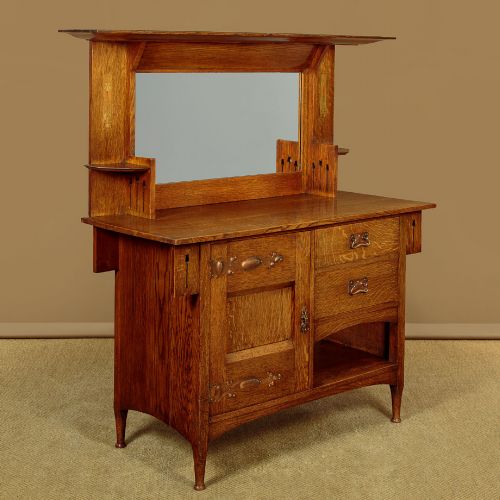
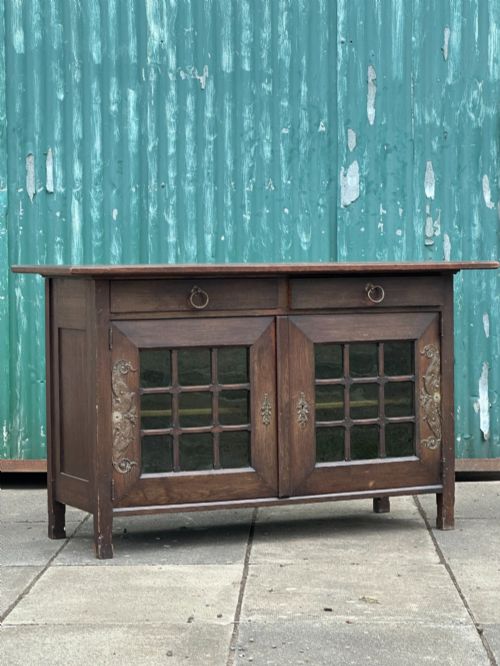
A liberty oak sideboard is a substantial dining room cabinet designed in the Arts and Crafts style, emerging from periods spanning the late Victorian era through the Edwardian years and into 1910. These pieces function primarily for storage and display, taking forms that include sideboards, dressers, side cabinets and combined dresser-cabinets.
Buyers looking at this selection encounter pieces designed specifically for Liberty and Co, alongside items created in a distinct Liberty style or attributed to the London retailer. The designs frequently incorporate regional models such as the Lochleven or Hathaway lines, reflecting the commercial output of the firm alongside independent cabinet makers.
The forms span from golden oak cupboards to large Victorian sideboards, showing the practical domestic requirements of British homes around the turn of the twentieth century. These sideboards anchor a room with straight-grained timber and functional compartments designed for tableware and linens.
What varies in quality
The distinction between pieces rests on the directness of the design attribution and the refinement of the cabinet work. Sideboards bearing specific documentation or attribution to known designers like Leonard Wyburd or makers such as Shapland and Petter sit at a different level from generic pieces produced in the broader Liberty style.
Material selection and decorative integration also separate examples, where the careful placement of copper hardware and precise wood inlay elevates the piece. The handling of the golden oak timber, through quarter-sawing that reveals strong figuring, dictates the visual presence of the furniture.
The listings span from 1880 through the Edwardian era to 1910, demonstrating the enduring popularity of Arts and Crafts oak furniture.
Liberty & Co.·Leonard Wyburd·Shapland and Petter
The Liberty Oak Sideboard Glossary
- Arts and Crafts
- A design movement emphasising handcraftsmanship, plain surfaces, and vernacular forms over industrial mass production. This style dominated British furniture production from the late nineteenth century into the Edwardian period.
- Quarter-sawn oak
- A method of cutting the log perpendicular to the growth rings that produces distinctive medullary ray flecks across the timber. This cut provides both greater stability and a characteristic decorative figure highly prized in this furniture.
- Marquetry inlay
- The technique of fitting small pieces of contrasting veneer into a prepared wooden surface to form pictorial or geometric patterns. It appears on drawer fronts and panels to add subtle detail.
- Leaded glass
- Small panes of glass held together within a network of lead cames, frequently used in cabinet doors. This technique allows for geometric or stylized botanical glazing patterns common in the period.
- Side cabinet
- A smaller storage piece akin to a sideboard, designed for smaller dining spaces or reception rooms. These items offer enclosed cupboard space and sometimes open shelving.
Liberty Oak Sideboard: Frequently Asked Questions
How do I spot an authentic piece?
Authentication relies on identifying construction methods consistent with the period, such as quarter-sawn oak and hand-beaten copper hardware. Look for specific design characteristics associated with the London retailer and documented makers.
Compare the proportions and timber quality against known examples from the archive. Documentation or attribution marks further clarify the origin of the piece.
Where were these pieces used?
These cabinets served primarily in dining rooms for storing cutlery, heavy ceramics, and glassware. They functioned as both practical storage units and surfaces for displaying serving platters.
In contemporary settings, they transfer easily to living spaces or large hallways. Their sturdy construction suits daily use while providing generous interior capacity.
How do I care for the oak?
Maintenance requires regular dusting with a dry, soft cloth to prevent particulate accumulation on the timber surface. Avoid placing the furniture near direct heat sources or strong sunlight, which can dry out the oak and fade the finish.
Application of traditional beeswax helps nourish the wood and maintain its lustre. Avoid modern silicone polishes that can build up a sticky film over time.
What is the difference between a sideboard and a dresser?
A sideboard typically consists of a low base unit with cupboards and drawers, designed for serving food and storing dining accessories. A dresser generally incorporates an upper section with plate racks or open shelving above the base.
Both forms utilise similar oak construction and decorative hardware within the Arts and Crafts idiom. The choice between them depends on whether display shelving or a flat top surface is required.