
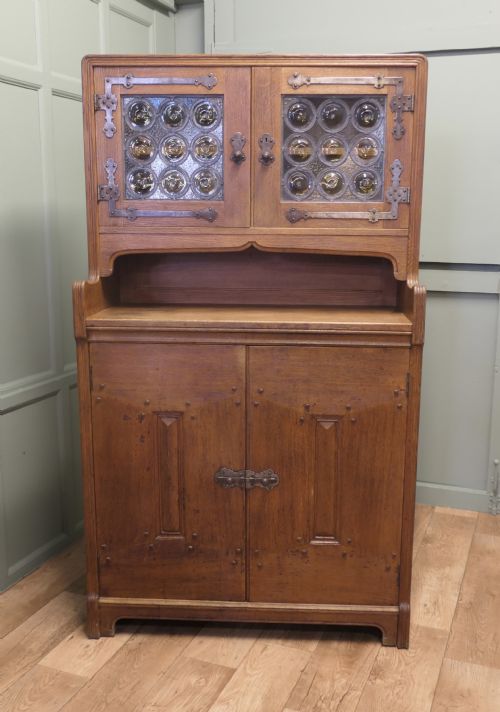
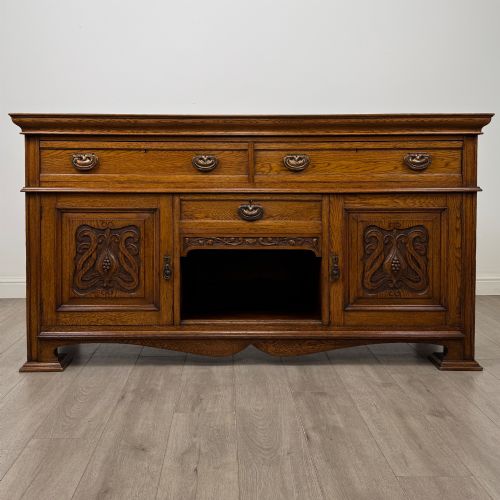
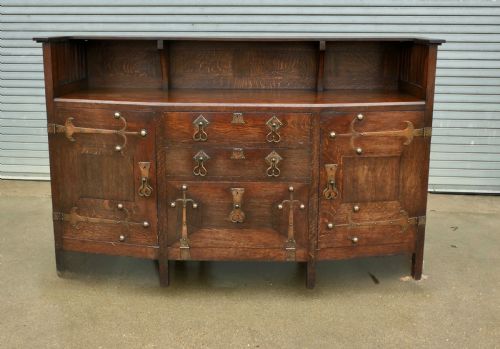
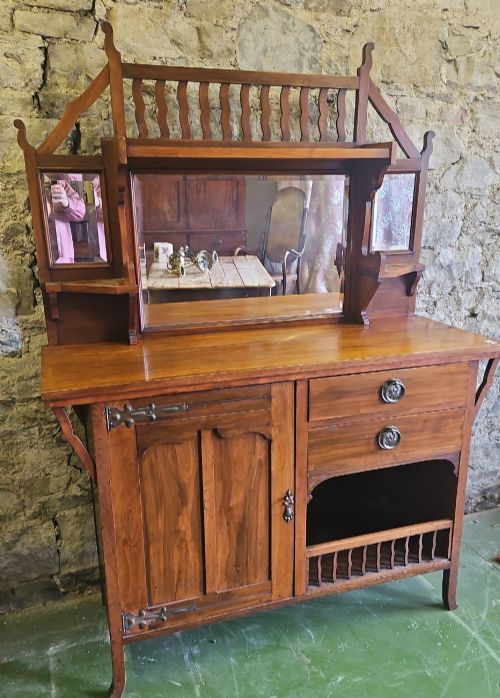
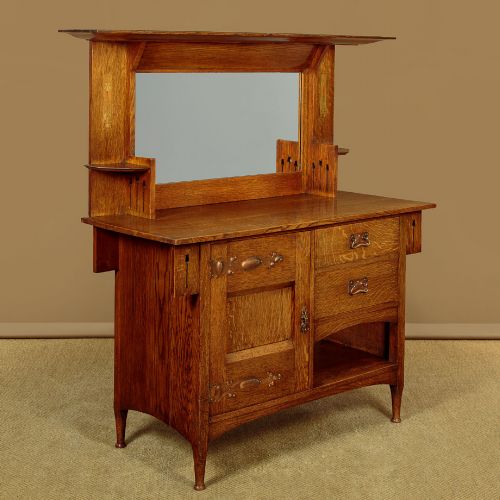
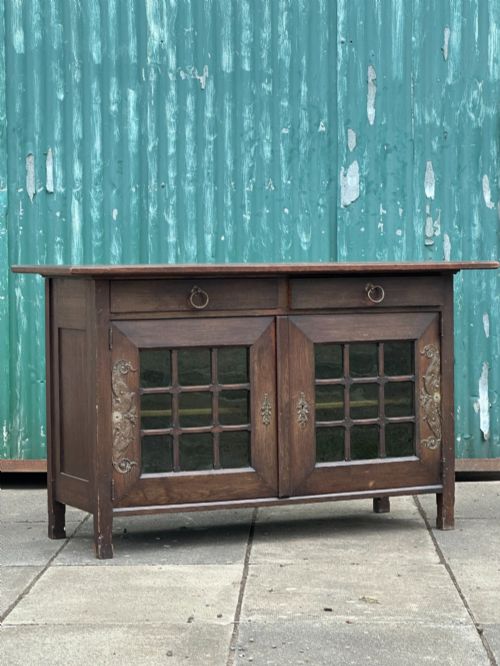


Liberty Oak Dresser
A liberty oak dresser brings the honest design and solid timber of the Arts and Crafts movement straight into a modern room.
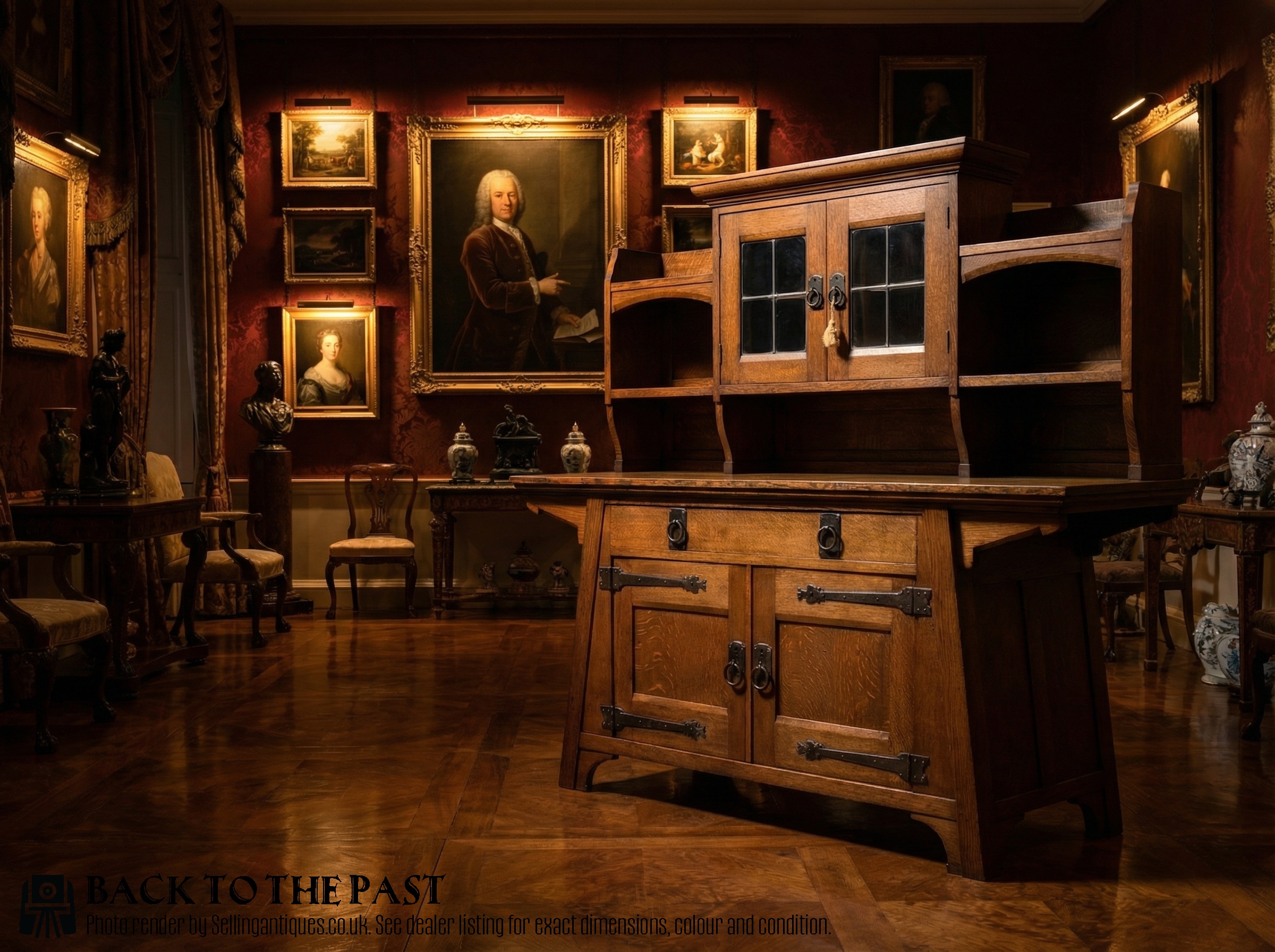
Liberty Oak Dresser
A liberty oak dresser combines functional storage with the distinct aesthetic principles of the Arts and Crafts movement. Buyers looking at this phrase find robust sideboards, side cabinets, and dresser bases created in golden oak.
The versions met most frequently on this page date from the late nineteenth century through the Edwardian period. Makers and designers produced these pieces to highlight natural timber grain rather than heavy surface ornament.
Many examples directly reflect commissions associated with Liberty and Company, sometimes bearing specific model names such as the Lochleven or the Hathaway. Other pieces represent the broader Arts and Crafts style attributed to firms of that same era.
How these pieces were made
Makers built these pieces primarily from solid oak, frequently described as golden oak, selected for its strong grain pattern. Workshops utilised traditional joinery methods to ensure durability without relying on concealed metal fasteners.
Decoration often remained structural or relied on contrasting materials integrated into the design. Metalwork elements in copper, brass, and iron appear on handles and hinges, whilst occasional wood inlay and marquetry add subtle detail.
Object forms on this page include sideboards, dressers, side cabinets, and dedicated dresser bases originating from the Arts and Crafts period.
What varies in quality
Quality in these pieces rests upon the integrity of the construction and the distinction of the design. Standard sideboards meet high utility standards, while documented pieces designed by figures such as Leonard Wyburd or manufactured by Shapland and Petter represent the finer end of the scale.
The refinement of the metal fittings and the precision of any wood inlay or marquetry also separate standard production items from superior workshop output. Original copper or brass hardware contributes to the integrity of a piece.
Liberty and Co·Leonard Wyburd·Shapland and Petter
The Liberty Oak Dresser Glossary
- Arts and Crafts
- A design movement spanning the late nineteenth and early twentieth centuries that valued traditional craftsmanship and simple forms. This style rejected heavy industrial ornamentation in favour of honest construction.
- Golden Oak
- A specific pale to medium tone of oak timber favoured by makers of this period. It highlights the natural medullary rays in the wood grain.
- Marquetry Inlay
- The art of applying small pieces of veneer to a structure to form decorative patterns. This technique appears on selected cabinet doors and drawer fronts.
- Sideboard
- A large piece of dining room furniture used for storing tableware and serving food. These forms frequently overlap with the dresser and side cabinet categories in the evidence.
- Wood Inlay
- The insertion of contrasting timber pieces flush into a solid wood surface. It provides linear or geometric decoration without protruding from the plane.
Liberty Oak Dresser: Frequently Asked Questions
What defines a Liberty oak dresser?
A Liberty oak dresser is defined by its solid oak construction, restrained Arts and Crafts styling, and association with the famous London firm. These pieces prioritize honest joinery and practical form over excessive ornamentation.
Many examples incorporate distinctive metal hardware in copper or brass, reflecting the hand-craft ethos of the period. Their forms range from low dresser bases to tall sideboards with integrated shelving.
How do I identify a piece by Leonard Wyburd?
Leonard Wyburd served as the head of the Liberty furnishing studio and designed numerous distinctive sideboards and dressers. Identifying his work often relies on documented archives and characteristic structural proportions.
His pieces frequently display clever geometric arrangements, subtle wood inlay, and bespoke metalwork. Archival records link specific models, such as the Hathaway, directly to his drawing board.
Where were these pieces used originally?
These pieces were created primarily for dining rooms and large living spaces in Edwardian and late Victorian homes. Their robust construction and ample storage made them ideal for holding tableware, linen, and glassware.
Today, they function equally well in contemporary dining spaces or hallways, providing practical surface area and substantial storage capacity.
How do I date an Arts and Crafts oak sideboard?
Dating relies on stylistic clues, construction techniques, and any associated maker marks or retailer stamps. Pieces from the 1880s and 1890s often display heavier proportions, whilst Edwardian examples can appear slightly more streamlined.
The presence of specific materials, such as hand-beaten copper hardware or distinct marquetry inlay, also helps place a piece within its correct historical decade.