




Liberty Co Carved Table
These liberty co carved table examples bring distinctive Arts and Crafts and Moorish Revival character to any interior.
Liberty Co Carved Table
A liberty co carved table encompasses an array of side tables, occasional tables, and plant stands produced or retailed during the late nineteenth and early twentieth centuries. These pieces reflect diverse international influences, including Anglo-Japanese, Moorish, and Anglo-Indian design vocabularies.
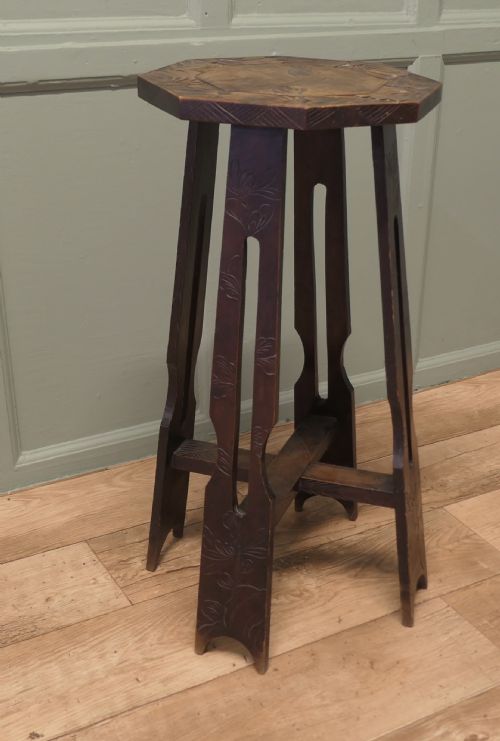
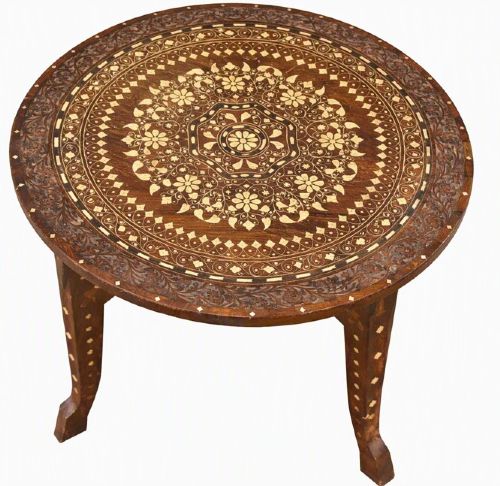
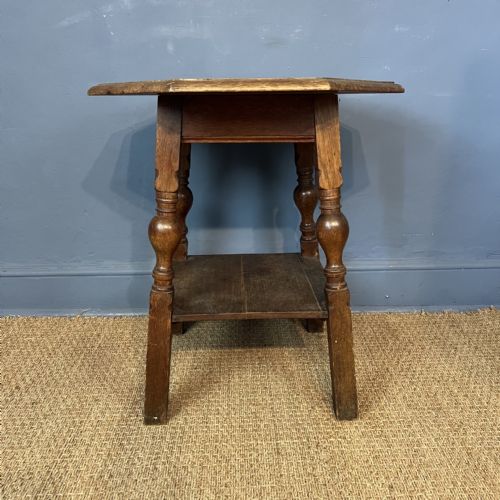
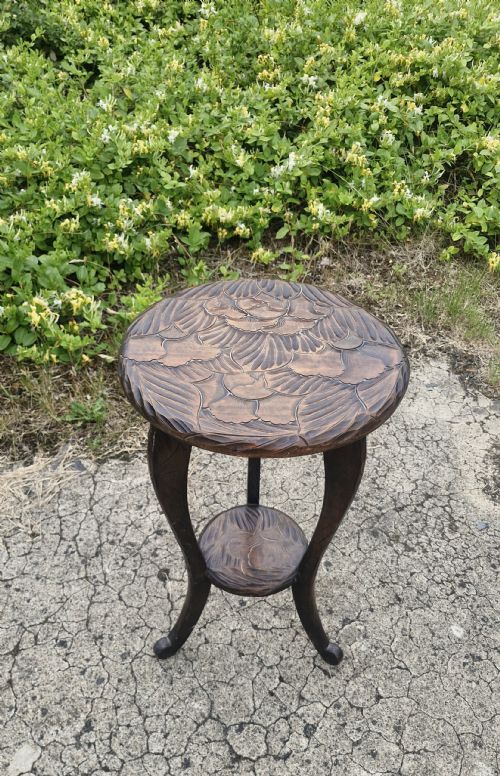
The most common examples encountered on this page are occasional tables and side tables featuring hand-carved floral motifs and structural detailing. Buyers frequently find formats ranging from two-tier display tables to octagonal and circular coffee tables.
Originating predominantly from periods spanning the eighteen-nineties through to the nineteen-twenties, these items demonstrate the retailer's capacity to source and commission distinctive imported and domestic woodwork. Each piece bridges the gap between utilitarian furniture and artistic craftsmanship.
Materials and construction methods
Construction relies heavily on solid hardwoods such as oak, walnut, and rosewood, alongside ebonised wood surfaces. Artisans employed traditional joinery to support elaborate surface decoration and multi-tiered formats.
Surface ornamentation defines these pieces, utilising intricate hand carving, bone inlay, and mother of pearl detailing. These decorative techniques draw directly upon Moorish Revival, Japanese, and Anglo-Indian aesthetic traditions.
Liberty Co Carved Table Retail Price Guide 2026
Typical asking prices for liberty co carved table among the pieces listed under this phrase on Sellingantiques today, from the lower quarter to the upper quarter. They describe what is for sale here now, not the wider market.
Several tables disguise their global travels by arriving quietly in suburban hallways as tea stands.
Evaluating the standard of workmanship
Quality rests in the crispness and depth of the hand carving across the wooden surfaces. Superior examples display precise floral detailing and secure inlay work that remains flush with the surrounding hardwood.
The integrity of the structural joinery distinguishes finer pieces from standard production. Tables exhibiting stable two-tier construction and well-fitted components demonstrate the higher tier of period craftsmanship.
Liberty and Co
The Liberty Co Carved Table Glossary
- Occasional table
- A small, movable table designed for minor, specific uses within a room. These formats dominate the selection alongside dedicated plant stands.
- Anglo-Japanese
- A nineteenth-century design style combining British structural forms with Japanese decorative motifs and construction principles. This aesthetic appears frequently in the carved side tables listed.
- Moorish Revival
- An architectural and decorative style incorporating Islamic art influences into European furnishings. It accounts for the geometric octagonal tables seen in the collection.
- Bone inlay
- A decorative technique where small pieces of carved bone are embedded into recesses within the wooden surface. This method creates striking contrast on occasional tables.
- Two tier
- A furniture configuration featuring a primary upper surface supported above a secondary lower shelf. This layout appears across walnut and carved hardwood examples.
Liberty Co Carved Table: Frequently Asked Questions
How do I date a liberty co carved table?
Dating relies on stylistic markers and recorded production periods spanning from the late nineteenth century through the nineteen-twenties. Pieces often align with specific design movements such as Arts and Crafts or Moorish Revival.
Examining the wood species, construction methods, and any accompanying retail stamps or attributions helps narrow the timeline. Archive records and historical cataloguing provide further context for specific table formats.
Where should I place an occasional table?
These compact tables suit living rooms, hallways, or studies where surface space is needed without dominating the room. Plant stands and two-tier models work well in corners or beside seating.
Ensure the table is placed away from direct heat sources to protect the hardwood and delicate bone or mother of pearl inlay. Their varied heights and footprints allow for versatile placement.
What styles influence these carved tables?
The designs draw heavily from Anglo-Japanese, Moorish, and Anglo-Indian aesthetic traditions. These global influences reflect late nineteenth-century British enthusiasm for imported craft and exoticism.
Arts and Crafts principles also govern many of the oak and walnut pieces, emphasising visible hand carving and material honesty. This blend of styles creates distinct visual variety across the inventory.
How do I care for inlaid wood?
Maintain inlaid surfaces by dusting regularly with a soft, dry cloth and avoiding harsh chemical polishes. Keeping the wood conditioned prevents shrinkage that might otherwise loosen bone or mother of pearl elements.
Protect the finish from prolonged exposure to direct sunlight and moisture. Gentle handling preserves both the structural joinery and the intricate carved details.